How an axle works in a driveline system
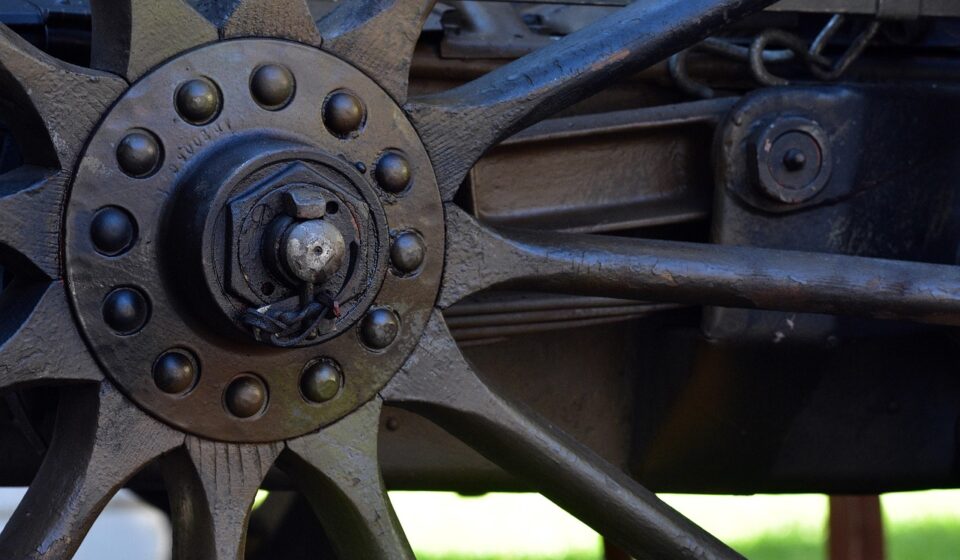
Understanding the axle in a driveline system
An axle is one of the main mechanical connections between a vehicle’s power source and the road. In a driveline system, it may carry vehicle weight, transmit torque to the wheels, contain the final drive, or combine these functions, depending on the vehicle architecture. This is why the same word can describe a front steering axle, a rear drive axle, a half-shaft in a front-wheel-drive car, or an integrated electric axle module in a battery electric vehicle.
At the wheel end, rotating power, vertical load, packaging, durability, and vehicle control all meet. That role helps explain why axle design varies across passenger cars, pickup trucks, commercial vehicles, off-highway equipment, hybrids, and EVs.

Terminology is not always consistent. SAE drive axle nomenclature, vehicle manufacturer service literature, and regulatory language such as gross axle weight rating all use axle-related terms in specific ways. For anyone comparing parts, platforms, or technical news, it is important to separate the axle’s structural role from its torque-transmitting role.
What the word axle can mean
In everyday automotive language, axle is often used as a broad shortcut. In engineering and service contexts, it can refer to different components or assemblies. The most common meanings are:
- Axle shaft: a rotating shaft that transmits torque from the differential or transaxle to a wheel.
- Drive axle assembly: a complete powered axle unit that may include the housing, differential, final drive gears, bearings, shafts, and wheel-end interfaces.
- Dead axle or non-drive axle: an axle that supports load but does not transmit engine or motor torque.
- Steer axle: an axle system that enables directional control and is often not powered in conventional rear-drive vehicles.
- e-axle: an electrified drive module that integrates an electric motor with reduction gearing and, in many designs, a differential and power electronics.
This distinction matters in diagnostics and parts selection. A fault described as an axle problem may involve a CV joint, wheel bearing, differential gear set, axle housing, seal, bushing, or electronic control issue in an electrified module. The correct diagnosis depends on the vehicle layout and the exact part being discussed.
How an axle moves torque to the wheels
In a conventional driveline, power starts at the engine, passes through a clutch or torque converter, and then moves through the transmission. From there, the path depends on the architecture. A rear-wheel-drive car or pickup commonly sends torque through a propeller shaft to a rear differential. The differential changes the torque path by roughly 90 degrees, applies the final drive ratio, and allows the left and right wheels to rotate at different speeds while cornering. Axle shafts then carry torque to the wheel ends.
In a front-wheel-drive vehicle, the transmission and final drive are usually packaged together as a transaxle. Shorter half-shafts with constant velocity joints deliver torque to the front wheels while allowing steering and suspension movement. In many all-wheel-drive systems, a power transfer unit, coupling, rear drive module, or second electric drive unit adds torque to the other axle when required.
The axle also affects torque multiplication and efficiency. Final drive ratio, ring-and-pinion geometry, gear mesh quality, bearing preload, shaft diameter, spline design, and lubricant selection all influence durability. A heavy-duty truck axle designed for high load and long service life is not engineered like a compact car half-shaft, even though both are part of the driveline.
Axle types by vehicle layout
The clearest way to understand axle design is to compare how different vehicle layouts package the driveline.
| Vehicle layout | Typical axle arrangement | Why it matters |
|---|---|---|
| Front-wheel drive | Transaxle with front half-shafts and CV joints | Compact packaging, good cabin space, steering and drive torque handled at the same wheels |
| Rear-wheel drive | Transmission, driveshaft, rear differential, rear axle shafts | Useful for towing, performance balance, and truck platforms with a strong rear axle |
| Part-time four-wheel drive | Transfer case, front and rear drive axles | Designed for traction and durability, often with selectable drive modes |
| Full-time all-wheel drive | Front and rear driveline paths with mechanical or electronically controlled torque distribution | Improves traction and stability but adds complexity, weight, and calibration requirements |
| Battery electric vehicle | One or more electric drive units or e-axles | Motor placement can remove the need for a long driveshaft and gives engineers more freedom in torque control |
There is no single best axle layout for every vehicle. A city EV, a heavy pickup, a long-haul tractor, and an agricultural machine place different demands on torque capacity, load rating, ground clearance, cost, noise, vibration, harshness, and serviceability.
Load, rating, and durability considerations
An axle is not only a propulsion component. It also helps carry and distribute vehicle load. For trucks, vans, trailers, and vehicles used for towing, axle loading is a safety-critical topic. The gross axle weight rating, or GAWR, is determined by the vehicle manufacturer and reflects the maximum allowable weight that can be placed on a specific axle. NHTSA interpretation materials make clear that this rating is not simply the rating of one axle beam. Tires, rims, hubs, bearings, suspension, brakes, and the vehicle configuration all influence the final certified rating.
For component selection and platform design, engineers look beyond peak torque. Key criteria include continuous torque, shock loading, vehicle mass, duty cycle, gear ratio, braking load, lubricant temperature, seal exposure, corrosion protection, bearing life, and misalignment tolerance. Off-road and commercial applications add further stress through impact loads, steep grades, frequent starts, and high payload variation.
Durability also depends on how the axle interfaces with the rest of the driveline. An underspecified driveshaft can create vibration that is mistaken for an axle issue. Incorrect gear backlash can create noise or heat. A worn bushing can change operating angles and accelerate CV joint wear. This system-level view is essential because driveline problems often pass through several components before the driver notices a symptom.
Axle, driveshaft, differential, and CV shaft compared
Searches for axle often overlap with related driveline terms. These parts work together, but they do not perform the same job.
| Term | Main function | Common confusion |
|---|---|---|
| Axle | Supports wheel-end load, transmits torque, or both depending on design | Can refer to a shaft, housing, beam, or assembly |
| Driveshaft | Transfers torque between separated driveline units, such as transmission to rear axle | Often called a prop shaft in rear-drive layouts |
| Differential | Allows left and right wheels to rotate at different speeds while distributing torque | May be housed inside a drive axle assembly |
| CV shaft | Uses constant velocity joints to transmit torque through steering and suspension angles | Often called a front axle or half-shaft in service language |
| Wheel bearing | Supports wheel rotation and radial or axial loads | Noise can be misdiagnosed as an axle failure |
The practical takeaway is that axle terminology should always be tied to a specific vehicle architecture. A rear axle in a body-on-frame truck is not the same type of service item as a front axle shaft in a compact front-drive car.
How electrification is changing axle design
Electrification is changing what an axle has to package. Public industry materials from major driveline suppliers describe e-axles as modules that can integrate an electric motor, reduction gearing, and axle functions. Some designs also bring the inverter and control software closer to the mechanical drive unit. This integration can reduce separate housings and long mechanical torque paths, but it also concentrates thermal, electrical, lubrication, sealing, and service requirements into one compact assembly.
The market context explains why this matters. The International Energy Agency’s Global EV Outlook 2026 reported that global electric car sales exceeded 20 million in 2025, roughly one in four new cars sold worldwide. That growth does not remove mechanical driveline engineering from the vehicle. It shifts the emphasis. EVs still need wheel-end load paths, bearings, seals, gears, splines, housings, mounts, and suspension interfaces. They also introduce fast torque response, regenerative braking loads, and software-controlled traction strategies that can place different stresses on axle-related components.
Several design implications follow:
- Packaging flexibility: a motor can be placed near an axle instead of sending torque from a central engine through a long driveline.
- Thermal management: gears, bearings, motor windings, and power electronics may need coordinated cooling strategies.
- Noise control: EVs remove much of the engine masking noise, so gear whine and bearing noise can become more noticeable.
- Torque calibration: software can change torque split quickly, making mechanical strength and control logic part of the same system discussion.
- Service strategy: integrated modules may improve factory assembly but can change repair economics in the aftermarket.
Axle development is also continuing for conventional vehicles. Pickup trucks, delivery vehicles, commercial tractors, buses, and off-highway equipment still require robust drive axles that can handle load, range, road shock, and long maintenance intervals. The future is not a simple move from mechanical axles to electric modules; it is a broader mix of mechanical, hybrid, and integrated electric driveline solutions.
Common axle-related symptoms and what they may indicate
Axle problems should be diagnosed carefully because similar symptoms can come from several driveline or suspension components. Common warning signs include:
- Clicking during turns: often associated with an outer CV joint, especially on front-drive or AWD vehicles.
- Vibration under acceleration: may involve axle shaft imbalance, CV joint wear, driveshaft angles, engine mounts, or tire issues.
- Clunking during gear changes: can come from backlash, worn mounts, differential wear, U-joints, bushings, or loose fasteners.
- Gear oil leaks: may point to axle seals, pinion seals, venting issues, or housing damage.
- Growling or humming noise: can be related to wheel bearings, carrier bearings, pinion bearings, tire pattern noise, or gear mesh.
- Uneven tire wear: may involve alignment, suspension geometry, bent axle components, or overloaded operation.
Because safety is involved, axle-related inspection should include surrounding systems: tires, wheel bearings, brakes, suspension joints, fasteners, fluid condition, and electronic fault codes where applicable. Replacing a visible shaft without correcting abnormal operating angles or overload can lead to repeat failure.
What to check when evaluating axle specifications
For buyers, technicians, fleet managers, and parts researchers, axle specifications should be read as a system package rather than a single headline number. A useful evaluation checklist includes:
- Vehicle application: passenger car, SUV, pickup, commercial truck, bus, trailer, or off-highway equipment.
- Drive layout: front-wheel drive, rear-wheel drive, AWD, 4WD, hybrid, or electric drive.
- Rated load: axle rating, tire capacity, suspension capacity, wheel-end hardware, and brake sizing.
- Torque requirement: peak torque, continuous torque, gradeability, launch behavior, and shock loading.
- Ratio and efficiency: final drive ratio, gear type, lubrication strategy, and expected operating temperature.
- Geometry: track width, mounting points, suspension travel, steering angle, and joint operating angles.
- Service environment: water exposure, dust, road salt, heat, payload variation, and maintenance interval.
- Integration level: conventional mechanical assembly, hybrid assist axle, or integrated e-axle module.
The strongest axle design is not always the heaviest. Good axle engineering balances strength, efficiency, packaging, manufacturing cost, vehicle dynamics, and serviceability. That balance is why the axle remains one of the most important components in driveline systems, even as powertrains shift from combustion engines to hybrid and electric architectures.
Frequently asked questions
Is an axle the same as a driveshaft?
No. A driveshaft usually transfers torque between major driveline units, such as from a transmission to a rear differential. An axle is closer to the wheel end and may support load, transmit torque to the wheels, or house the final drive and differential.
Do all axles deliver power?
No. A drive axle delivers torque to the wheels. A dead axle or non-drive axle supports load but does not propel the vehicle. Many trailers and some rear axles on front-drive vehicles are non-driven.
Why do EVs still need axles?
EVs may not need the same long mechanical driveline as a front-engine rear-drive vehicle, but they still need structures and shafts that carry wheel loads and deliver torque. E-axles combine electric propulsion with traditional axle functions in a more integrated package.
What does GAWR mean for an axle?
GAWR means gross axle weight rating. It is the maximum allowable weight placed on a specific axle as determined by the vehicle manufacturer. It reflects more than the axle beam alone because tires, wheels, hubs, brakes, suspension, and vehicle configuration also matter.
What is the main takeaway for driveline design?
The axle should be understood as part of a system. Its performance depends on torque path, load rating, wheel-end hardware, suspension geometry, lubrication, control strategy, and vehicle use. That system view becomes even more important as electric and hybrid driveline architectures expand.