Briggs and Stratton engine guide for selecting, maintaining, and replacing small engines
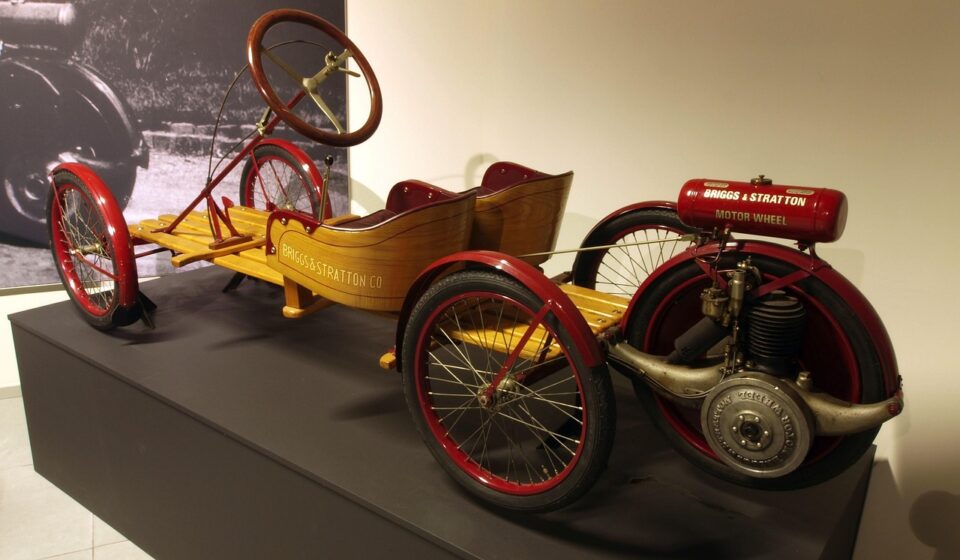
People searching for a Briggs and Stratton engine are usually trying to identify, service, or replace a compact gasoline engine used in outdoor power equipment, not an automotive powerplant. Briggs & Stratton engines are common in push mowers, riding mowers, generators, pumps, snow blowers, and pressure washers. In practical terms, the application comes before the power rating. Shaft orientation, crankshaft dimensions, mounting points, controls, cooling airflow, emissions labeling, and service parts all affect whether an engine will fit and run reliably. For owners, dealers, and parts buyers, many problems still come back to fuel quality, air filtration, oil condition, spark plug wear, and heat management. This article looks at Briggs & Stratton engines within the broader context of engine and thermal systems.
What a Briggs & Stratton engine means in practical terms
Briggs & Stratton is best known for small spark-ignition engines used in outdoor power equipment. These are not automotive engines. They are generally compact, air-cooled, four-cycle gasoline units designed to drive a blade, belt, pump, alternator, or other driven component at a controlled operating speed.
The basic combustion process is familiar: air and fuel enter the cylinder, a spark plug ignites the mixture, combustion produces torque, and waste heat must be rejected through oil, airflow, and metal surfaces. The packaging is different from many larger engines. Instead of a liquid coolant circuit, many small engines rely on a flywheel fan, shrouds, and cooling fins. That makes clean surfaces, correct airflow direction, and proper shroud installation more important than many users realize.
Most residential engines are single-cylinder units. Higher-output riding mower and zero-turn mower applications may use V-twin layouts. Commercial and industrial lines can add pressure lubrication, oil filters, high-capacity air cleaners, electronic fuel injection, and electronic throttle control. The exact configuration depends on the engine family, the equipment manufacturer, and the model number.
Main engine families and applications
Briggs & Stratton engine names can vary by market and by original equipment manufacturer, but several families appear regularly in lawn and garden equipment. E Series engines are commonly positioned as lighter, simpler push mower engines. EX and EXi Series engines add convenience features on selected models, including easier starting systems and reduced oil-change requirements under the manufacturer’s maintenance approach. PXi Series engines sit above the basic residential range and are used in both push mower and riding mower applications, depending on the model.
For push mowers, current manufacturer material lists PXi examples in the 190 cc to 223 cc range, with gross torque ratings from 8.50 to 10.00 ft-lb on specific listed models. Those figures are useful for comparison, but they should not be the only basis for selecting a replacement engine. A mower deck, blade adapter, crankshaft length, brake system, cable routing, and safety controls can make two engines with similar displacement incompatible.
Riding mower engines include single-cylinder and V-twin options. The riding mower range may include E, EX, EXi, PXi, and CXi families, with higher-feature models using full pressure lubrication, improved filtration, or designs intended for high-debris mowing conditions. Vanguard-branded engines sit in a more commercial and industrial category, often used where duty cycle, service access, and durability features matter more than the lowest initial cost.
Specifications that matter before replacing an engine
A common replacement mistake is shopping by horsepower or gross torque first. Power matters, but fitment usually fails on physical and system details. Before ordering an engine, read the engine data tag and the equipment manual. Briggs & Stratton identifies engines by model, type, and code. The manufacturer’s manual and illustrated parts list are the safest starting points for parts and specification lookup.
| Specification | Why it matters | What to check |
|---|---|---|
| Model, type, and code | Identifies the exact build and parts list | Stamping or label on the engine, then confirm with the manual |
| Shaft orientation | Determines whether the output suits the equipment | Vertical shaft for many mowers, horizontal shaft for many pumps and generators |
| Crankshaft dimensions | Controls blade, pulley, clutch, or pump fitment | Diameter, length, keyway, tapped end, and step design |
| Mounting pattern | Affects direct installation on the deck or frame | Bolt spacing, base shape, and clearance around the sump |
| Controls and wiring | Connects throttle, choke, brake, charging, and electric start systems | Cable brackets, connectors, starter type, alternator output, and kill switch |
| Cooling and exhaust layout | Prevents overheating and heat damage | Shrouds, muffler position, heat shields, debris screens, and airflow path |
| Emissions label | May affect legal sale or installation in a specific market | Certification label, model year, and local requirements |
If an engine is being replaced after a major failure, inspect the driven equipment as well. A bent blade adapter, seized pump, blocked generator head, or misaligned belt system can overload the replacement engine and cause a second failure that looks like an engine quality problem.
Maintenance that protects performance and heat control
Small air-cooled engines are sensitive to basic maintenance because the same conditions that affect combustion also affect temperature. Dirty oil increases internal wear. A blocked air filter changes the fuel-air mixture and can increase deposits. Grass packed around cooling fins restricts heat rejection. A worn spark plug makes starting harder and can leave unburned fuel in the system.
Briggs & Stratton maintenance guidance updated in 2026 states that small engine oil should be changed after the first five hours of use and then annually or every 50 hours, whichever comes first, unless the operator manual gives a different requirement. Oil viscosity should be selected by outdoor temperature. SAE 30 is commonly recommended above 40°F for many Briggs & Stratton engines, while synthetic 5W-30 is often used across a wider outdoor temperature range. The operator manual remains the controlling document because oil capacity and viscosity can vary by engine.
Air filtration is equally important. Briggs & Stratton engines may use paper, foam, or dual-element filters. Foam filters generally need oiling and regular service. Dual-element systems use a foam pre-cleaner with a paper element. In dusty mowing or construction environments, the service interval should be shortened. A restricted filter can cause rich running, smoke, power loss, and accelerated deposits.
Spark plugs are simple parts, but they carry a large share of starting and running complaints. The manufacturer’s service guidance recommends checking or replacing plugs annually according to the operator manual. Correct plug type, gap, and torque help starting and reduce ignition-related troubleshooting. Fuel should also be treated as a maintenance item. Briggs & Stratton support material warns that stale, untreated gasoline can begin to break down after about a month, which is why fuel stabilizer, draining for storage, or using fresh fuel matters on seasonal equipment.
Troubleshooting common Briggs & Stratton engine symptoms
Troubleshooting should start with simple, testable items before assuming a major internal failure. The following guide is not a substitute for a service manual, but it helps separate likely maintenance faults from deeper mechanical issues.
| Symptom | Likely areas to inspect first | Why it happens |
|---|---|---|
| Engine will not start | Fresh fuel, spark plug, safety switch, carburetor, oil level | Seasonal equipment often sits with stale fuel or a fouled plug |
| Hard starting | Spark plug, choke or ReadyStart system, valve clearance, fuel quality | Weak spark, poor mixture control, or compression changes increase pull effort |
| Black smoke | Air filter, overfilled oil, flooded carburetor, stale fuel | Too much fuel or oil contamination can create rich combustion and smoke |
| Surging | Carburetor passages, governor linkage, intake leaks, fuel supply | Unstable mixture or control response causes speed hunting |
| Overheating | Cooling fins, flywheel screen, shrouds, oil level, load condition | Air-cooled engines depend on clean airflow and correct oil level |
| Power loss under load | Blade or pump drag, air filter, fuel delivery, compression, governor setting | The engine may be healthy but overloaded by the driven equipment |
Owners often replace a carburetor, ignition coil, or starter before checking the basics. A more reliable sequence is fuel, air, spark, oil, mechanical load, and then compression or valve-related tests. If the engine is used commercially, a written service log can reveal patterns such as overheating after dusty jobs or repeated starting issues after long storage periods. See also: braking and chassis.
Emissions rules and the direction of the market
Small engines are regulated differently from road vehicles, but emissions rules still influence design and availability. The U.S. Environmental Protection Agency regulates small spark-ignition engines and equipment for exhaust and evaporative emissions. Phase 3 exhaust standards for small spark-ignition engines took effect in 2011 or 2012 depending on engine size, and evaporative requirements cover fuel-system permeation and venting.
California has moved further for small off-road engines. The California Air Resources Board approved amendments affecting spark-ignition engines of 25 hp and below used in most lawn and garden equipment. For most newly manufactured small off-road engines, zero-emission standards began with model year 2024. Portable generators and large pressure washers follow a different transition, with tighter standards beginning in model year 2024 and zero-emission standards scheduled for model year 2028.
This does not mean every existing gasoline engine suddenly becomes unusable. The rule focus is on new engines and equipment placed into the regulated market. For parts buyers, the direction still matters. Dealers may stock different models by state, replacement availability can vary, and commercial users may compare repair costs against battery-electric alternatives. From an engineering standpoint, gasoline small engines remain relevant where refueling speed, long runtime, cold-weather performance, or remote operation outweighs the benefits of electrification.
How parts buyers should think about compatibility
For anyone sourcing a Briggs & Stratton engine or related parts, the safest approach is documentation first and assumptions second. Record the model, type, and code. Photograph the label, crankshaft, muffler side, control plate, fuel tank, starter, and mounting base. Measure physical interfaces instead of relying on memory. Confirm whether the equipment manufacturer used a standard engine or a special build with unique controls, charging output, or crankshaft details.
Thermal compatibility should also be part of the decision. Replacement engines need the correct shrouds, screens, deflectors, mufflers, and guards so cooling air moves as designed and hot exhaust does not damage belts, plastic covers, fuel lines, or operator areas. A low-cost engine swap that ignores airflow can shorten service life even if the engine starts and runs on day one.
Finally, separate service parts from repair parts. Oil, filters, spark plugs, and fuel stabilizer support scheduled maintenance. Carburetors, ignition coils, starters, gaskets, pistons, valves, and short blocks belong to repair decisions. If the crankshaft, cylinder bore, or mounting base is damaged, replacement may be more practical than rebuilding, especially on residential equipment.
Frequently asked questions
Is a Briggs & Stratton engine an automotive engine?
No. In normal usage, a Briggs & Stratton engine refers to a small off-road engine for equipment such as mowers, generators, pressure washers, pumps, and snow blowers. It uses the same combustion principles as larger engines, but the cooling, packaging, controls, and duty cycle are different.
How do I identify the correct Briggs & Stratton engine?
Use the model, type, and code from the engine label or stamping. Those numbers identify the exact build and help locate the correct operator manual, illustrated parts list, and service parts. Equipment brand and deck model are helpful, but they do not replace the engine identification numbers.
Can I replace a vertical shaft engine with a horizontal shaft engine?
In almost all normal equipment applications, no. Shaft orientation is a fundamental design feature. A vertical shaft mower engine and a horizontal shaft pump or generator engine are built for different driven components, lubrication conditions, mounting layouts, and safety systems.
What maintenance most often prevents starting problems?
Fresh fuel, a clean air filter, correct oil level, and a good spark plug prevent many seasonal starting problems. For equipment stored more than a short period, untreated gasoline is a common cause of carburetor deposits and poor running.
Are gasoline Briggs & Stratton engines being phased out?
The answer depends on the market and application. California rules affect many newly manufactured small off-road engines beginning with model year 2024, while some categories such as portable generators follow a later schedule. Existing engines and equipment are a separate issue, and rules can vary by jurisdiction.