Tesla Inc. cars in 2026 and the vehicle electrics behind the EV shift

Tesla Inc. cars remain a useful reference point for modern electric vehicle electrics because the company’s scale makes design choices visible across charging, batteries, power electronics, software and service. As of September 19, 2026, the latest official Tesla quarterly vehicle data available is for Q2 2026, when Tesla reported 451,758 vehicles produced and 480,126 vehicles delivered. That rebound followed a weaker 2025, when annual deliveries fell to 1,636,129 vehicles. For readers tracking vehicle electrics, the more useful story is not only how many cars Tesla sold, but how its electrical architecture has shaped expectations for EV charging, diagnostics, braking, low-voltage supply and advanced driver-assistance systems.
Why Tesla Inc. cars matter to vehicle electrics
Tesla is often discussed as an automaker, a technology company or a stock-market story. In an automotive parts and electrics context, Tesla Inc. cars are better viewed as rolling electrical platforms. Propulsion, braking feel, cabin functions, thermal systems, infotainment, charging behavior and driver-assistance functions all depend on electrical control.
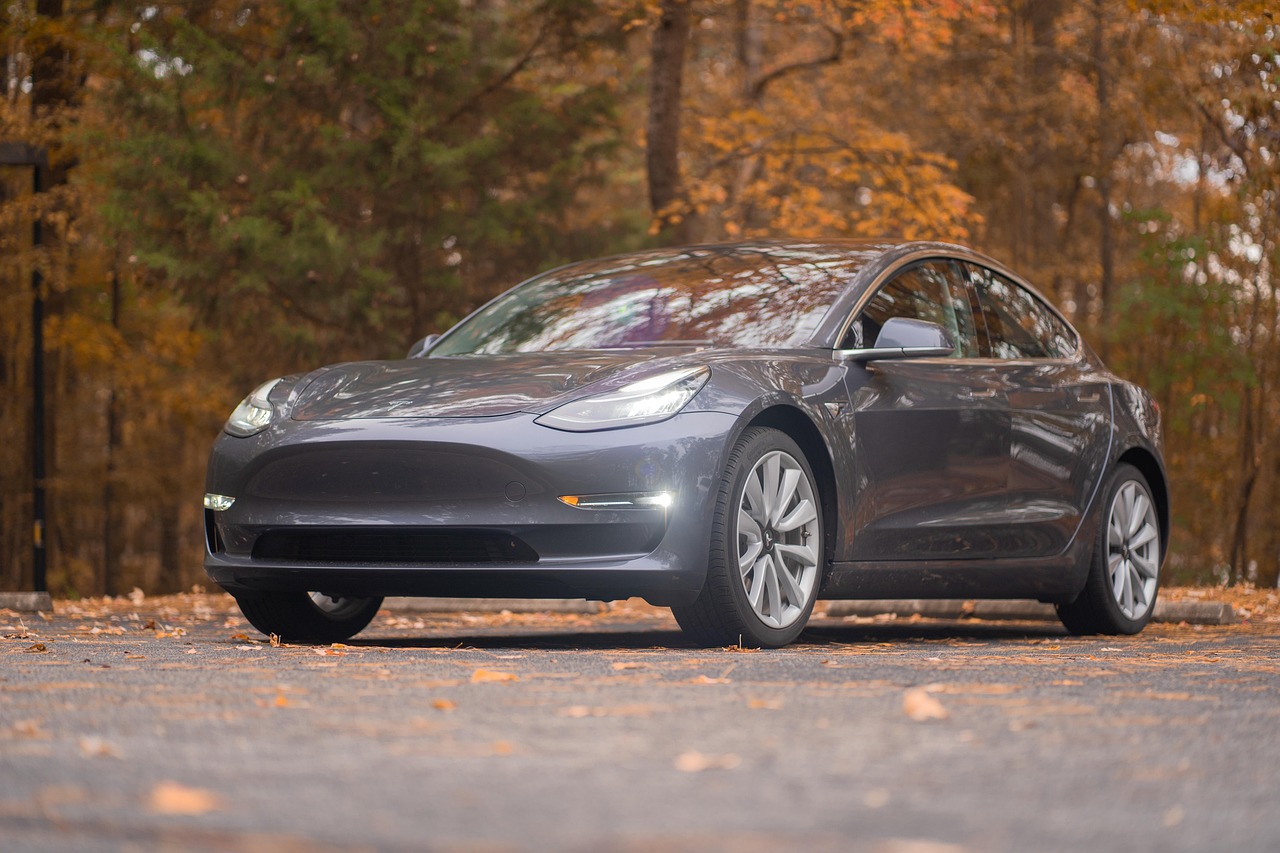
That does not make Tesla unique in using electronics. Every modern vehicle is electronically complex. Tesla is especially relevant because of its scale in battery-electric vehicles and its tendency to integrate functions that were historically split across separate modules, suppliers and service workflows.
Tesla’s own reporting separates Model 3 and Model Y from “Other Models.” In Q2 2026, Model 3/Y accounted for 467,762 of 480,126 deliveries, or about 97.4 percent of the total. That concentration matters for parts observers because much of Tesla’s volume is tied to closely related platforms. When one electrical design decision spreads across high-volume models, it can influence repair demand, charging-equipment planning and aftermarket learning curves.
Recent delivery data shows recovery, but not a simple growth story
The most recent official numbers show why short-term Tesla headlines need context. Tesla reported 1,808,581 vehicle deliveries in 2023, 1,789,226 in 2024 and 1,636,129 in 2025. That puts 2025 deliveries about 8.6 percent below 2024. The decline was notable because it showed that even a leading EV maker can face model-cycle pressure, pricing pressure, regional competition and demand swings.
The first half of 2026 looked stronger. Tesla reported 358,023 deliveries in Q1 2026 and 480,126 deliveries in Q2 2026, for a first-half total of 838,149 vehicles. Using Tesla’s own reported 2025 quarterly figures as the comparison base, first-half 2026 deliveries were about 16.3 percent higher than the first half of 2025. Production also increased, with 860,144 vehicles produced in the first half of 2026.
| Period | Production | Deliveries | Electrical-market takeaway |
|---|---|---|---|
| 2025 full year | 1,654,667 | 1,636,129 | Lower annual volume still represented a large installed base for EV electrical service and charging demand. |
| Q1 2026 | 408,386 | 358,023 | Production exceeded deliveries, so inventory movement would matter in the next quarter. |
| Q2 2026 | 451,758 | 480,126 | Deliveries exceeded production by 28,368 vehicles, suggesting inventory drawdown as well as stronger customer deliveries. |
| H1 2026 | 860,144 | 838,149 | Scale remained high enough to influence charging, diagnostics and EV parts planning. |
For vehicle-electrics readers, these figures should not be treated as a guarantee of future demand. Tesla itself warns in delivery releases that vehicle deliveries are only one measure of performance and do not, by themselves, explain profitability, average selling price, cost, foreign exchange or cash flow. The practical conclusion is narrower: Tesla’s installed fleet continues to expand, and every additional EV increases the importance of safe high-voltage practices, accurate diagnostics and compatible charging hardware.
The core electrical systems inside Tesla-style EV architecture
A Tesla battery-electric vehicle depends on two broad electrical domains. The first is the high-voltage system that stores and converts traction energy. The second is the low-voltage system that powers controls, lighting, safety electronics, infotainment, access systems and communication modules.
High-voltage battery and battery management
The traction battery is the vehicle’s energy center. It must store energy, deliver high current under acceleration, accept energy during charging and regenerative braking, and operate within a controlled temperature window. Battery management hardware and software monitor cell voltage, temperature, state of charge and safety limits.
For parts and service teams, the battery is not simply a replaceable “fuel tank.” It is an electrical assembly with monitoring, isolation and thermal-control requirements. Damage, water exposure, improper lifting or unqualified repair can create safety risks. This is why public safety guidance from agencies such as NHTSA repeatedly emphasizes qualified EV service and special care around high-voltage batteries.
Inverters, drive units and regenerative braking
The inverter converts battery direct current into alternating current for the drive motor. The motor can also operate as a generator during regenerative braking, sending energy back toward the battery when conditions allow. This reduces reliance on friction brakes in many ordinary deceleration events, but it does not eliminate conventional brakes.
NHTSA’s EV guidance notes that electrified vehicles still use conventional brakes in situations such as emergency braking or when the battery is too full to accept regenerative energy. That point matters for maintenance: EV brake systems may wear differently, but they still require inspection for corrosion, caliper movement, hydraulic condition and electronic control performance.
DC-DC conversion and low-voltage loads
Most EVs do not use a traditional engine-driven alternator. Instead, a DC-DC converter steps high-voltage battery power down to supply low-voltage systems and recharge the auxiliary battery. This low-voltage side is critical because many safety and control functions depend on it.
A low-voltage fault can create symptoms that appear unrelated to the traction system, including access problems, warning messages, communication faults, charging interruptions or no-start conditions. As EVs become more software-defined, low-voltage stability becomes a basic diagnostic checkpoint rather than an afterthought.
Charging standards have become a parts and infrastructure issue
Charging is where Tesla’s influence is especially visible. Tesla opened its North American Charging System connector design in 2022, and SAE later developed the J3400 recommended practice for the North American Charging System. SAE J3400, revised in September 2024, covers physical, electrical, functional, safety and performance requirements for conductive power transfer using the coupler.
For the industry, this moved the Tesla connector from a brand-specific topic toward a standards and interoperability discussion. That matters for vehicle electrics because charging compatibility is not just a plug shape. It involves contact design, signaling, thermal behavior, safety controls, AC and DC charging capability, and charger-to-vehicle communication.
Parts distributors, charging-equipment installers and service technicians should treat charging hardware as an electrical system, not a simple accessory. Cable condition, connector heat, port wear, adapter compatibility, ground-fault protection and software handshakes can all affect the customer experience.
The practical lesson from Tesla Inc. cars is that charging convenience can become part of perceived vehicle quality. A technically capable EV with unreliable charging access can frustrate owners. A mature charging interface, by contrast, can reduce friction for fleets, commuters and long-distance drivers. See also: braking and chassis.
Driver-assistance electronics are moving from premium features to baseline requirements
Tesla’s brand is closely associated with advanced driver-assistance features, but the wider industry trend is not limited to Tesla. In April 2024, NHTSA finalized FMVSS No. 127, requiring automatic emergency braking, including pedestrian automatic emergency braking, on passenger cars and light trucks by September 2029. The rule also sets performance expectations at higher speeds and in pedestrian-detection scenarios.
This regulation highlights a key shift for vehicle electrics: cameras, radar where used, control units, braking actuators and software validation are becoming safety-critical baseline systems. Even when a vehicle is not marketed as highly automated, it may still rely on electronic sensing and automatic braking to meet future requirements.
For Tesla and other EV makers, this increases the importance of sensor calibration, wiring integrity, software updates and fault-code interpretation after collision repair. A bumper repair, windshield replacement or harness issue can affect more than appearance. It can change how the vehicle sees and reacts to the road.
What Tesla’s 2026 direction suggests for electrics suppliers and repair teams
Tesla’s Q2 2026 update said Cybercab had begun production at Gigafactory Texas and that Tesla Semi remained on track for production in 2026 at its Nevada factory. These programs should be read carefully: production status does not automatically mean broad consumer availability or mature service demand. Still, they show the direction of travel.
Vehicle electrics are expanding beyond passenger-car propulsion. Robotaxi platforms add heavier reliance on sensing, redundancy, compute, remote monitoring and uptime. Electric commercial trucks add higher energy throughput, heavier-duty thermal management, depot charging needs and different duty-cycle stress.
For the aftermarket and parts ecosystem, several implications stand out:
- High-voltage training becomes essential. Shops that service EVs need procedures, insulated tools, personal protective equipment and clear isolation checks.
- Low-voltage diagnostics remain important. Many EV complaints can begin with auxiliary power, network communication or module wake-sleep behavior.
- Thermal management parts gain value. Pumps, valves, sensors, coolant circuits and heat exchangers directly affect battery and power-electronics performance.
- Charging components need careful inspection. Ports, cables, adapters and onboard charging electronics face repeated mechanical and thermal stress.
- Software does not remove hardware failure. Over-the-air updates can change behavior, but connectors, harnesses, sensors and actuators still age and fail.
The main opportunity is not to copy Tesla’s design. It is to understand the service pattern created by high-volume EV platforms: fewer engine-related components, more high-voltage safety concerns, more electronics-led diagnostics and more dependence on charging infrastructure.
Key limits when interpreting Tesla Inc. cars as an industry signal
Tesla is influential, but it is not the entire EV market. Its delivery mix is heavily weighted toward Model 3 and Model Y, while other automakers may use different battery formats, electrical architectures, charging strategies and supplier relationships. A repair trend seen in one Tesla platform should not automatically be applied to every EV.
It is also important to separate confirmed facts from company plans. Completed delivery data, published regulatory rules and issued technical standards are stronger evidence than product timing statements. A statement that a vehicle program is “on track” is useful context, but it should not be treated as proof of future production volume, service demand or parts availability.
The safest editorial conclusion is this: Tesla Inc. cars show where modern vehicle electrics are heading, but each technical claim still needs model-specific verification. Parts fitment, repair procedures, calibration steps and charging compatibility should always be checked against the specific vehicle, market and production date.
Frequently asked questions
Are Tesla Inc. cars fully electric?
Tesla’s passenger vehicles are battery-electric vehicles, meaning propulsion comes from electric motors powered by a traction battery. Tesla has also reported Semi production and development of newer vehicle platforms, but buyers and service teams should verify specifications for the exact model and production period.
Why do Tesla reports separate Model 3/Y from other models?
Tesla reports Model 3 and Model Y together because they represent the company’s highest-volume vehicle group. Other models are grouped separately, which can make it harder to track individual volumes for vehicles such as Model S, Model X, Cybertruck or Semi using delivery releases alone.
What electrical parts are most important in Tesla-style EV service?
The most important areas include the high-voltage battery, inverter, drive unit, DC-DC converter, charging port, thermal-management electronics, low-voltage battery and control modules. Sensor systems and wiring harnesses are also critical because driver-assistance and safety functions depend on reliable electrical signals.
Does regenerative braking mean Tesla cars do not need brake service?
No. Regenerative braking can reduce friction-brake use during normal driving, but conventional brakes remain necessary for emergency stops, certain stability-control events and conditions where regeneration is limited. Brake inspection remains important, especially for corrosion and mechanical movement.
Is SAE J3400 only relevant to Tesla owners?
No. SAE J3400 is relevant to the wider North American EV market because it standardizes the North American Charging System coupler. Its importance extends to charging-equipment makers, automakers, installers, fleets and service teams working with compatible charging hardware.