How to choose a go kart engine for performance, reliability, and heat control

Quick answer for choosing a go kart engine
The right go kart engine is not simply the largest unit that will fit the frame. For many recreational single-seat karts, buyers compare small horizontal-shaft, air-cooled four-stroke engines in the roughly 160 cc to 212 cc class, then match the engine to the kart’s weight, tire size, clutch or torque converter, brake capacity, and intended speed. Youth karts, rental units, race karts, and private off-road fun karts do not have the same requirements. In most cases, the safer choice is the engine that delivers predictable torque while staying within the chassis, drivetrain, and rule limits.
Published horsepower should be treated as one input, not a speed guarantee. Cooling airflow, governor setup, exhaust routing, oil capacity, and service access often determine whether the kart remains reliable after several hours of use.

What a go kart engine actually has to do
A kart engine works in a harsher environment than many first-time builders expect. It has to launch from low speed, tolerate vibration, sit close to the driver, and operate with limited clearance around the body and frame. Unlike a road vehicle, a basic kart may have no multi-speed gearbox, little sound insulation, and only minimal shielding around hot or rotating parts. That makes engine selection inseparable from the driveline and thermal layout.
The most useful questions are practical ones:
- Who will drive the kart? A youth fun kart, adult yard kart, concession kart, and competition kart should not be specified in the same way.
- Where will it run? Flat pavement, packed dirt, grass, and hills create very different load demands.
- What controls speed? Gear ratio, governor setting, clutch engagement, tire size, and track length matter more than engine size alone.
- Can the chassis support it? Brakes, frame welds, axle diameter, chain size, seat position, and guards must suit the available torque.
- Can the engine stay cool? Air-cooled engines need clean intake air, unobstructed fan flow, and a layout that does not trap exhaust heat around the fuel tank or driver.
For that reason, a go kart engine should be treated as part of an integrated system. A modest engine with correct gearing and open airflow can be easier to control and more durable than a larger engine installed without enough braking, shielding, or cooling margin.
Common engine choices and where they fit
Small kart engines are usually selected from a few broad categories. The examples below are not buying endorsements. They are reference points because published specifications help show how similar engines differ in displacement, rated output, torque, and service requirements.
| Engine category | Typical use | Main advantage | Key limitation | Checks before use |
|---|---|---|---|---|
| Smaller governed four-stroke engine | Youth fun karts and low-speed recreational use | Smoother power delivery and easier control | May struggle with hills, heavy riders, or tall gearing | Age guidance, throttle stop, brake capacity, guard coverage |
| 160 cc to 212 cc horizontal-shaft four-stroke | Common adult recreational and utility-style karts | Good parts availability, simple maintenance, useful low-speed torque | Speed varies widely with gearing and tire size | PTO shaft size, mounting pattern, clutch match, cooling clearance |
| Sealed or rule-specific racing engine | Club racing classes with defined technical rules | Closer competition and controlled modifications | Must follow class rules rather than general preference | Sanctioning body rules, restrictor, rev limit, approved parts |
| Motorcycle, snowmobile, or high-output conversion | Advanced custom builds only | High power potential | Major safety, cooling, fabrication, and braking demands | Engineering review, chain containment, radiator or airflow, legal limits |
For perspective, Honda Motor Europe’s published GX200 technical sheet lists a 196 cm3 air-cooled four-stroke OHV petrol engine with 4.3 kW net power at 3,600 rpm and 12.4 Nm maximum net torque at 2,500 rpm. Briggs & Stratton Racing documentation for the Animal, Jr. 206, and LO206 family lists 205 cc displacement and racing-specific components. These figures explain why engines in the 196 cc to 205 cc range are often compared, but the correct choice still depends on kart rules, gearing, and safety design.
Power, torque, and gearing matter more than headline horsepower
Horsepower describes work over time, but torque and gearing determine how a kart launches, climbs, and responds at low speed. If the overall gearing is too tall, the kart can feel sluggish, overheat the clutch, and strain the chain even when the engine has a respectable horsepower rating. If the gearing is too short, the kart may accelerate well but reach its comfortable speed limit quickly.
A simple speed estimate shows the relationship:
Theoretical speed in mph = tire circumference in inches × engine rpm ÷ gear ratio × 60 ÷ 63,360.
For example, a 3,600 rpm engine with 6:1 overall gearing and an 11-inch tire has a tire circumference of about 34.6 inches. The theoretical speed is about 19.7 mph before losses. Changing to 5:1 gearing raises the theoretical figure to about 23.6 mph, but it also reduces wheel torque. Changing to 8:1 lowers the theoretical figure to about 14.8 mph, while improving launch and hill performance. Real-world speed will be lower or otherwise different because of clutch slip, torque converter behavior, tire deflection, rider weight, surface drag, and governor action.
This is why engine upgrades should begin with the complete driveline. A centrifugal clutch is simple and compact, but it can overheat if the engine is geared too tall or the kart is used for slow stop-and-go riding. A torque converter can improve launch and variable-ratio operation, but it adds packaging, belt heat, and maintenance considerations. In both setups, chain alignment, sprocket condition, and axle bearings affect performance as much as the engine itself.
Thermal and installation factors that decide reliability
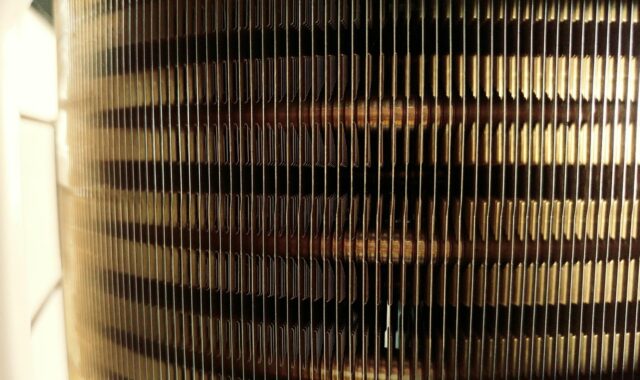
Most small four-stroke kart engines are air-cooled. They depend on a flywheel fan, shrouds, clean fins, and clear air paths. Removing shrouds for appearance, enclosing the engine tightly in bodywork, or routing hot exhaust near the cooling intake can shorten engine life. Grass, dust, and oil film on cooling fins also reduce heat transfer.
Oil capacity is another thermal factor that is easy to overlook. Honda’s GX200 technical sheet lists 0.6 liters of engine oil capacity, which shows how little oil mass many small engines carry compared with automotive engines. Low oil level, wrong viscosity, long drain intervals, or sustained high-load running can quickly increase temperature and wear. Racing engines may also require specific kart racing oils or more frequent service than general-purpose utility engines.
Before finalizing an engine, check these installation details:
- Airflow path: Leave space around the recoil starter, fan inlet, cylinder shroud, and exhaust side.
- Exhaust direction: Keep exhaust heat away from the driver, fuel system, brake line, and body panels.
- Fuel system position: Avoid routing fuel lines close to hot surfaces or moving chain components.
- Mount stiffness: Use a flat engine plate and correct fasteners so chain tension does not shift under load.
- Service access: Oil drain, spark plug, air filter, and carburetor adjustments should be reachable without removing half the kart.
For broader context on how heat, airflow, lubrication, and cooling layout affect small power units, see the engine and thermal systems section. See also: braking and chassis.
Safety, emissions, and compliance checks before purchase
Engine selection also has a regulatory and safety side. The U.S. Environmental Protection Agency states that small spark-ignition engines are subject to exhaust and evaporative emission standards, with Phase 3 exhaust standards taking effect in 2011 or 2012 depending on engine size. For buyers and builders, new engines should have proper certification labeling and documentation, especially when imported, sold, or installed in new equipment.
Consumer Product Safety Commission business guidance describes a fun-kart, under ASTM F2011 terminology, as a commercially sold four-wheel motorized vehicle for private off-road recreational use, with maximum speeds over 12 mph but not exceeding 40 mph. The same CPSC guidance notes that there is no mandatory CPSC standard for fun-karts, while ASTM F2011 is identified as a voluntary standard representing industry best practices. ASTM F2007 separately covers concession go-karts and facilities where public or member use is offered for a fee.
Those distinctions matter. A backyard project, a consumer fun kart, a concession kart, and a race kart may fall under different rules, insurance expectations, and technical standards. Engine swaps that bypass governors, raise top speed, or remove guards can move a kart outside its original design assumptions. At minimum, verify throttle return, kill switch function, chain guarding, brake performance, steering integrity, seat mounting, and hot-surface shielding before increasing output.
A practical go kart engine selection checklist
Use this checklist before comparing brands or price points:
- Define the use case. State whether the kart is for youth recreation, adult yard use, rental operation, organized racing, or a custom project.
- Confirm rule limits. Racing classes, concession operations, and local regulations may specify displacement, restrictors, governors, or maximum speed.
- Measure the chassis. Check engine plate dimensions, shaft height, chain line, exhaust clearance, and driver legroom.
- Match the PTO shaft. Verify shaft diameter, length, keyway, rotation direction, and whether the clutch or torque converter fits.
- Choose the driveline first. Select the clutch or torque converter, sprockets, chain size, and tire diameter as a system.
- Protect the engine from heat and dirt. Keep fan flow open, use the correct air filter, and avoid recirculating exhaust heat.
- Do not outrun the brakes. Any engine upgrade should trigger a brake, tire, and steering inspection.
- Plan maintenance access. An engine that is difficult to service is more likely to run with dirty oil, a clogged filter, or loose fasteners.
If two engines appear similar on paper, choose the one with better documentation, parts availability, and compatibility with the kart’s intended use. A published torque curve, oil specification, mounting drawing, and emissions label are more useful than vague horsepower claims.
Maintenance signals and upgrade limits
A well-matched engine can still perform poorly if basic maintenance is ignored. Hard starting, clutch smoke, chain slap, surging, plug fouling, or repeated stalling under load usually points to a system issue rather than an engine-size problem. Dirty air filters, old fuel, incorrect idle speed, weak return springs, worn belts, and misaligned sprockets are common causes of poor kart behavior.
Upgrade decisions should follow a sequence. First, restore the engine to known-good condition. Next, verify gearing and clutch engagement. Then inspect brakes, tires, steering, chain guards, and frame condition. Only after those checks should displacement, carburetion, exhaust, or rev-limit changes be considered. More power can make a kart less enjoyable if it adds heat, vibration, noise, and maintenance without improving control.
The strongest practical rule is simple: match the engine to the weakest safe component on the kart, not to the largest engine that will bolt on. The best-performing recreational kart is often the one that starts easily, accelerates predictably, stops confidently, and keeps its engine temperature under control during the kind of riding it actually does.
Frequently asked questions
What size go kart engine is common for adult recreational use?
Many adult recreational karts use small horizontal-shaft four-stroke engines in the 160 cc to 212 cc range, but the correct size depends on kart weight, driver weight, tire diameter, terrain, gearing, and brake capacity. Displacement alone does not define safe speed.
Is a 212 cc engine always faster than a 196 cc engine?
No. A 212 cc engine may have more displacement, but top speed and acceleration depend on governor setting, gearing, clutch or torque converter behavior, tire size, load, and engine condition. A well-geared 196 cc setup can feel better than a poorly matched larger engine.
Can a vertical-shaft lawn mower engine be used on a kart?
It is usually not the practical choice for a typical chain-drive kart because most kart clutches and torque converters are designed around horizontal PTO shafts. Converting a vertical-shaft engine adds complexity, alignment problems, and safety concerns.
Should a go kart engine keep its governor?
For recreational and youth use, keeping the governor or another proper speed-control strategy is generally the safer approach. Removing or bypassing a governor can exceed the engine’s intended operating range and the kart’s original brake, tire, and chassis assumptions.
What is more important for reliability, horsepower or cooling?
Both matter, but cooling and lubrication often decide long-term reliability. An engine with modest power, clean cooling fins, correct oil, open airflow, and proper gearing will usually last longer than a higher-output engine that is overheated or overloaded.