Fiat 500e electrical system guide for battery, charging and range
What the Fiat 500e electrical system is built around
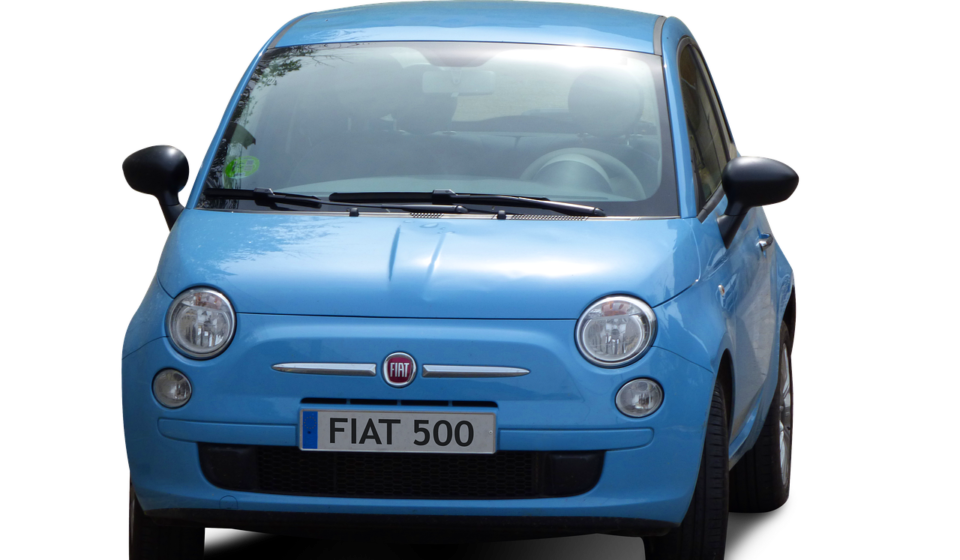
The Fiat 500e is a small battery-electric city car, but its electrical layout is more involved than the exterior suggests. For North American 2024-2026 models, Fiat and Stellantis materials describe a 42 kWh lithium-ion battery pack, an 87 kW front electric drive motor and an EPA-rated driving range of up to 149 miles. That makes the 500e a useful case study for vehicle electrics: it replaces the starter, alternator, exhaust and fuel-system logic of a combustion car with a high-voltage battery, charging inlet, power electronics, DC-DC conversion, thermal management, software-controlled drive modes and a conventional low-voltage network.
For owners, technicians and parts researchers, the name “Fiat 500e” needs context. The earlier U.S. compliance-car 500e and the newer global 500e do not share every component. European and North American vehicles may also differ in charging connectors, trim packaging, lighting rules and regulatory equipment. Before ordering electrical parts, confirm the VIN, build year, market and service information.
Core electrical specifications at a glance
The figures most useful for electrical diagnosis and parts selection come from EPA/Department of Energy fuel-economy data, Fiat/Stellantis fleet specifications and Mopar owner documentation. Published values can vary by market and model year, but the North American 2024-2026 specification is built around the same core EV hardware.
| System area | Reported specification | Why it matters |
|---|---|---|
| High-voltage battery | 42 kWh lithium-ion pack; Fiat/Stellantis fleet material lists 352 volts | Defines range, charging energy, thermal load and high-voltage service precautions |
| Drive motor | 87 kW front electric drive motor, commonly listed at 117 hp and 162 lb-ft | Shows the 500e is tuned for urban response rather than long-distance performance |
| EPA range | 149 miles in the 2026 EPA/DOE Fuel Economy Guide for the standard 500e listing | Useful benchmark for expected real-world range, though weather and speed can reduce it |
| Efficiency | 116 MPGe combined, 127 city and 104 highway in EPA/DOE data | Highlights why the car is more efficient in city use than sustained highway driving |
| AC charging inlet | SAE J1772 for Level 1 and Level 2 AC charging in U.S. owner documentation | Determines home-charging compatibility and EVSE requirements |
| DC fast charging | Fiat materials cite DC fast charging capability, commonly up to 85 kW for the 42 kWh version | Important for trip planning and for diagnosing charge-port or fast-charge communication issues |
One voltage detail needs careful reading. Some marketing material describes the vehicle as a 400-volt EV, while U.S. fleet documents list a 352-volt battery pack. That is not necessarily a conflict. EV literature often uses a broad architecture label, while service and fleet documents may list nominal battery voltage. For parts work, the service manual and VIN-specific catalog should take priority over general marketing descriptions.
High-voltage battery and battery management
The 500e’s high-voltage battery supplies energy for propulsion, cabin climate support and DC-DC conversion. Fiat’s 42 kWh figure is the headline specification for the newer North American car, but service conditions are more variable. Battery performance depends on state of charge, cell temperature, software calibration, charging pattern and whether the vehicle is used mainly at city speeds or on highways.
The battery management system monitors temperature, voltage and operating limits. Owner documentation describes battery conditioning messages and notes that the vehicle may request specific actions when the high-voltage battery temperature is outside its preferred operating window. This matters in very cold or very hot conditions. A pack that is too cold may accept charge slowly, while a pack that is too hot may limit power or charging speed to protect the cells.
From a parts perspective, the high-voltage battery should not be treated like a removable consumer battery. It belongs to a regulated high-voltage system with interlocks, insulation monitoring, cooling hardware and defined service procedures. Reduced range, interrupted charging or warning messages can originate in the pack, but they can also come from the charge inlet, EVSE, onboard charger, software, 12-volt supply or temperature-control system. Accurate diagnosis should start with fault codes and service information, not with assumptions about battery failure.
Charging hardware and the role of the 12-volt system
The Fiat 500e uses external charging equipment to feed the vehicle’s onboard charging and battery-management systems. Mopar owner documentation for the 2024 U.S. model identifies an industry-standard SAE J1772 charge inlet for AC Level 1 and Level 2 charging, and it advises using certified charging equipment. Level 1 charging uses a 120-volt household circuit and is slow. Level 2 charging at 240 volts is the more practical home solution for most drivers who depend on the car daily.
DC fast charging works differently. Instead of relying on the car’s onboard AC charger to convert household-style alternating current, a DC fast charger communicates with the vehicle and supplies high-voltage direct current under controlled conditions. Fiat/Stellantis materials have described the 42 kWh 500e as capable of DC fast charging, with commonly published figures of up to 85 kW and a 0-80 percent session around 35 minutes under suitable conditions. Actual charging speed depends on battery temperature, starting state of charge, charger output, station condition and software limits.
The conventional 12-volt system remains important. Like other EVs, the 500e uses low-voltage power for modules, locks, lighting controls, infotainment, contactors and startup logic. A weak 12-volt battery or poor low-voltage connection can create symptoms that resemble high-voltage faults, including failure to enter ready mode, communication errors, warning lights or charging handshake problems. For any EV electrical complaint, checking the 12-volt battery condition, ground points and fuse protection is still a basic first step.
Range, efficiency and why city driving suits the 500e
The EPA/DOE data for the 2026 Fuel Economy Guide lists the Fiat 500e at 116 MPGe combined, with higher city efficiency than highway efficiency. That pattern matches the car’s design. A compact EV with regenerative braking can recover energy in stop-and-go driving, while highway driving increases aerodynamic load and keeps the motor under higher continuous demand.
The 149-mile EPA range should be read as a comparison value, not a guarantee. EPA range and fuel-economy ratings are standardized estimates for comparing vehicles. Real range can fall in cold weather, with aggressive acceleration, high cabin heat use, underinflated tires, roof accessories, repeated highway driving or heavy use of defrost. Short urban trips in mild weather, by contrast, may make the car feel more efficient than the headline range suggests.
For parts and maintenance planning, range complaints should be separated into three groups. The first is normal operating conditions, such as winter range loss or high-speed consumption. The second is accessory or low-voltage issues, such as dragging brakes, tire-pressure problems, failing sensors or a weak 12-volt battery causing module errors. The third is a true high-voltage or charging-system fault. Treating every range concern as battery degradation can lead to unnecessary parts replacement. See also: braking and chassis.
Lighting, safety electronics and recall context
The 500e is not just a battery and motor. Its electrical package also includes LED lighting, driver-assistance sensors, digital instrumentation, infotainment, charge indicators and body-control modules. These systems matter because a small EV is subject to the same road-safety requirements as larger vehicles.
A useful example is NHTSA recall 25V715, submitted by Chrysler FCA US on October 21, 2025. The recall covered certain 2024-2025 Fiat 500e battery-electric vehicles built with missing plugs for the horizontal headlamp aim adjustment mechanism. NHTSA’s report described a potential noncompliance with Federal Motor Vehicle Safety Standard No. 108, because headlamps that can be improperly adjusted may reduce visibility or create glare for oncoming traffic. The remedy described in the recall report was dealer installation of headlight adjustment plugs.
This does not mean every 500e has a headlamp defect. Recall applicability is VIN-specific and can change after a repair is completed. The lesson for electrical parts buyers is narrower but important: lighting hardware is regulatory hardware. A headlamp, control module, sensor bracket or connector that fits physically may still be wrong if it does not match the vehicle’s market, model year or safety specification.
Parts considerations for owners and technicians
The safest way to approach Fiat 500e electrical parts is to divide the car by voltage domain and function. High-voltage propulsion components, AC/DC charging components and thermal-management parts should be handled only by qualified EV technicians using the correct isolation procedures. Low-voltage parts such as bulbs, fuses, relays, switches, sensors and 12-volt batteries are more familiar, but they still interact with networked control modules.
- Confirm the generation: Do not assume parts for an older 2013-2019 U.S. 500e fit the newer global 500e.
- Check the market: U.S., Canadian and European cars may differ in charging equipment, lighting and regulatory labels.
- Use the VIN: Trim names and model years are not enough for electronic modules, harnesses or lamps.
- Separate AC and DC charging issues: A car that charges on Level 2 but not on DC fast charging may have a different fault path than a car that will not charge anywhere.
- Test the 12-volt system early: Low-voltage instability can cause misleading EV warnings.
- Avoid unsupported substitutions: High-voltage connectors, orange cables, contactors and battery-cooling parts are not generic components.
For workshop content and parts research, the Fiat 500e shows how tightly modern vehicle electrics are integrated. A charging complaint may involve software, thermal conditioning, grid equipment, communication pins and battery temperature. A lighting complaint may involve compliance rules as well as the lamp itself. Good diagnosis is therefore less about replacing the most expensive component and more about following the system path from power source to module to load.
Frequently asked questions
Is the Fiat 500e a 400-volt EV?
It is commonly described in broad terms as a 400-volt-class EV, while U.S. Fiat/Stellantis fleet material lists a 352-volt, 42 kWh battery pack. For service and parts selection, rely on VIN-specific documentation rather than the marketing label.
What is the EPA range of the Fiat 500e?
The EPA/DOE 2026 Fuel Economy Guide lists the standard Fiat 500e at 149 miles of driving range and 116 MPGe combined. Real-world range can be lower or higher depending on temperature, speed, tires, terrain and accessory use.
Can the Fiat 500e use normal home charging?
Yes. U.S. owner documentation describes SAE J1772 AC charging for Level 1 and Level 2. Level 1 is slow and best for light use, while a properly installed 240-volt Level 2 setup is more practical for regular daily charging.
Why can a 12-volt battery problem affect an EV?
The 12-volt system powers control modules, relays, locks, communications and startup logic. If that system is weak, the high-voltage battery may be healthy but the car can still show warning lights, fail to wake correctly or have charging communication problems.
Should owners replace Fiat 500e high-voltage parts themselves?
No. High-voltage EV parts require proper isolation, protective equipment and service procedures. Owners can document symptoms and check basic items such as tire pressure, charging schedule and 12-volt battery condition, but high-voltage diagnosis should be left to qualified EV technicians.