Car engine parts explained for modern engine and thermal systems
Why car engine parts still matter in modern vehicles
Car engine parts are no longer evaluated only by whether they keep a vehicle running. In modern engine and thermal systems, each component can affect fuel efficiency, emissions, heat rejection, oil control, durability and service cost. A piston, thermostat, injector, gasket or sensor may influence combustion quality as much as mechanical reliability. Buyers, repair professionals and parts distributors therefore need to view the engine as a connected system, not as a list of isolated replacement items.
The basic purpose of an internal combustion engine is still straightforward: controlled combustion pushes pistons, the pistons turn a crankshaft, and the crankshaft delivers rotating force to the drivetrain. What has changed is the operating environment. Tighter emissions rules, downsized turbocharged engines, hybrid powertrains and longer service intervals have made material quality, thermal stability and fitment accuracy more important.
This article explains the main engine part groups, how they work together, and which practical checks matter when selecting replacement components. For related coverage, visit the engine and thermal systems section.
The mechanical core that turns combustion into motion
The mechanical core of the engine includes the parts that contain combustion pressure and convert it into rotation. These components carry high loads, work at high temperatures and depend on accurate lubrication and cooling. A defect in one part can damage others, so diagnosis should consider the full assembly rather than a single failed item.
Engine block and cylinder head
The engine block is the main structural body of the engine. It houses the cylinders, coolant passages, oil galleries and crankcase area. Its material and machining quality affect cylinder sealing, oil control, coolant flow and vibration. Cast iron is still used in some heavy-duty or durability-focused applications, while aluminum alloys are common in passenger cars because they reduce weight and transfer heat quickly.
The cylinder head sits above the block and forms the top of the combustion chambers. It carries valves, camshafts in many modern engines, spark plugs or injectors, intake and exhaust ports, and coolant passages. Because the head is exposed to intense heat from combustion and exhaust flow, flatness, crack resistance and gasket sealing are critical. Overheating can warp the head, damage the head gasket and allow coolant, oil and combustion gases to mix.
Pistons, rings and connecting rods
Pistons move up and down inside the cylinders. They must be light enough for fast acceleration but strong enough to withstand repeated pressure and heat. Piston rings seal combustion pressure, control oil on the cylinder wall and transfer heat from the piston to the cylinder. Worn or stuck rings can cause low compression, high oil consumption and visible exhaust smoke.
Connecting rods link the pistons to the crankshaft. They transmit force every time combustion occurs, so material strength, bearing quality and dimensional accuracy are essential. Even a short lubrication failure can damage rod bearings and lead to knocking noise, metal debris and crankshaft wear.
Crankshaft, bearings and flywheel
The crankshaft converts piston motion into rotation. It runs on main bearings and is balanced to reduce vibration. Bearing clearances, oil film strength and surface finish matter because the crankshaft is loaded thousands of times per minute. If bearings wear, oil pressure may drop and the engine may develop a deep knocking sound.
The flywheel or flexplate connects engine output to the clutch or automatic transmission. It smooths engine pulses and helps the drivetrain engage. In many modern vehicles, dual-mass flywheels add vibration control, but they also become a wear item that can create noise or shudder when damaged.
Air, fuel and ignition parts that control combustion
Combustion quality depends on how precisely the engine meters air, injects fuel and initiates ignition. These systems have become more complex as automakers seek higher output from smaller engines while limiting fuel consumption and exhaust pollutants.
Intake, throttle, turbocharger and EGR components
The intake system carries filtered air into the engine. It includes the air filter housing, intake ducts, throttle body, intake manifold and, in many engines, turbocharger plumbing. A leak after the mass airflow sensor or pressure sensor can cause rough idle, lean mixture faults and poor drivability.
Turbochargers are now common because they allow smaller engines to produce more torque. A turbocharger uses exhaust energy to compress intake air, but it also places greater demand on oil quality, heat control and charge-air cooling. Failed turbo seals can lead to oil burning, while worn bearings may cause whining noise and boost loss.
Exhaust gas recirculation, or EGR, routes a measured amount of exhaust gas back into the intake stream under some operating conditions. This can reduce combustion temperature and nitrogen oxide formation. However, soot and oil vapor can build deposits in EGR valves, coolers and intake passages, especially in engines that frequently operate at low load.
Fuel delivery and injection parts
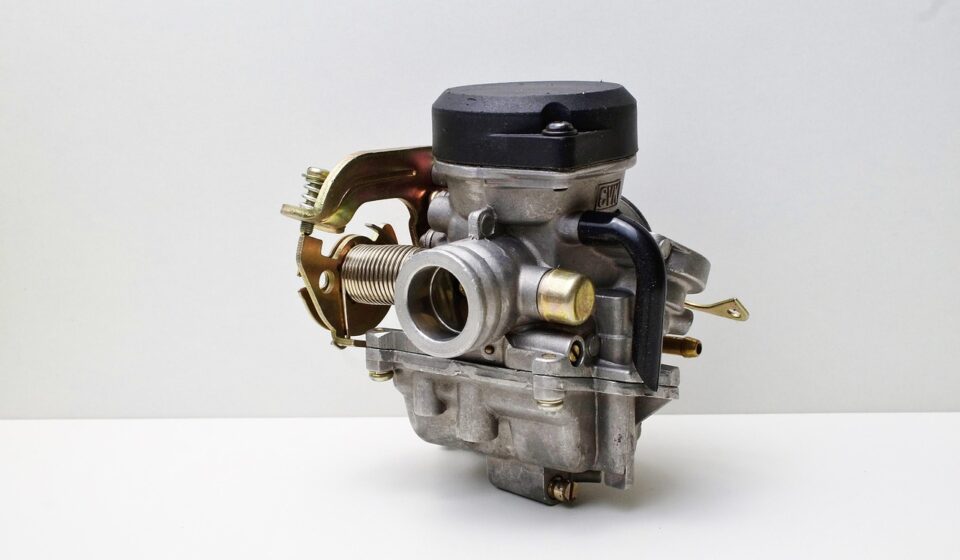
Fuel system components include the fuel pump, filter, pressure regulator, fuel rail and injectors. Port fuel injection sprays fuel into the intake port, while direct injection sprays fuel into the combustion chamber at much higher pressure. Direct injection can improve efficiency and control, but the injectors face more heat, pressure and deposit exposure.
Replacement injectors should match the engine code, pressure specification, connector type and calibration requirements. Poor spray pattern, incorrect flow rate or low-quality sealing can cause misfires, hard starting, fuel odor, high emissions and, in severe cases, piston damage.
Spark plugs, coils and engine sensors
Gasoline engines rely on spark plugs and ignition coils to start combustion at the correct moment. Plug heat range, electrode design and gap must match the engine specification. Turbocharged and direct-injection engines can be more sensitive to weak ignition because cylinder pressure is higher.
Sensors allow the engine control unit to adjust fuel, spark, boost, valve timing and emissions systems. Key sensors include crankshaft position, camshaft position, oxygen, coolant temperature, manifold pressure, mass airflow and knock sensors. A mechanical engine part may be in good condition, yet the engine can still run poorly if sensor data is inaccurate.
Lubrication and sealing parts protect the engine from wear
Many engine failures do not begin with one dramatic breakage. They often start with heat, contamination, poor lubrication or sealing loss. Lubrication and sealing parts are therefore as important as major metal components.
The oil pump circulates oil through galleries to bearings, camshafts, timing components, piston cooling jets and turbochargers where fitted. Oil filters remove particles that would otherwise wear bearings and precision surfaces. Oil coolers help control temperature in engines used for high load, turbocharging or towing duty.
Sealing parts include head gaskets, valve cover gaskets, oil pan gaskets, crankshaft seals, camshaft seals, intake gaskets and exhaust gaskets. These parts may look simple, but they must handle pressure, oil, coolant, fuel vapor and temperature cycling. Modern gasket materials are often designed for a specific surface finish and clamping load, so correct installation is as important as material quality.
| Part group | Main function | Common warning sign | Buyer check |
|---|---|---|---|
| Piston rings | Seal combustion pressure and control oil | Blue smoke, oil consumption, low compression | Match bore size, coating and engine code |
| Oil pump and filter | Maintain oil pressure and cleanliness | Low oil pressure warning, bearing noise | Confirm flow, pressure and bypass specifications |
| Head gasket | Seal combustion, coolant and oil passages | Overheating, coolant loss, white smoke | Use the correct thickness and bolt procedure |
| Timing chain or belt | Synchronize crankshaft and camshaft timing | Rattle, hard start, misfire, fault codes | Replace related tensioners, guides and pulleys |
Cooling and thermal systems are now design priorities
Every combustion engine produces heat that must be managed. Cooling is not only about preventing overheating. It also supports emissions control, oil life, passenger comfort, turbocharger durability and, in electrified vehicles, battery or hybrid system operation. See also: braking and chassis.
The coolant circuit
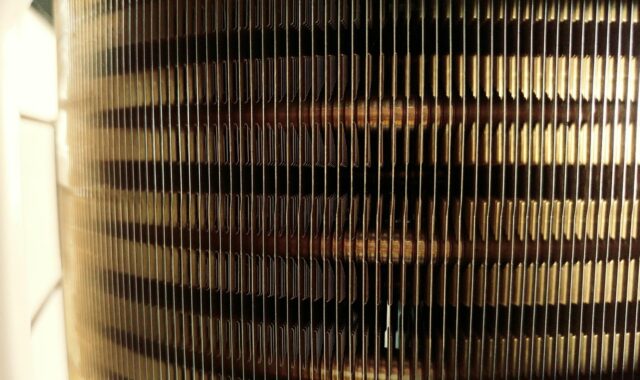
A typical liquid-cooled engine uses a water pump, thermostat, radiator, radiator fan, coolant hoses, heater core, expansion tank and temperature sensors. Coolant absorbs heat from the block and cylinder head, transfers it to the radiator, and is cooled by airflow. The thermostat controls warm-up by regulating flow. If it sticks open, the engine may run too cool and use more fuel. If it sticks closed, overheating can occur quickly.
Radiators and coolant hoses should be selected for pressure rating, heat resistance, corrosion protection and vehicle-specific packaging. A radiator that fits physically but has lower cooling capacity may cause problems under high ambient temperature, long climbs, towing or stop-and-go traffic.
Thermal management in downsized and hybrid engines
Modern engines often use electronic thermostats, variable-speed pumps, active grille shutters and separate cooling circuits. These designs help the engine warm up quickly, reduce friction during cold operation and keep high-heat components under control. Hybrid vehicles add another layer because the engine may stop and restart frequently, while the battery, power electronics and cabin heating systems may have their own thermal needs.
For parts buyers, this means cross-referencing by vehicle identification, engine code and production date is safer than relying only on engine displacement. Two engines with similar size may use different pumps, sensors, connectors or coolant-routing strategies.
Emissions systems are closely linked to engine part quality
Emission control should not be treated as separate from the engine. Misfires, oil burning, coolant leaks, poor fuel atomization and incorrect air measurement can damage catalysts, particulate filters and oxygen sensors. A low-cost engine part that fails early can therefore lead to a much more expensive emissions-system repair.
In the United States, the Environmental Protection Agency finalized multipollutant standards in March 2024 for light-duty and medium-duty vehicles beginning with model year 2027. EPA also issued later rulemaking activity related to Tier 4 criteria-pollutant implementation, showing that timing and compliance details can continue to evolve before full phase-in. For parts planning, the practical takeaway is that clean combustion, accurate sensors, low oil consumption and durable aftertreatment compatibility remain central requirements.
In the European Union, Regulation (EU) 2024/1257, commonly known as Euro 7, was adopted in 2024 and introduces a broader framework that includes exhaust emissions, brake particle emissions, tyre abrasion and battery durability. For new M1 and N1 passenger cars and vans, the regulation has application dates in late 2026 for new types and late 2027 for new vehicles. Even when exhaust limits for some light vehicles remain close to Euro 6 levels, the direction of regulation is clear: the vehicle is evaluated as a complete emissions and durability system.
For replacement parts, this increases the importance of correct fitment and consistent performance. Oxygen sensors, exhaust gas temperature sensors, EGR valves, catalytic converters, evaporative emissions parts and crankcase ventilation components must match the original system strategy. An incorrect component may fit the pipe or connector but still create fault codes or inspection failures.
How to evaluate replacement engine parts
Price matters, but it should not be the first filter for parts that operate inside the engine or directly beside it. A stronger evaluation starts with fitment, specification, material, manufacturing consistency and service context.
- Confirm the exact application. Use vehicle make, model, year, engine code, fuel type, emissions market and production date where available.
- Check material and coating requirements. Pistons, rings, bearings, valves and gaskets may use specific coatings or alloys for heat, friction and corrosion resistance.
- Consider system replacement. A timing belt job may also require tensioners, pulleys, water pump and seals. Replacing only one worn part can shorten the life of the repair.
- Respect torque and installation procedures. Many cylinder head bolts, crank bolts and injector seals are torque-to-yield or single-use items.
- Look for contamination causes. A failed turbocharger, bearing or head gasket may leave debris, coolant or oil residue that can damage the replacement part.
- Compare electrical details. Sensors and actuators should match connector shape, pin count, signal type and calibration range.
A sound part selection process also asks why the original part failed. If a new radiator is installed without checking the cap, fan, thermostat and coolant condition, the same overheating complaint may return. If a new oxygen sensor is installed while the engine is burning oil, the sensor may fail again because the root cause remains.
Key trends shaping the engine parts market
The engine parts market is changing, but it is not disappearing. Electric vehicles reduce the number of traditional combustion components in new platforms, yet the global vehicle parc still includes a large number of gasoline, diesel, hybrid and plug-in hybrid vehicles. Many will need maintenance for years.
Three trends are especially relevant. First, engines are more thermally stressed because downsizing, turbocharging and emissions control concentrate heat in smaller packages. Second, diagnostics are more data-driven, so sensors and electronically controlled parts carry greater value. Third, regulatory pressure is pushing better durability, lower oil consumption and cleaner operation over longer service life.
For distributors and repair professionals, older purchasing habits are becoming riskier. A part that looks interchangeable may not meet the thermal, electronic or emissions requirements of a specific engine version. Strong parts programs increasingly depend on accurate catalog data, reliable manufacturing and a system-level understanding of engine behavior.
Frequently asked questions
What are the most important car engine parts to know?
The most important parts include the engine block, cylinder head, pistons, piston rings, connecting rods, crankshaft, camshaft, valves, timing chain or belt, oil pump, fuel injectors, spark plugs, sensors, water pump, thermostat and radiator. Their importance depends on whether the focus is power, cooling, lubrication, emissions or repair cost.
Are engine and thermal system parts connected?
Yes. Cooling, oil temperature, combustion temperature and exhaust temperature directly affect engine durability. A weak thermostat, clogged radiator or failing water pump can damage gaskets, pistons, bearings and turbochargers. Thermal parts should be considered part of the engine reliability system.
Why do modern engines use more sensors?
Modern engines use sensors to control fuel injection, ignition timing, valve timing, boost pressure, emissions systems and cooling strategy. Better sensor data helps the engine control unit balance performance, fuel economy, emissions and component protection.
Should related parts be replaced together?
Often, yes. Timing belts are commonly replaced with tensioners, pulleys and sometimes the water pump. A head gasket repair may require head bolts, seals, coolant, oil and inspection of the cylinder head. Replacing related wear parts can reduce repeat labor and improve repair reliability.
What is the biggest mistake when buying engine parts?
The biggest mistake is choosing by appearance or lowest price without confirming the exact engine specification. Correct fitment, material quality, sealing design, sensor calibration and installation procedure are essential for modern engine and thermal systems.