BMW i4 eDrive40 battery, charging and electrical system explained

What the BMW i4 eDrive40 is really telling buyers
The BMW i4 eDrive40 is the long-range, rear-wheel-drive version of BMW’s electric Gran Coupe. Its main technical story sits under the familiar 4 Series-style body: battery capacity, power electronics, charging hardware and the way those systems affect range. For 2026 U.S. models, BMW and EPA information show an 83.9 kWh gross battery, usable capacity listed by BMW USA at 81.2 kWh, a 250 kW electrically excited synchronous motor and EPA-rated range of 333 miles with 18-inch wheels or 307 miles with 19-inch wheels.
The key 2026 update is the use of silicon carbide inverter technology. In simple terms, the inverter moves energy from the high-voltage battery to the motor, and lower conversion losses help the car use that stored energy more efficiently. For readers comparing EV hardware, charging behavior and vehicle electrics, the i4 eDrive40 is a useful example of how battery capacity, power electronics, wheel packages, software and charging access all shape the ownership experience.
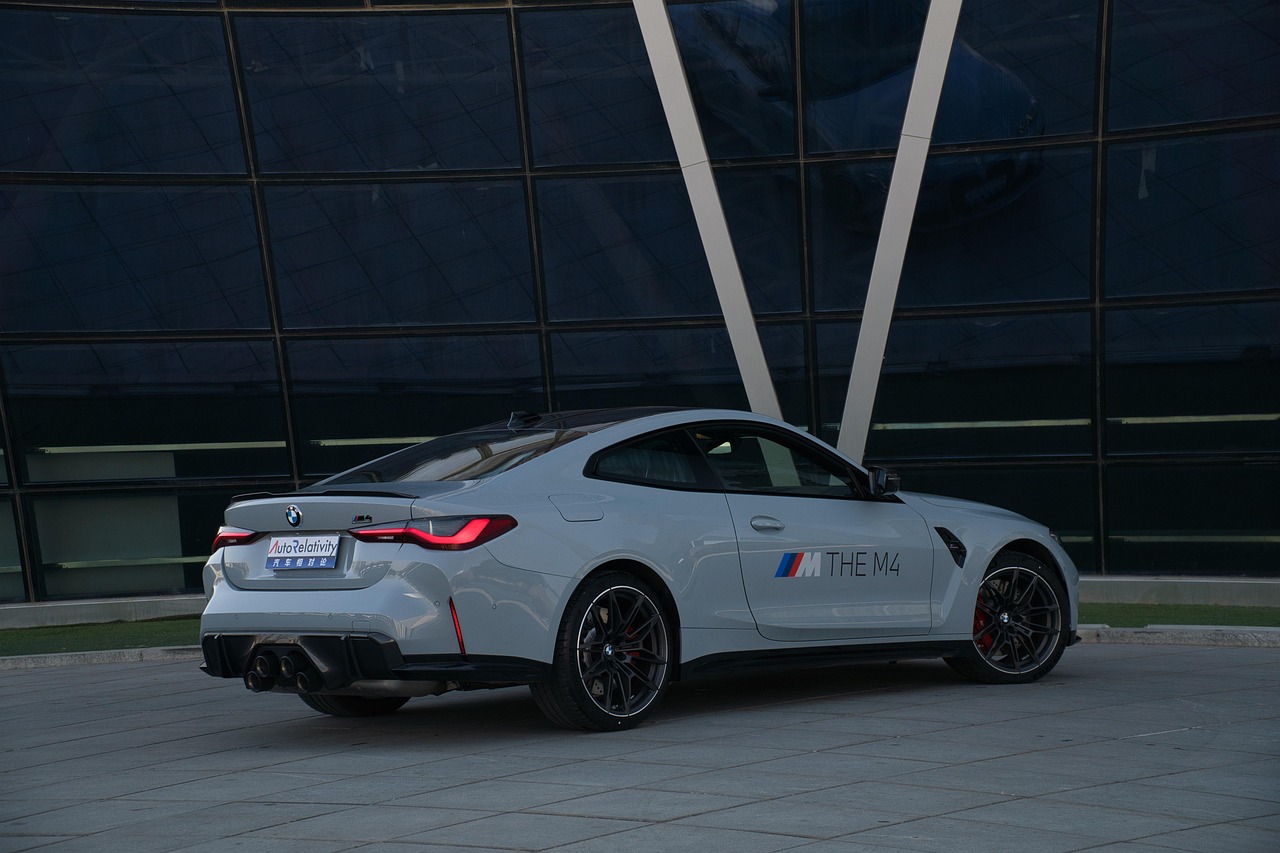
This article focuses on the electrical side of the BMW i4 eDrive40 rather than styling or luxury equipment. It uses publicly available information from BMW USA, BMW Group press material, EPA fuel-economy data and BMW owner/warranty documentation, summarized without external links. For more electrical-system explainers, see our vehicle electrics section.
Core electrical specifications at a glance
The eDrive40 badge identifies a single-motor, rear-wheel-drive i4, not the dual-motor xDrive40 or the performance-focused M model. For electrical-system analysis, the important point is that the eDrive40 pairs a relatively large battery with one rear electric drive unit. That reduces drivetrain complexity compared with all-wheel-drive versions and supports the model’s efficiency position in the i4 lineup.
| Item | BMW i4 eDrive40 detail | Why it matters |
|---|---|---|
| Drive layout | Rear-wheel drive, single rear motor | Fewer traction motors than AWD models, with efficiency as a core advantage |
| Motor type | 250 kW electrically excited synchronous motor in EPA listing | A high-output motor design without permanent magnets in the rotor |
| Battery | BMW USA lists 83.9 kWh gross and 81.2 kWh usable capacity for current i4 models | Usable capacity is the more relevant number for range planning |
| EPA range | 333 miles with 18-inch wheels; 307 miles with 19-inch wheels in the 2026 EPA guide | Wheel and tire selection has a measurable effect on rated range |
| EPA efficiency | 118 MPGe combined with 18-inch wheels; 108 MPGe combined with 19-inch wheels | Shows the efficiency penalty from larger wheel packages |
| AC charging | BMW technical data has listed up to 11 kW AC charging | Useful for home Level 2 charging estimates |
| DC fast charging | BMW technical data has listed up to 205 kW DC fast charging and about 10-80 percent in 30 minutes under suitable conditions | Peak charging power is only part of the real charging curve |
These figures explain why the i4 eDrive40 is often treated as the range-oriented i4 configuration. It is not the highest-output version in the family, but it offers the strongest balance between battery size, motor count and energy consumption.
What changed for the 2026 BMW i4 eDrive40
BMW Group’s U.S. press release dated November 6, 2025 presented the 2026 i4 update as an efficiency improvement, not a full platform change. For the i4 eDrive40, the main technical update was the adoption of silicon carbide, or SiC, components in the inverter. BMW stated that the 2026 eDrive40 was expected to achieve more than 300 miles of range whether fitted with 18-inch or 19-inch wheels.
That detail matters because EV range gains do not always come from a larger battery. Here, the improvement was tied to power electronics. An inverter converts the battery’s DC energy into AC energy for the traction motor. A more efficient inverter wastes less energy as heat during that conversion, especially when load and operating temperatures are higher.
The EPA’s 2026 fuel-economy guide later gave more specific U.S. figures: 333 miles for the i4 eDrive40 Gran Coupe with 18-inch wheels and 307 miles with 19-inch wheels. Compared with BMW’s preliminary statement, the EPA data confirms the practical result: both listed wheel configurations remain above the 300-mile threshold.
For parts and repair readers, the lesson is straightforward. Modern EV range is not determined only by cell chemistry or pack size. Power modules, semiconductor materials, cooling, control software and tire packages can all change the final efficiency number.
Battery capacity, usable energy and range behavior
Battery-capacity figures can be confusing because automakers and third-party references may use gross capacity, net capacity or usable capacity. Gross capacity is the total energy storage of the pack. Usable capacity is the portion the vehicle allows the driver to use in normal operation. Automakers normally reserve some energy buffer to protect battery health, maintain performance and avoid deep discharge.
For the current U.S. i4 lineup, BMW USA lists battery capacity at 83.9 kWh, with 81.2 kWh usable. Older BMW technical-data documents for the i4 eDrive40 have also shown gross capacity of 83.9 kWh and net capacity in the low-81 kWh range. The practical takeaway is consistent: the eDrive40 uses an approximately 84 kWh-class pack with a little over 81 kWh available for driving.
The gap between the 18-inch and 19-inch EPA range ratings shows how vehicle electrics interact with mechanical choices. Larger wheels can add mass and rolling resistance, and wider or sportier tires can increase energy use. In the EPA guide, the 19-inch version is rated 26 miles lower than the 18-inch version. For drivers who often cover long highway routes, that is a meaningful difference, not a minor label variation.
Real-world range will still move above or below the EPA rating. Cold weather, high speeds, frequent acceleration, cabin heating, roof accessories, tire pressure and elevation changes all affect consumption. The EPA number is best used as a standardized comparison tool, not a guarantee for every trip.
Charging hardware and connector access
The i4 eDrive40 supports AC charging for home or workplace use and DC fast charging for longer trips. BMW technical specifications for the i4 eDrive40 have listed up to 11 kW AC charging, which fits typical overnight Level 2 charging needs for many owners. The EPA guide lists a 240 V charging time of 9 hours for both 18-inch and 19-inch 2026 i4 eDrive40 entries.
For DC fast charging, BMW technical data has listed a maximum charging rate of up to 205 kW and a 10-80 percent fast-charge time of about 30 minutes under suitable charger, temperature and battery-state conditions. The conditions matter. EVs do not charge at peak power from empty to full. The charging curve usually rises, peaks and then tapers as the battery approaches higher states of charge. Battery temperature, charger output, site reliability and software limits can all affect the session.
BMW USA has also published information on Tesla Supercharger access for BMW EVs. As of current BMW USA guidance, model-year 2022-2026 BMW EVs can use NACS Partner Tesla Supercharger stations with the BMW-approved Lectron Vortex Plus DC adapter after the vehicle receives the required Remote Software Upgrade. BMW also says select Tesla Supercharger stations with Magic Dock can be used because the adapter is built into the station. Not every Tesla site is open to non-Tesla vehicles, so BMW directs drivers to the vehicle navigation system or My BMW App to identify compatible stations.
This connector transition is especially relevant for i4 owners because many vehicles on the road use a CCS charging port, while North American public charging infrastructure is increasingly incorporating NACS access. The adapter and software requirement mean charging compatibility is now partly mechanical and partly digital. See also: braking and chassis.
Electrical components owners should understand
High-voltage battery system
The high-voltage battery is the i4 eDrive40’s energy source for propulsion and also supports other electrical functions through conversion hardware. BMW warranty documentation describes the high-voltage lithium-ion battery as a sealed system and warns against opening or removing it outside qualified service procedures. This is more than a warranty point. High-voltage EV systems can create serious shock and fire hazards if handled incorrectly.
From a parts perspective, the battery pack should be viewed as a managed system, not just a container of cells. It depends on battery-management electronics, temperature control, insulation monitoring, contactors, current sensing and crash-safety logic. A charging or drivetrain warning may involve software, cooling, wiring, sensors or modules rather than a simple bad-battery conclusion.
Inverter and electric drive unit
The inverter is one of the most important electrical components in the 2026 eDrive40 update. By adopting SiC inverter components, BMW targeted lower energy loss between the battery and the motor. In practical terms, that can support better range without adding battery weight.
The motor itself is listed by the EPA as an EESM, an electrically excited synchronous motor. Unlike permanent-magnet synchronous motors, an EESM does not rely on rare-earth permanent magnets in the rotor. BMW has used this technology as part of its fifth-generation eDrive approach, integrating electric motor, power electronics and transmission functions into compact drive hardware.
Low-voltage system and DC-DC conversion
Like other modern EVs, the i4 still needs a low-voltage electrical system for control units, lighting, access systems, infotainment, safety electronics and communication modules. EVs normally use a DC-DC converter to step high-voltage battery energy down to low-voltage supply, supporting the 12-volt battery and the vehicle’s conventional electrical network.
This is why EV electrical diagnosis cannot stop at the traction battery. A weak low-voltage battery, software update issue, communication fault or charging-control problem can create symptoms that feel larger than the failed component. For parts readers, the 12-volt side remains highly relevant even in a high-voltage vehicle.
Maintenance and repair implications
The BMW i4 eDrive40 removes many internal-combustion service items, but it does not make the car simple. The main service focus shifts toward software, cooling, brakes, tires, charging equipment, low-voltage power supply and high-voltage safety checks.
- Charging faults need structured diagnosis. A failed session can involve the station, cable, charge port, adapter, payment authorization, software, battery temperature or onboard charging electronics.
- Tires affect both range and cost. The EPA difference between 18-inch and 19-inch models shows that tire and wheel choices are part of the energy system, not just appearance.
- High-voltage work is not a DIY area. BMW service information and warranty language emphasize qualified personnel for high-voltage battery work.
- Software status matters. Supercharger access through a BMW-approved NACS adapter depends on a Remote Software Upgrade, making software level part of charging compatibility.
- Cooling remains critical. Batteries, inverters and motors generate heat. Efficiency and fast-charging performance depend on keeping those systems within operating range.
For used-car shoppers, service history deserves close review. A high-voltage battery module replacement, charging-port repair or low-voltage battery issue does not automatically mean a vehicle should be rejected, but it should prompt documentation review and professional inspection.
Frequently asked questions
What is the EPA range of the 2026 BMW i4 eDrive40?
The 2026 EPA fuel-economy guide lists the BMW i4 eDrive40 Gran Coupe at 333 miles with 18-inch wheels and 307 miles with 19-inch wheels. Those are standardized U.S. ratings, not guaranteed real-world results.
How big is the BMW i4 eDrive40 battery?
BMW USA lists the current i4 battery at 83.9 kWh gross capacity and 81.2 kWh usable capacity. For range planning, usable capacity is the more practical number because it represents the energy the vehicle normally makes available for driving.
Why did the 2026 i4 eDrive40 gain range?
BMW attributed the 2026 efficiency improvement to silicon carbide inverter components. The inverter manages energy transfer from the high-voltage battery to the electric motor, so reducing conversion losses can improve range without increasing battery size.
Can the BMW i4 eDrive40 use Tesla Superchargers?
According to BMW USA guidance, model-year 2022-2026 BMW EVs can use NACS Partner Tesla Supercharger stations with the BMW-approved Lectron Vortex Plus DC adapter after the required Remote Software Upgrade. Select Magic Dock Supercharger stations can also work because the adapter is built into the station.
Is the i4 eDrive40 the best i4 for efficiency?
Within the 2026 EPA data, the rear-wheel-drive i4 eDrive40 with 18-inch wheels has the strongest listed i4 range and efficiency figures. The xDrive40 and M60 add more driven wheels or performance, but their EPA range ratings are lower.