E vehicle electrics explained for parts buyers and repair teams
What “e vehicle” means in vehicle electrics
An e vehicle, more commonly called an electric vehicle or EV, is not simply a conventional car with the engine removed. Its value, performance and service risk are concentrated in the electrical system: the traction battery, inverter, motor, DC-DC converter, onboard charger, charge inlet, thermal controls, wiring, sensors and safety isolation devices. For parts buyers and repair teams, vehicle electrics are no longer a secondary category. They determine whether a vehicle can drive, charge safely, communicate with charging equipment and protect occupants when a fault occurs.
The market context explains why this matters. The International Energy Agency’s Global EV Outlook 2026 reported that electric car sales exceeded 20 million globally in 2025, grew by about 20% from 2024 and reached around 25% of new car sales. The same report notes that electric cars include battery electric and plug-in hybrid electric vehicles. That scale is moving more electrical components into mainstream parts planning, quality control and repair training. (iea.org)

Public definitions also matter. The U.S. Energy Information Administration distinguishes battery electric vehicles, which run only on rechargeable battery energy, from plug-in hybrid electric vehicles, which combine an electric motor, rechargeable battery and internal combustion engine. Conventional hybrids use electric assistance but are not plugged in. For vehicle electrics, those differences affect battery voltage, charging hardware, cooling layout, diagnostic strategy and replacement-part compatibility. (eia.gov)
The electrical architecture inside an e vehicle
The simplest way to understand EV parts is to divide the vehicle into energy storage, power conversion, propulsion, charging, thermal control and auxiliary electrical loads. These systems work as a chain. A battery pack stores DC energy, the inverter converts it for the motor, the DC-DC converter supplies low-voltage systems, and the onboard charger manages AC charging from the grid. The U.S. Department of Energy describes electric drive technologies such as the motor, inverter, boost converter and onboard charger as essential components of hybrid and plug-in electric propulsion systems. (energy.gov)
| System | Main function | Parts and service relevance |
|---|---|---|
| Traction battery pack | Stores high-voltage DC energy | Requires battery management, thermal control, crash protection and strict isolation testing |
| Battery management system | Monitors cells, voltage, temperature and state of charge | Sensor accuracy and software compatibility are critical |
| Inverter | Converts battery DC power to AC power for the motor | Failure can cause loss of drive; cooling and semiconductor reliability matter |
| Electric motor | Produces traction torque | Usually has fewer wear parts than combustion drivetrains, but depends on inverter control and cooling |
| DC-DC converter | Steps high-voltage battery power down for low-voltage loads | Supports lighting, controls, infotainment, pumps and the 12 V or 48 V bus |
| Onboard charger | Converts AC grid power to DC battery charging power | Connector, charging rate, thermal limits and communication protocols affect compatibility |
| Charge inlet and cables | Connect the vehicle to EV supply equipment | Mechanical wear, sealing, pin temperature and interlock condition are common inspection points |
| Thermal management | Controls temperature of battery, power electronics and cabin | Coolant quality, pumps, valves, heat exchangers and sensors affect range and durability |
Power electronics link these blocks. DOE material explains that inverters convert DC battery energy to AC motor power, DC-DC converters increase or decrease battery voltages for different vehicle loads, and onboard chargers convert AC grid energy to the DC energy needed to recharge batteries. For buyers, the practical point is that a visually similar module may not be interchangeable across voltage class, connector type, cooling plate design, communication software or vehicle platform. (energy.gov)
High voltage, low voltage and 48 V are different design layers
The high-voltage traction layer
Most EV traction systems use a high-voltage battery and orange high-voltage cabling to move large amounts of energy efficiently. The exact voltage varies by platform, but the design purpose is similar: reduce current for a given power level, limit heat losses and support fast acceleration or fast charging. From a parts perspective, this layer includes high-voltage connectors, contactors, fuses, relays, busbars, insulation monitoring, service disconnects and crash-triggered isolation devices.
High-voltage components should be selected by exact vehicle application, not by approximate size or appearance. Connector keying, pin count, sealing, current rating, thermal path and software recognition can all differ. A mismatch can create charging faults, drive warnings or safety hazards. For repair teams, de-energizing procedures, personal protective equipment and manufacturer service information are not optional details; they are part of the electrical design.
The low-voltage auxiliary layer
EVs still need low-voltage power for body electronics, lamps, locks, infotainment, safety modules, communication networks, sensors, pumps and many control units. The low-voltage battery may look familiar, but its role can be more critical than in a conventional vehicle because contactors, control modules and wake-up logic may rely on it before the high-voltage battery is connected. A weak auxiliary battery or DC-DC fault can therefore prevent starting, charging or diagnostic communication even when the traction battery has energy.
The 48 V layer
Some vehicle platforms use 48 V systems to support higher electrical loads while limiting current compared with 12 V circuits. ISO 21780:2020 covers road vehicle 48 V supply voltage electrical requirements and tests, which shows that 48 V is a defined electrical environment with its own testing expectations, not just a marketing term. (iso.org)
For parts planning, 48 V components should not be treated as simple 12 V upgrades. Motors, compressors, pumps, actuators, converters, connectors and protection devices must match the specified voltage range, transient behavior and control strategy. This becomes more important as electric compressors, active chassis systems, steer-by-wire functions and high-power accessories increase the load on auxiliary networks.
Charging hardware and communication points matter for compatibility
Charging is part of vehicle electrics, not an external convenience feature. The vehicle inlet, onboard charger, battery management system, thermal controls and communication lines must work with the charging station. In AC charging, the onboard charger performs the AC-to-DC conversion inside the vehicle. In DC fast charging, the off-board charger supplies DC power, while the vehicle still controls limits, battery conditioning and safety handshakes.
Connector standards are changing in visible ways, especially in North America. SAE J1772, revised in January 2024, covers physical, electrical, functional and performance requirements for conductive charging of EV and plug-in hybrid vehicles in North America. SAE J3400, revised in September 2024, covers the North American Charging System for electric vehicles. These standards do not make every vehicle and charger automatically compatible; hardware, adapters, software, authorization and manufacturer guidance still matter. (saemobilus.sae.org)
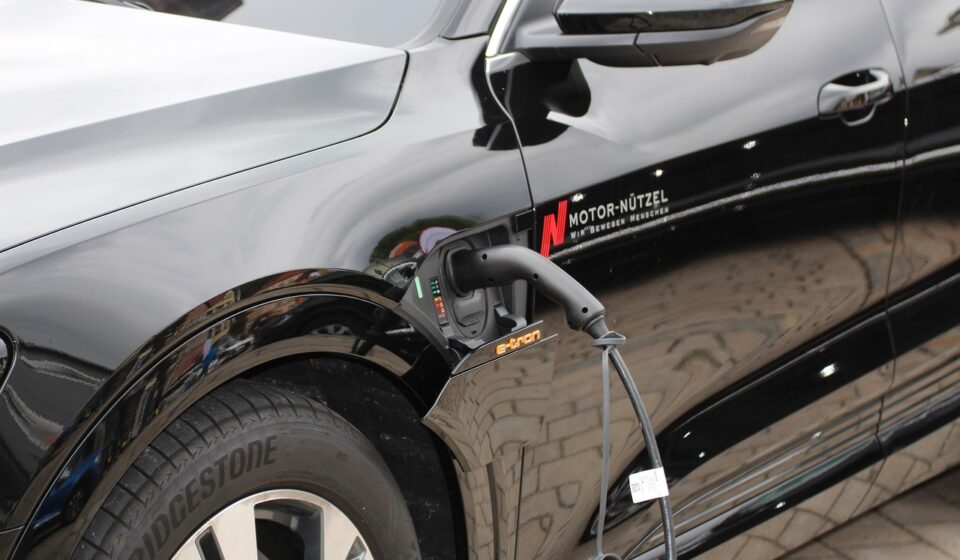
Charging also adds inspection points for parts and service teams. A charge inlet can fail because of damaged pins, water ingress, overheating, broken locking mechanisms or communication faults. A charging complaint may originate in the EVSE, the cable, the inlet, the onboard charger, battery temperature, the DC-DC converter or software. Good diagnosis avoids replacing an expensive module when the fault is actually a connector, sensor or low-voltage supply problem.
Safety and regulation shape component design
EV electrical safety is regulated because high-voltage energy can create shock, fire and post-crash hazards if it is not controlled correctly. In the United States, 49 CFR 571.305 specifies requirements related to electrolyte spillage, retention of electric energy storage or conversion devices, and protection from harmful electric shock during and after a crash and during normal vehicle operation. The eCFR edition displayed in August 2026 states that the standard applies to certain passenger cars, multipurpose passenger vehicles, trucks and buses using propulsion components above specified voltage thresholds, unless certified to the successor provision noted in the regulation. (ecfr.io)
NHTSA’s 2017 final rule for FMVSS No. 305 also updated the standard to adopt more modern and harmonized electrical safety requirements, including protections against direct and indirect contact with high-voltage sources during everyday operation. For parts sourcing, the takeaway is practical: insulation, enclosure integrity, high-voltage interlock loops, automatic disconnects and labeling are not cosmetic features. They are part of safety compliance and should not be bypassed during repair. (transportation.gov)
Service safety depends on process as much as parts. A correct replacement component can become unsafe if it is installed with damaged seals, incorrect torque, contaminated coolant, compromised insulation or unverified high-voltage isolation. Repair documentation should specify de-powering steps, wait times, test points, dielectric checks, coolant filling procedures and post-repair diagnostic routines. Where local law or manufacturer policy requires trained technicians, the work should not be assigned to unqualified staff.
What the shift means for automotive parts sourcing
The rise of EVs changes the parts business from a mostly mechanical replacement model to a mixed electrical, electronic and thermal model. A buyer evaluating vehicle electrics must now check voltage class, software version, cooling interface, electromagnetic compatibility, sealing, vibration resistance, connector coding, safety certification and traceability. Price remains important, but compatibility and documentation often determine whether a part can be installed without repeated faults.
Several categories deserve closer attention. High-voltage connectors and cables need correct insulation, shielding, color identification and sealing. DC-DC converters and onboard chargers need platform-specific electrical and communication compatibility. Sensors must meet accuracy expectations because battery and thermal controls rely on small measurement differences. Cooling components must be selected with the right material compatibility, flow rate and control behavior. Low-voltage batteries should be checked as part of EV diagnosis rather than ignored because the vehicle is electric.
Readers following Sifangdi automotive parts insights should also watch the boundary between serviceable parts and integrated modules. Automakers may combine an inverter, DC-DC converter and onboard charger into one power electronics unit, or integrate thermal valves and pumps into compact assemblies. Integration can reduce packaging weight and improve efficiency, but it can also raise replacement cost if a small fault requires a larger module.
The safest sourcing strategy is application-first. Start with the exact model, year, platform, battery size and market region. Confirm the OEM part number or validated equivalent, then check connector geometry, voltage rating, current rating, cooling path, communication protocol and installation notes. For EVs, a part that fits physically but fails electrically is not a near match; it is the wrong part.
Frequently asked questions
Is an e vehicle the same as an EV?
In most search and industry contexts, “e vehicle” means electric vehicle, or EV. The clearer technical term is EV, with subtypes such as battery electric vehicle and plug-in hybrid electric vehicle. For parts work, the subtype matters because a BEV, PHEV and hybrid can use different batteries, chargers, converters and wiring layouts.
Do EVs still have a 12 V battery?
Many EVs still use a low-voltage battery and low-voltage electrical network for controls, lighting, locks, safety modules and communication. Some platforms also add or shift selected loads to 48 V. A low-voltage fault can stop an EV from waking up, charging or closing its high-voltage contactors.
Which EV electrical parts fail most often?
Failure patterns vary by model and age, so broad rankings should be treated carefully. Common diagnostic areas include the auxiliary battery, charge inlet, onboard charger, DC-DC converter, coolant pumps, thermal sensors, contactors, wiring connectors and software-related charging faults. Accurate diagnosis should begin with fault codes, service data and voltage checks rather than assumptions.
Can charging connectors be converted with adapters?
Adapters can be valid when approved for the vehicle, charger type and market, but they do not remove the need for correct communication, current limits, thermal monitoring and locking behavior. A connector shape alone does not guarantee safe or reliable charging compatibility.
Why is thermal management so important in EV electrics?
Batteries, inverters, motors and chargers all generate heat, and their performance depends on staying within designed temperature limits. Thermal problems can reduce charging speed, limit power, shorten component life or trigger safety warnings. That makes pumps, valves, heat exchangers, coolant quality and temperature sensors part of the electrical reliability system, not just comfort equipment.