V12 engine explained and why it still matters in modern cars
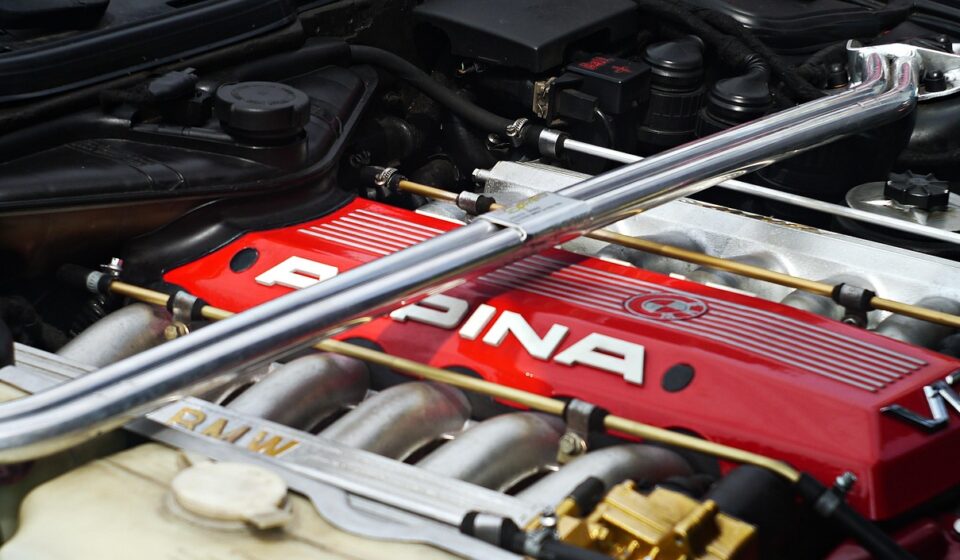
What a V12 engine is
A V12 engine is a twelve-cylinder piston engine with two banks of six cylinders sharing a single crankshaft. In a four-stroke V12, one cylinder can begin a power stroke every 60 degrees of crankshaft rotation, which helps the engine deliver torque in a very even, continuous way. The layout is uncommon in mainstream cars because it is large, expensive and complex, but it still has value where smooth power delivery, high output and brand character matter more than low cost or compact packaging.
In engineering terms, a V12 combines the breathing capacity of many cylinders with the balance advantages associated with inline-six geometry. SAE International technical material on racing engine layouts has described the conventional V12 as perfectly self-balanced when compared with more unusual twelve-cylinder arrangements such as a W12. Car and Driver’s engineering coverage has also explained the V12’s smoothness by treating it as two inline-six engines joined around a common crankshaft.
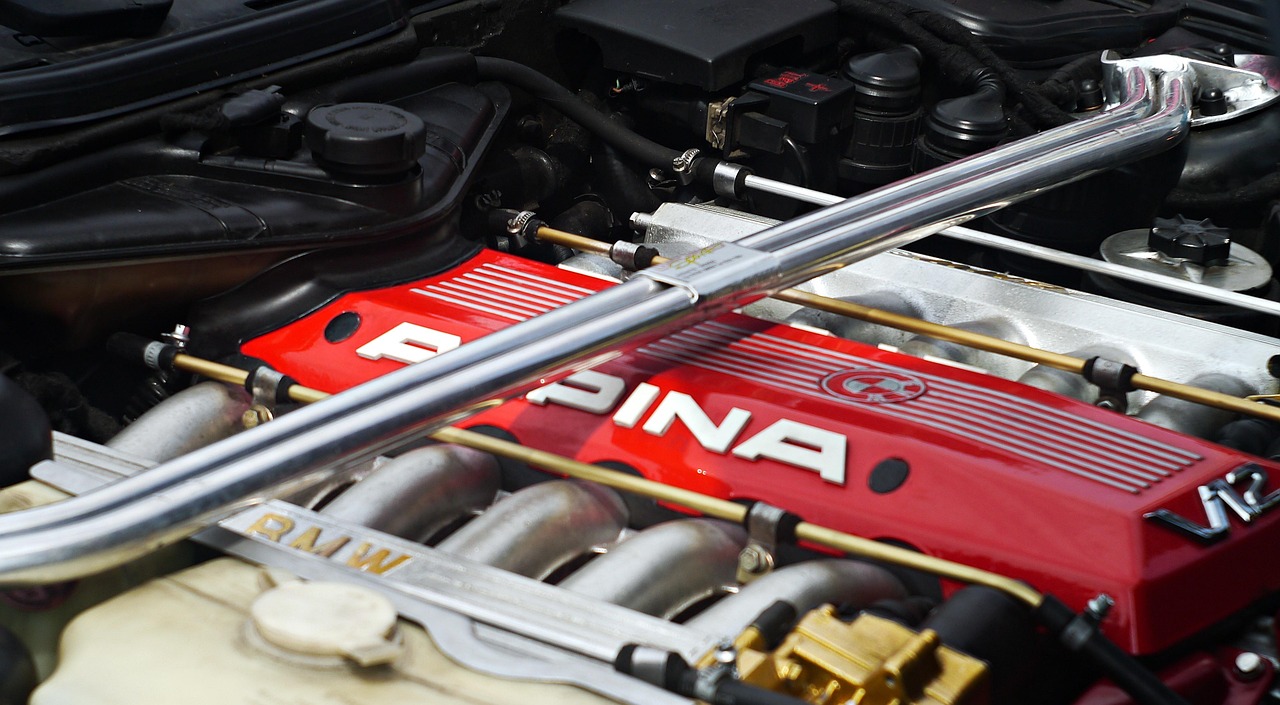
That does not mean every V12 engine feels the same. Bank angle, crankshaft design, firing order, intake length, exhaust routing, turbocharging, hybrid assistance and vehicle calibration all change the result. A Ferrari naturally aspirated V12, a Lamborghini plug-in hybrid V12 and a Rolls-Royce twin-turbo V12 pursue different goals, even though they share the same basic cylinder count.
Why twelve cylinders feel different
Balance and firing frequency
The core engineering advantage of a V12 is smoothness. In a four-stroke engine, 720 degrees of crankshaft rotation are required to complete a full cycle. Divide that by twelve cylinders and the engine can deliver a combustion event every 60 degrees. The short interval between firing pulses reduces the gap between torque impulses, giving the engine a continuous feel at low speed and a dense, high-frequency character at higher rpm.
Balance is the other part of the story. A well-designed inline-six is known for excellent primary and secondary balance. Because a V12 can be understood as two six-cylinder banks working together, the layout can achieve very low vibration without relying on the same level of balance-shaft correction that smaller or less naturally balanced engines may need. This matters most in luxury cars, where low noise and low vibration are central to the driving experience.
Power delivery and sound
A V12 does not produce power by cylinder count alone. Output still depends on displacement, airflow, combustion efficiency, rpm, boost pressure, friction losses and calibration. What the twelve-cylinder layout provides is flexibility. Engineers can create a high-revving naturally aspirated engine with smaller individual cylinders, or a large, low-revving turbocharged engine that delivers high torque with little effort.
The sound comes from the same ingredients: firing interval, exhaust manifold design, engine speed and the way each bank’s pulses merge. A 65-degree Ferrari V12 with dry-sump lubrication and a high redline has a very different acoustic signature from a twin-turbo luxury V12 tuned for quiet torque. For automakers that sell emotion as well as transportation, that signature remains one reason to keep the architecture alive.
Design choices that shape a V12 engine
The V12 label describes cylinder count and general layout, not a single engineering formula. The table below shows the main variables that determine how a V12 behaves in a real vehicle.
| Design variable | Why it matters | Typical effect |
|---|---|---|
| Bank angle | Changes engine width, height, crankshaft geometry and exhaust packaging. | A narrow angle can help packaging; a wider angle can lower the center of gravity. |
| Displacement | Determines the amount of air and fuel the engine can process per cycle. | Larger engines often favor torque; smaller, freer-breathing designs may favor rpm. |
| Naturally aspirated or turbocharged | Defines how the engine fills its cylinders. | Naturally aspirated units prioritize response and sound; turbocharged units can deliver strong torque from lower rpm. |
| Dry-sump or wet-sump lubrication | Affects oil control, engine height and sustained high-g operation. | Dry-sump systems are common in high-performance applications but add complexity. |
| Cooling and exhaust layout | Controls heat rejection, catalyst light-off, underbody temperature and service access. | Thermal packaging becomes more demanding because there are more cylinders, exhaust ports and hot-side components. |
| Hybrid integration | Adds electric torque, energy recovery and new control strategies. | Can preserve V12 character while addressing performance and efficiency requirements. |
These choices explain why comparing V12 engines only by displacement or peak horsepower can be misleading. A front-mounted grand-touring V12 must manage cabin refinement, crash structure and long-distance cooling. A mid-mounted supercar V12 faces different constraints, including intake routing, rear thermal load, battery placement if electrified, and airflow through a compact body.
Where V12 engines still appear
The modern V12 has moved away from ordinary premium cars and toward the most expensive performance and luxury segments. Ferrari introduced the 12Cilindri in Miami Beach on May 3, 2024, as a front-mid-mounted, naturally aspirated V12 grand tourer. Ferrari’s own technical specifications list a 65-degree V12 with dry-sump lubrication and 830 cv, showing that the brand still treats a naturally aspirated twelve-cylinder engine as part of its identity.
Lamborghini took a different path with the Revuelto, presented on March 29, 2023. Its official technical information describes a 6,498.5 cc naturally aspirated V12 combined with three electric motors for a total system output of 1,015 CV. In that case, electrification does not replace the V12; it changes how torque is delivered, how traction is managed and how the powertrain meets modern performance expectations.
Aston Martin’s 2024 Vanquish launch also illustrates the survival of the V12 in high-end grand touring. The company described the car as using a 5.2-liter twin-turbo V12 producing 835 PS and 1,000 Nm of torque, with a stated top speed of 214 mph. That is a different interpretation from Ferrari’s high-revving naturally aspirated approach, because the Aston Martin emphasizes boosted torque and long-legged acceleration.
Luxury brands use the layout for another reason: silence and effortlessness. Rolls-Royce press material for Ghost Series II in October 2024 described a 6.75-liter twin-turbocharged V12 petrol engine paired with an eight-speed gearbox. Mercedes-Benz USA has also described the Mercedes-Maybach S 680 as using a handcrafted V12 in selected markets. In these applications, the V12 is less about lap times and more about smooth, quiet authority. See also: braking and chassis.
Why the V12 engine has become rare
The same features that make a V12 special also make it difficult to justify. Twelve pistons, twelve connecting rods, multiple camshafts, long crankshafts, large cooling circuits, extensive exhaust aftertreatment and tight packaging all raise cost and complexity. Compared with a turbocharged V8, hybrid V6 or electric drive unit, a V12 is harder to package in a modern vehicle platform designed around crash structures, emissions hardware, batteries and pedestrian-protection rules.
Regulation is another factor. The European Union’s revised CO2 standards for new cars and vans set a 100% reduction target for 2035 compared with the regulatory baseline, according to European Commission material on road transport decarbonisation. Euro 7, adopted in 2024, also extends attention beyond tailpipe pollutants to areas such as brake particles, tire particles and battery durability. These policies do not single out V12 engines by name, but they make large combustion engines harder to use at scale.
Market demand has changed as well. Buyers who once expected a large engine in a flagship model can now get instant torque from electric motors, high output from smaller turbo engines and lower official emissions from plug-in hybrids. For many automakers, a V12 is no longer a rational volume product. It survives where it can support a brand story, a collector market or a very specific driving experience.
What V12 engines mean for engine and thermal systems
For parts suppliers, workshops and technical readers, the main practical lesson is that a V12 engine is also a thermal-management challenge. More cylinders mean more combustion chambers, more exhaust ports, longer coolant paths and more sealing surfaces. Turbocharged V12 engines add turbine housings, charge-air cooling, oil cooling and additional heat shielding. Hybrid V12 vehicles add inverter cooling, battery thermal management and high-voltage safety considerations.
That makes the surrounding systems just as important as the engine block itself. Radiators, electric fans, coolant pumps, thermostats, oil coolers, intercoolers, exhaust insulation, oxygen sensors, temperature sensors and engine mounts all affect whether the powertrain performs consistently. A small fault that might be inconvenient on a simpler engine can become expensive on a V12 because access is often limited and heat density is high.
Readers following broader powertrain design, cooling technology and under-hood component trends can explore related topics in the engine and thermal systems section. The direction of travel is clear: even when the V12 remains mechanically traditional, the systems around it are becoming more electronic, more temperature-sensitive and more tightly integrated.
Frequently asked questions
Is a V12 engine smoother than a V8?
In general, a well-designed V12 can be smoother than a V8 because it has more frequent firing events and excellent inherent balance. However, real-world refinement also depends on engine mounts, exhaust tuning, combustion control, transmission calibration and vehicle insulation.
Are all V12 engines naturally aspirated?
No. Some famous V12 engines are naturally aspirated, including modern Ferrari examples, but many luxury and grand-touring V12 engines are turbocharged. Turbocharging helps deliver high torque at lower rpm, while natural aspiration is often chosen for throttle response, sound and high-rpm character.
Why do automakers still build V12 engines?
Automakers still build V12 engines when the layout supports a product’s identity and price position. In supercars, it can provide sound, response and a sense of occasion. In luxury cars, it can provide quiet, effortless acceleration. The business case is narrow, but it has not disappeared.
Is the V12 engine likely to become common again?
That is unlikely. Cost, packaging, fleet emissions rules and the rise of electrified powertrains all work against large twelve-cylinder engines in mass production. The V12 is more likely to remain a low-volume technology used in selected performance, luxury and collector-oriented vehicles.