How a portal hub 4×4 driveline changes clearance, gearing and durability
What a portal hub 4×4 system is
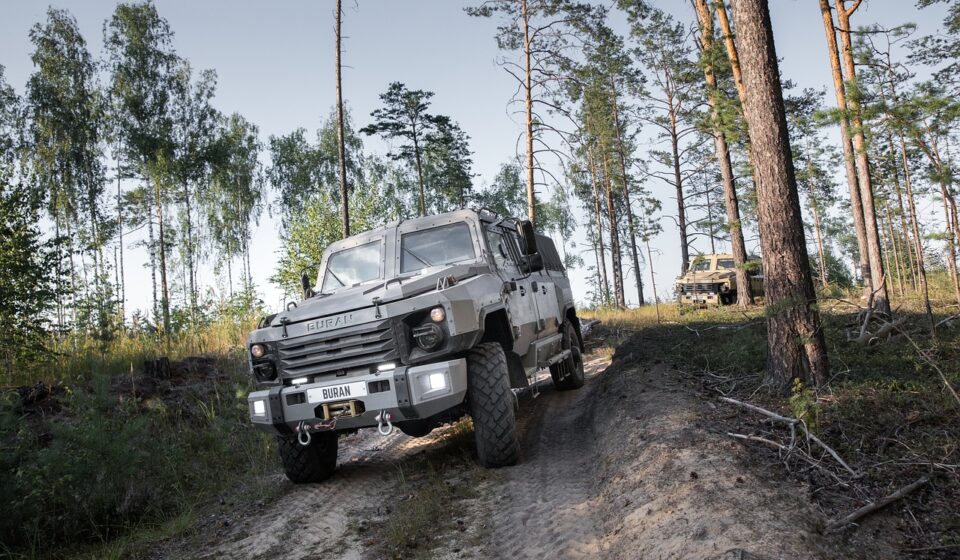
A portal hub 4×4 system places a reduction gearset at or near each wheel hub, allowing the axle centerline to sit higher than the wheel centerline. In off-road use, that helps the differential housing and axle tubes clear rocks, ruts and track crowns that would strike a conventional axle first. The concept is well established in purpose-built military, utility and extreme off-road vehicles. For builders and buyers, the key point is that portal hubs are not just a visual lift. They change the load path, final drive ratio, unsprung mass, steering geometry, braking package and maintenance routine of the vehicle. (mercedes-benz-trucks.com)
For readers comparing axle, transfer case and wheel-end choices, portal hubs sit within the broader category of driveline systems. They connect suspension packaging with torque delivery, so the decision cannot be judged by advertised lift height alone.

How power flows through a portal hub
In a conventional live axle, the axle shaft usually drives the wheel on a centerline close to the wheel hub. In a portal arrangement, the half shaft or axle tube is offset upward from the wheel center. Torque enters a compact gear housing at the wheel end and then drives the wheel through a lower output axis. Depending on the vehicle and manufacturer, the gearset may use spur gears, helical gears or a planetary-style reduction, but the core function is the same: place the wheel center below the axle center while still transmitting torque to the tire.
That offset is the defining feature. A suspension lift can raise the body and frame, but on most solid-axle 4x4s it does not raise the differential pumpkin. Taller tires improve under-axle clearance by about half of the tire diameter increase. A portal hub raises the axle assembly itself, so the clearance gain is concentrated at the parts that often drag off-road: differential housings, axle tubes and lower link brackets.
Portal hubs also affect gearing. Because reduction happens at the wheel end, the upstream axle shafts, differential and ring-and-pinion can deliver a given wheel torque with less torque load than if all reduction occurred earlier in the driveline. That is one reason portal concepts appear in vehicles designed for slow-speed traction and high obstacle loads. The trade-off is direct: four additional gearboxes must be lubricated, sealed, cooled and supported by bearings.
Why portal hubs improve off-road clearance
The main functional advantage is ground clearance under the axle. Mercedes-Benz Trucks describes the Unimog’s portal axles as a way to combine high ground clearance with a low vehicle center of gravity, because the axle and differential are positioned above the wheel center rather than sitting as the lowest point of the driveline. Its off-road Unimog material also notes an asymmetrical differential arrangement that helps the vehicle pass over obstacles. (mercedes-benz-trucks.com)
Factory examples show the scale of the change. Mercedes-Benz stated that the G 500 4×4² used portal axles developed for extreme off-road use, raising ground clearance to 450 mm and wading depth to 1,000 mm. Mercedes-AMG lists the later G 63 4×4² with specially built portal axles, 351 mm of ground clearance, 910 mm of wading depth and a 40-degree ramp angle. Those figures are platform-specific, but they explain why portal hubs draw attention in serious 4×4 engineering. (media.mercedes-benz.com)
The benefit is most visible in ruts, ledges and rock gardens. In deep ruts, the tires may sit in the tracks while the differential tries to plow through the center ridge. Raising the axle centerline reduces that contact. On rocks, a portal-equipped axle may clear a step that would otherwise catch the differential cover. On soft ground, the advantage can be less dramatic, because tire flotation, pressure and tread pattern may matter more than axle height.
Portal hubs compared with tires and suspension lifts
Portal hubs, larger tires and suspension lifts all create height, but they do it in different ways. The right choice depends on the actual clearance problem, not the tallest number in a specification sheet.
| Modification | What it raises | Main benefit | Main limitation |
|---|---|---|---|
| Portal hubs | Axle centerline, differential and wheel-end output relationship | Real clearance under axle components | Added gearboxes, weight, cost and maintenance |
| Larger tires | Entire vehicle by about half the diameter increase | More tire footprint and under-axle clearance | Can require gearing, braking, fender and steering changes |
| Suspension lift | Body, frame and suspension ride height | Improves approach, breakover and tire packaging | Usually does not raise a solid-axle differential |
A portal hub can be the more efficient solution when repeated differential strikes are the main problem. It can be the wrong priority when the vehicle mainly needs tire clearance, payload control, ride quality or highway stability. Many extreme builds combine portals with larger tires and suspension changes, but every added change increases the need for proper engineering validation.
The driveline trade-offs that matter
Unsprung mass and ride control
A portal hub adds gears, housings, oil, bearings and fasteners at the wheel end. That increases unsprung mass, meaning more weight moves with the wheel rather than with the body. Higher unsprung mass can make it harder for the tire to follow small bumps and can put more demand on damper tuning. On a slow trail vehicle this may be acceptable. On a vehicle that also runs quickly over corrugations, washboard roads or pavement, the compromise is more noticeable.
Steering geometry and track width
Portal hubs can change scrub radius, kingpin relationship, wheel offset requirements and track width. If the hub moves the wheel mounting face outward, steering loads rise and wheel bearings may see leverage that differs from the original design intent. A factory portal vehicle can integrate these details from the start. A retrofit must address them through wheel choice, steering arms, tie rod position, brake hose routing and electronic stability system compatibility.
Heat, lubrication and sealing
Each portal box is a small gearbox working close to brake heat, water, mud and impact loads. Gear oil level, venting, seal condition and bearing preload therefore become part of routine service. Military and utility examples underline the point that wheel-end hardware is not a cosmetic accessory. A U.S. Army safety publication discussing the HMMWV identifies the geared hub assembly and spindle bearing as a distinctive driveline feature, and a U.S. Army maintenance article warns that losing a half-shaft can remove drive to that wheel. (safety.army.mil) See also: braking and chassis.
Gearing, speed and calibration
Hub reduction changes the effective final drive ratio. It can improve crawl control and reduce stress upstream, but it also changes engine speed at road speed unless axle gearing, tire size and transmission calibration are considered together. Speedometer accuracy, shift behavior, ABS tone rings and traction-control logic may all need attention on modern vehicles. For that reason, a portal conversion should be treated as a driveline redesign, not as a bolt-on spacer.
Where portal hub 4×4 systems make the most sense
Portal hubs are most convincing on vehicles that regularly face obstacles taller than the axle housing, especially when low-speed control matters more than high-speed ride refinement. Common use cases include expedition trucks on deep-rutted tracks, rock-crawling builds, military-style utility vehicles, rescue vehicles, forestry vehicles and remote-area support vehicles. The technology is also a logical match for heavy-duty platforms where the axle, frame and brakes can be specified around the wheel-end loads from the beginning.
They make less sense when the vehicle is mostly driven on pavement, when payload and towing certification are critical, or when the owner wants a simple height increase with minimal maintenance. They may also be a poor match for lightweight independent-suspension vehicles unless the kit is engineered specifically for that platform’s suspension kinematics, driveshaft angles and electronics.
The clearest dividing line is duty cycle. If a 4×4 spends most of its time crawling, recovering or crossing ruts where the differential is the limiting point, portal hubs solve a real mechanical problem. If the 4×4 spends most of its time commuting, towing or traveling at highway speed, the same hardware can become an expensive source of weight, noise, service work and calibration issues.
A practical checklist before choosing portal hubs
- Define the obstacle problem. Measure where the vehicle gets stuck: differential, lower control arm, crossmember, rocker panel or tire traction. Portals mainly help axle and differential clearance.
- Calculate the real gear ratio. Combine tire diameter, axle ratio, transfer case ratio and portal reduction before assuming the vehicle will drive correctly.
- Check brake compatibility. Confirm caliper clearance, rotor size, parking brake layout, brake line routing and heat exposure around the portal box.
- Review steering loads. Look at scrub radius, wheel offset, tie rod angle and steering assist capacity, especially with wider tires.
- Plan service intervals. Portal gear oil, seals, bearings and breathers add maintenance points at every corner.
- Confirm parts support. A portal-equipped vehicle depends on specialized housings, gears and seals; long-term availability matters more than short-term novelty.
- Consider legal and insurance implications. Road registration, inspection rules and insurance coverage can vary by jurisdiction and vehicle use.
Frequently asked questions
Is a portal hub the same as a portal axle?
Not exactly. A portal axle usually refers to the complete axle layout where the axle centerline is offset above the wheel centerline. A portal hub often refers to the wheel-end gearbox or conversion unit that creates that offset. In casual 4×4 language the terms are often used together, but the engineering scope is different.
Do portal hubs reduce stress on the axle?
They can reduce torque load in the upstream axle shafts and differential when the hub gearset provides reduction at the wheel. However, they also add bending loads, unsprung mass and wheel-end gear loads. The result depends on the whole system, not the portal box alone.
Can portal hubs replace larger tires?
They can raise under-axle clearance without requiring the same tire diameter increase, but they do not replace the traction, footprint or sidewall benefits of tire selection. Many builds still use larger tires with portals, so gearing and braking must be reviewed as a package.
Are portal hubs good for daily driving?
They can be road-driven when engineered, calibrated and maintained correctly, as factory portal vehicles show. For a retrofit daily driver, the added weight, gear noise, service points and geometry changes should be weighed carefully against the limited benefit during normal pavement use.
What is the main maintenance concern?
The main concern is that each wheel gains a small gearbox. Oil level, contamination, seal wear, bearing condition and fastener torque become critical. Neglect at one corner can affect drivability, braking safety and expensive wheel-end components.
The bottom line
A portal hub 4×4 driveline is valuable because it raises the parts that usually remain low after a normal lift: the axle tube and differential. That is why it appears on serious off-road platforms such as the Unimog and special G-Class variants. The same design also adds four gearboxes to the vehicle, bringing real costs in mass, heat, lubrication, steering geometry and parts support. For a purpose-built off-road machine, portals can be a rational engineering solution. For a mixed-use 4×4, they should be chosen only after the full driveline, suspension and maintenance consequences are understood.