How an air conditioner and heater unit works in modern vehicles
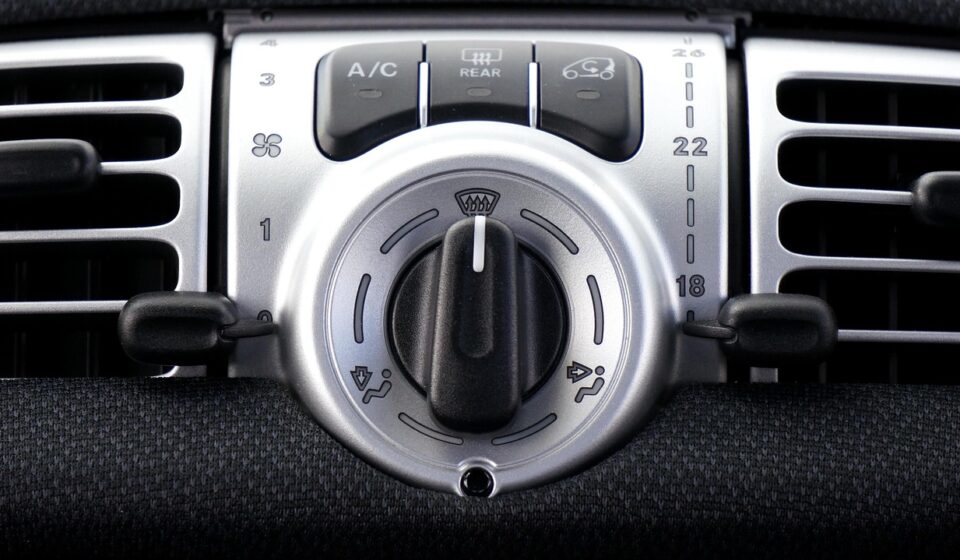
What an air conditioner and heater unit does
An automotive air conditioner and heater unit is more than a comfort accessory. It is the cabin HVAC assembly that moves air through the evaporator, heater core or heating circuit, blend doors, mode doors, ducts and vents. That single assembly helps cool the cabin, warm occupants, clear the windshield and manage humidity. In parts catalogs, the same assembly may be listed as an HVAC unit, heater and A/C box, climate control module, evaporator housing, heater box or air handling unit.
For repairers, parts buyers and vehicle engineers, the main issue is compatibility. The correct unit must match the vehicle platform, refrigerant, heater type, control system, actuator layout, sensor package and duct geometry. A case that looks similar can still be wrong if its doors, wiring, refrigerant connections or coolant ports are different.
The main parts inside the HVAC unit
The cabin unit sits where airflow, refrigerant flow, coolant flow and electronic control come together. The exact layout varies by model, but most passenger cars and light commercial vehicles use the same functional building blocks.
Air handling components
The blower motor draws air from the cabin recirculation inlet or the outside fresh-air intake. Air usually passes through a cabin filter before entering the HVAC case. From there, the case directs airflow across the heat exchangers and through the outlet doors. A typical unit includes:
- Blower motor and fan wheel to generate airflow.
- Cabin air filter housing to reduce dust and debris entering the evaporator and cabin.
- Recirculation door to switch between outside air and cabin air.
- Mode doors to route air to the face vents, floor vents, defrost outlets or mixed outlets.
- Duct seals and foam edges to prevent air leakage and temperature mixing errors.
Cooling and dehumidifying components
The evaporator core is the cold heat exchanger inside the HVAC case. As air passes across the evaporator fins, refrigerant absorbs heat from that air. Moisture in humid cabin air condenses on the cold surface and drains out of the vehicle through the condensate tube. This is why air conditioning helps defog the glass even when the temperature setting is warm.
The evaporator is only the in-cabin side of the refrigeration loop. The compressor, condenser, expansion valve or orifice device, refrigerant lines and pressure sensors complete the system outside the HVAC case. A fault in any of those parts can make a good heater and A/C unit appear weak.
Heating components
In a conventional internal-combustion vehicle, the heater core uses hot engine coolant as its heat source. Air passing through or around the heater core is blended to reach the requested outlet temperature. In hybrids and battery-electric vehicles, the heat source may be different. Some use a positive temperature coefficient electric heater, some use a heat pump, and some combine coolant loops, refrigerant circuits and waste-heat recovery.
Controls, actuators and sensors
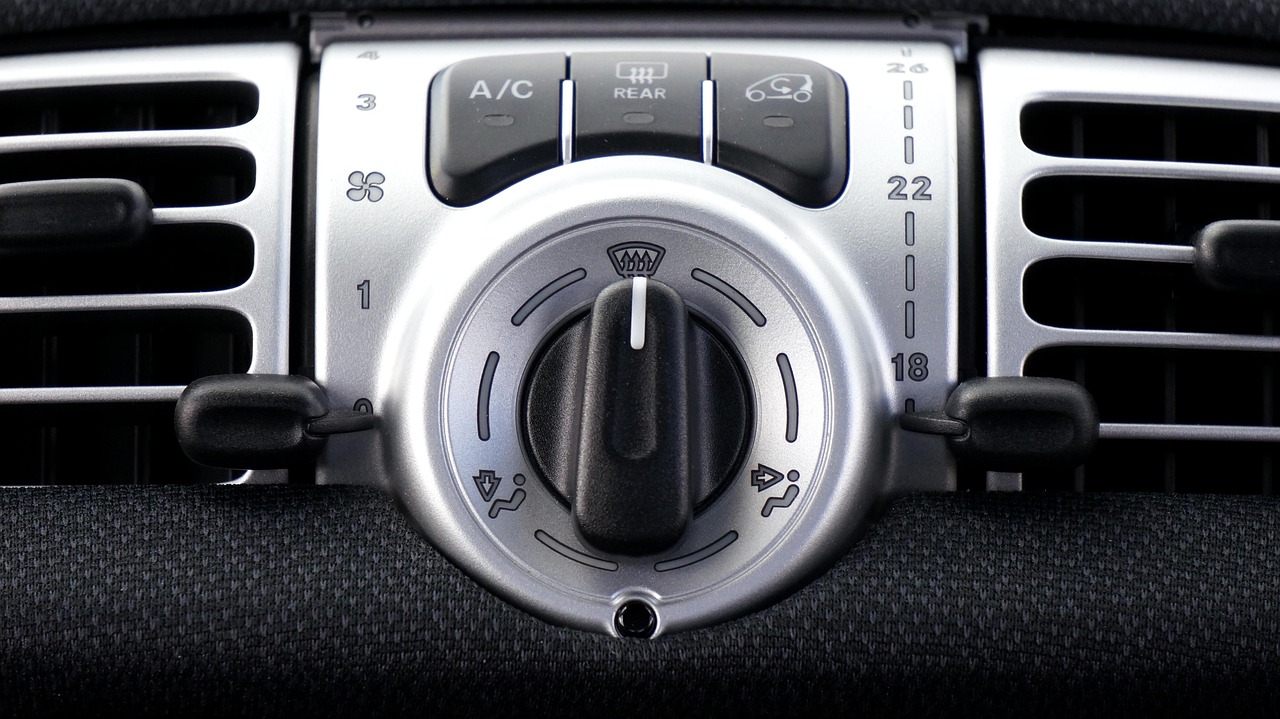
Manual HVAC systems use cables, levers or simple electric actuators. Automatic climate control adds sensors and software. Interior temperature sensors, sunload sensors, evaporator temperature sensors and outlet temperature sensors help the control unit determine blower speed, blend position, recirculation strategy and compressor operation. As a result, a modern air conditioner and heater unit can be mechanically sound but still perform poorly if calibration, sensors or actuators are incorrect.
Cooling, heating and defogging are connected
Drivers often think of air conditioning and heating as opposite functions. Inside the HVAC unit, they often work together. The system may cool the air first to remove moisture, then reheat it to a comfortable temperature before sending it to the windshield or floor. This combined operation is especially important in rainy, cold or humid conditions.
| Operating mode | Main components involved | What the unit is trying to do |
|---|---|---|
| Cabin cooling | Evaporator, compressor, condenser, blower, recirculation door | Remove cabin heat and often reduce humidity |
| Cabin heating | Heater core, coolant circuit or electric heater, blend door, blower | Add heat while maintaining controlled airflow |
| Defogging | Evaporator, heater core, defrost door, blower, fresh-air intake | Deliver warm, dry air to the glass surface |
| Defrosting | High airflow, heater source, defrost outlet, glass-directed ducting | Melt frost and restore windshield visibility |
Defrost and defog functions are not only comfort features. In the United States, Federal Motor Vehicle Safety Standard No. 103 addresses windshield defrosting and defogging systems. For engineers and replacement-parts professionals, outlet routing, blower capacity, sealing and control logic are therefore safety-relevant details, not minor packaging choices.
Why refrigerant choice matters
The air conditioner side of the unit must match the vehicle’s refrigerant and service requirements. Public guidance from the U.S. Environmental Protection Agency describes the industry transition away from CFC-12 in new vehicles in the 1990s, the broad use of HFC-134a after that period, and the later adoption of lower-global-warming-potential alternatives such as HFO-1234yf and R-744 carbon dioxide in approved applications.
Refrigerants are not interchangeable by guesswork. HFO-1234yf systems use different fittings and labels, and service equipment standards from SAE International are commonly referenced for recovery, recycling and recharging machines. Mixing refrigerants, charging by pressure alone, using unapproved substitutes or bypassing recovery procedures can damage components, reduce performance and create safety or regulatory problems.
For parts selection, the practical checks are straightforward: confirm the refrigerant label on the vehicle, match the evaporator and expansion device, verify the line connection style, and use the lubricant type specified for that system. A replacement HVAC case or evaporator core should not be treated as universal simply because it fits in the dashboard opening.
How electrification changes the heater and A/C unit
Vehicle electrification has changed HVAC from a comfort subsystem into an important part of whole-vehicle thermal management. A gasoline or diesel engine produces large amounts of waste heat that can warm the cabin through the heater core. A battery-electric vehicle does not have the same continuous waste-heat source, so cabin heating can draw directly from the high-voltage battery unless a more efficient strategy is used.
That is why EVs and hybrids increasingly combine cabin HVAC with battery cooling, power electronics cooling and heat-pump operation. Research from organizations such as the National Renewable Energy Laboratory and vehicle thermal-management studies has repeatedly shown that cabin heating can be a significant energy load in cold weather. The design response is not only a better heater; it is a more integrated thermal system.
| Vehicle type | Common heat source | HVAC unit implication |
|---|---|---|
| Internal-combustion vehicle | Engine coolant through heater core | Heater performance depends on coolant temperature, flow and blend-door control |
| Hybrid vehicle | Engine coolant, electric heater or combined strategy | Control logic must handle engine-off operation and quick cabin warm-up |
| Battery-electric vehicle | PTC heater, heat pump or integrated coolant/refrigerant loops | Unit may share thermal functions with battery and power electronics circuits |
| Commercial or off-highway vehicle | Engine coolant, auxiliary heater or rooftop HVAC package | Durability, service access and high airflow can be more important than compact packaging |
For more context on cooling, heating and thermal-management topics, visit the engine and thermal systems section. See also: braking and chassis.
Specification checks before replacement or sourcing
Because the air conditioner and heater unit is hidden behind the instrument panel, replacement is labor-intensive. Ordering the wrong part can mean removing the dashboard twice. Before ordering or approving a replacement, check more than the year, make and model.
- Vehicle platform and body style: left-hand-drive and right-hand-drive layouts often use different cases, ducts and control linkages.
- Climate control type: manual, semi-automatic and fully automatic systems may use different actuators and sensors.
- Zone configuration: single-zone, dual-zone and rear-HVAC systems can have different blend doors and additional outlets.
- Refrigerant and evaporator design: match R-134a, R-1234yf or other approved refrigerant systems exactly as specified by the vehicle manufacturer.
- Heater core connections: confirm pipe direction, diameter, sealing method and coolant-valve arrangement.
- Electrical connectors: compare blower resistor or control module, actuator plugs, temperature sensors and harness routing.
- Case sealing and drain routing: a missing seal or blocked condensate drain can cause odor, leakage or wet carpets.
- Software or calibration needs: some vehicles require actuator relearn or HVAC module calibration after repair.
Used or remanufactured units need additional inspection. Check for broken mounting ears, warped plastic, stripped actuator shafts, contaminated evaporator fins, coolant residue around the heater core, and foam deterioration on the blend doors. A clean exterior does not prove that the internal doors seal correctly.
Common symptoms and what they usually indicate
Symptoms can help narrow the fault, but they do not prove that the unit itself has failed. A complete diagnosis should separate air-side problems from refrigerant-side, coolant-side and control-side problems.
| Symptom | Likely area to inspect | Why it happens |
|---|---|---|
| Weak airflow from all vents | Cabin filter, blower motor, fan wheel, evaporator blockage | The unit cannot move enough air through the case |
| Cold on one side, warm on the other | Blend door, actuator, dual-zone calibration | Air mixing is uneven or one temperature door is stuck |
| No heat at idle | Coolant level, heater core flow, water pump, thermostat | The heater core is not receiving enough hot coolant |
| Musty odor after A/C use | Evaporator surface, drain tube, cabin filter | Moisture remains in the case and supports odor formation |
| Water on passenger floor | Condensate drain, case seal, heater core leak | Condensate or coolant is entering the cabin |
| Clicking behind dashboard | Door actuator, stripped gear, broken door shaft | The control motor is trying to move a jammed or damaged door |
One common mistake is replacing the whole HVAC unit when the root cause is outside the case. Low refrigerant charge, a restricted condenser, a weak compressor, trapped air in the cooling system or a faulty temperature sensor can all imitate a failed air conditioner and heater assembly. Conversely, a leaking heater core or cracked internal blend door may require access to the unit even when the compressor and engine cooling system are healthy.
What makes a good replacement unit
A good replacement unit is accurate, clean, sealed and compatible. It should match the original layout, hold the heat exchangers securely, move all doors through their full travel and provide stable mounting for the blower, actuators and sensors. In the aftermarket, quality is not only about the plastic housing. Small details often decide whether the system performs quietly and consistently after installation.
Important quality indicators include smooth door operation, correct foam density, reinforced mounting points, precise evaporator and heater-core fit, reliable drain geometry and stable actuator interfaces. For vehicles with automatic climate control, sensor placement and airflow paths must remain close to the original design because the control software expects a certain thermal response.
Packaging also matters. Evaporator ports, heater pipes and duct mouths must be protected during shipping. Fine fins are easy to bend, plastic door shafts can crack, and a distorted case flange can cause an air leak that is difficult to trace after the dashboard is reinstalled.
Frequently asked questions
Is an air conditioner and heater unit the same as the compressor?
No. The compressor is part of the refrigerant circuit, usually mounted in the engine bay or driven electrically in an EV. The air conditioner and heater unit is the cabin-side assembly that contains the evaporator, heater core or heating elements, doors, blower-related parts and ducts.
Can a vehicle have heat without the A/C working?
Often yes, especially in an internal-combustion vehicle where the heater core uses hot engine coolant. However, a non-working A/C system can still affect defogging because the evaporator helps remove moisture from cabin air.
Why does the A/C run when the defrost mode is selected?
The system may operate the compressor to dehumidify air before directing it to the windshield. Dry, warm air clears fog more effectively than warm humid air.
Can R-134a and R-1234yf parts be mixed?
They should not be mixed unless the vehicle manufacturer specifically approves a service procedure. Refrigerant type affects fittings, labels, lubricants, service equipment and safety requirements. Matching the original specification is the safest approach.
When should the whole HVAC unit be replaced instead of a smaller part?
Full unit replacement may be justified when the case is cracked, the heater core or evaporator is leaking inside the dashboard, internal doors are broken, or multiple integrated parts are damaged. If the fault is only a blower motor, actuator, sensor or cabin filter, a smaller repair may be enough.