Engine oil for car engines explained by viscosity, API rating, and driving conditions
Quick answer for selecting engine oil
The right engine oil for car engines is the grade and performance specification listed in the vehicle owner manual. It is not simply the thickest oil, the most expensive oil, or the newest label on the shelf. Start with the required SAE viscosity, such as 0W-20 or 5W-30. Then confirm the performance category, such as API SQ, ILSAC GF-7A, ILSAC GF-7B, API SP, an ACEA category, or a vehicle-maker approval.
For modern gasoline cars, API and ILSAC categories matter because they address low-speed pre-ignition, timing chain wear, piston deposits, fuel economy, emission system compatibility, and low-temperature pumpability. For European, diesel, hybrid, turbocharged, or direct-injection engines, the specific OEM approval can be just as important as viscosity.
In practical terms, use this order: owner manual first, viscosity second, certification third, driving conditions fourth. If those points conflict, the vehicle manufacturer specification should control the decision.
Start with the three identifiers on the oil container
Most engine oil labels carry several claims, but three pieces of information do the real work: viscosity grade, performance category, and manufacturer approval. Understanding the difference helps avoid two common mistakes: buying by brand alone and assuming that a newer or thicker oil is automatically better.
| What to check | Typical example | What it tells you | Common mistake |
|---|---|---|---|
| SAE viscosity grade | 0W-20, 5W-30, 10W-40 | How the oil flows under defined low-temperature and high-temperature conditions | Calling viscosity a quality rating or assuming thicker always protects better |
| API or ILSAC category | API SQ, API SP, ILSAC GF-7A, GF-7B | Whether the oil meets a passenger-car engine performance standard | Using an obsolete category in a modern gasoline engine |
| ACEA or OEM approval | ACEA C3, ACEA C6, VW, BMW, Mercedes-Benz, Ford, GM, or other maker approvals | Compatibility with engine design, aftertreatment systems, oil drain strategy, and regional requirements | Ignoring the approval because the viscosity looks correct |
| Oil type | Full synthetic, synthetic blend, conventional | Base oil and formulation family, but not a replacement for the required specification | Assuming full synthetic can override the manual |
SAE International classifies engine oil viscosity through SAE J300. That standard defines viscosity limits in rheological terms only. It does not by itself show that an oil has the required detergent, anti-wear, oxidation, deposit-control, or emission-system performance. For that reason, viscosity must be read together with API, ILSAC, ACEA, or OEM specifications.
What API SQ and ILSAC GF-7 mean for gasoline cars
API SQ and ILSAC GF-7 reflect the direction of modern passenger-car gasoline engines. According to API Motor Oil Guide material dated April 2025, API SQ and ILSAC GF-7A/GF-7B were introduced in March 2025 for newer gasoline-engine oil requirements. The same API guide describes GF-7A and GF-7B as current ILSAC standards and lists GF-6A and GF-6B as current with an obsolescence date of October 1, 2026.
The move from GF-6 to GF-7 is not just a label change. API describes GF-7A and GF-7B oils as designed to address fresh and aged oil low-speed pre-ignition, improved timing chain wear protection, high-temperature deposit protection for pistons and turbochargers, sludge and varnish control, fuel economy, emission control system protection, low-temperature pumpability, and operation on ethanol-containing fuels up to E85.
The distinction between GF-7A and GF-7B is important. GF-7A applies to many mainstream passenger-car gasoline oil grades and is associated with the API Starburst certification mark. GF-7B applies only to SAE 0W-16 oils and is associated with the API Shield certification mark. If a vehicle specifies GF-6A, the API guide indicates GF-7A is the replacement path. If a vehicle specifies GF-6B and 0W-16, GF-7B is the relevant successor. A vehicle-specific approval in the owner manual can still narrow the acceptable choices.
Choosing viscosity without guessing
Viscosity is often the most visible part of engine oil selection, but it is also one of the easiest to misunderstand. In a grade such as 0W-20, the first part relates to low-temperature cranking and pumping behavior. The second part relates to viscosity at operating-temperature test conditions. A 0W-20 and a 5W-20 are not identical in cold conditions, even though both are 20-grade oils on the high-temperature side of the classification.
The manufacturer chooses viscosity around bearing clearances, oil pump capacity, variable valve timing hardware, turbocharger lubrication, piston cooling needs, fuel-economy targets, and emissions durability. Moving to a thicker oil without approval can slow flow during startup, affect hydraulic controls, reduce efficiency, or change how quickly oil reaches tight passages. Moving to a thinner oil without approval can reduce oil film margin under load. Neither direction is automatically safer.
Climate can matter, but it should be interpreted through the manual. Some vehicles list more than one acceptable viscosity by temperature range or service condition. Others specify one viscosity plus a manufacturer approval. If the manual allows 0W-20 and 5W-30 under different conditions, that is different from choosing 5W-30 only because the engine sounds quieter. For high-load towing, track use, desert heat, or sustained mountain driving, use the severe-service or performance-use guidance supplied by the automaker.
Synthetic, synthetic blend, and conventional oil
Full synthetic oil is common in modern engines because many current specifications require strong oxidation stability, low-temperature flow, deposit control, and volatility performance. Synthetic oil can be especially useful in turbocharged engines, engines with extended drain intervals, vehicles exposed to very cold starts, and cars that spend long periods in stop-and-go traffic. Still, synthetic is a formulation category, not a universal permission slip.
A full synthetic 5W-30 without the required OEM approval may be a poor choice for a car that requires a specific low-SAPS, mid-SAPS, or manufacturer-approved oil. A synthetic blend that meets the exact specification can be more appropriate than a full synthetic product that does not. Conventional oil may still be suitable for some older engines if it matches the required viscosity and performance category, but many newer low-viscosity and high-performance categories are dominated by synthetic or synthetic-blend formulations.
Oil-change interval should also follow the vehicle manufacturer, not the bottle claim alone. Oil-life monitoring systems and service schedules are designed around engine family, calibration, sump capacity, duty cycle, fuel dilution tendency, and emission-system requirements. If the car sees repeated short trips, extended idling, heavy load, dusty conditions, or frequent cold starts, the severe-service interval may apply even when synthetic oil is used.
Driving conditions that change the decision
Two cars using the same viscosity can place very different demands on oil. A naturally aspirated commuter engine driven mostly on warm highway trips usually gives oil an easier life than a turbocharged direct-injection engine used for short urban trips. Direct injection can increase fuel dilution risk in some duty cycles, while turbochargers expose oil to high local temperatures around bearings and housings. Hybrid engines may shut off and restart frequently, which can increase the importance of low-temperature flow and moisture control during short trips. See also: braking and chassis.
Short trips are especially hard on oil because the engine may not stay hot long enough to evaporate moisture and fuel residues. Stop-start traffic adds repeated load and heat cycles. Towing, roof loads, mountain roads, and high ambient temperatures increase thermal stress. Dusty roads make air filtration and oil filtration more important. In these cases, choosing oil only by viscosity is not enough; the oil also needs the correct performance category and the correct service interval.
Engine oil also works with the broader thermal system. It reduces friction, carries heat away from pistons, bearings, timing components, and turbocharger areas, and works alongside coolant, oil coolers, filters, seals, and crankcase ventilation. A cooling-system fault, clogged oil cooler, restricted PCV system, or oil leak can make even the correct oil degrade faster. For more background on related parts, see the engine and thermal systems section.
Common mistakes when buying engine oil for a car
The first mistake is treating diesel oil as a universal upgrade for gasoline cars. Some heavy-duty oils carry both diesel and gasoline categories, but API warns that oils formulated primarily for diesel engines may not provide all performance requirements consistent with gasoline vehicle manufacturer recommendations. Diesel aftertreatment, gasoline catalysts, particulate filters, ash chemistry, phosphorus limits, and fuel-economy requirements are not interchangeable details.
The second mistake is using an old oil category because it is cheap. API material lists older gasoline categories such as SH, SG, SF, SE, SD, SC, SB, and SA as obsolete, with cautions against use in many modern engines. A classic or specialty engine may have its own lubrication needs, but a late-model gasoline passenger car should not be filled with an obsolete category just because the viscosity appears familiar.
The third mistake is assuming aftermarket oil additives can fix the wrong oil. Modern engine oil is a balanced additive package. Adding friction modifiers, viscosity improvers, seal swellers, detergents, or anti-wear chemicals outside the approved formulation can disturb the chemistry that the oil was tested to meet. If an engine has consumption, sludge, timing-chain noise, or pressure concerns, diagnosis is usually better than additive stacking.
The fourth mistake is mixing oils casually. API guidance says that if mixing brands is necessary, the same viscosity grade and API service category should be used to maintain performance. Topping up in an emergency is different from planning an oil change around a random mix of leftover containers.
A practical buying checklist
- Identify the exact vehicle and engine. Year, engine code, fuel type, turbocharging, hybrid system, and market region can change the required oil.
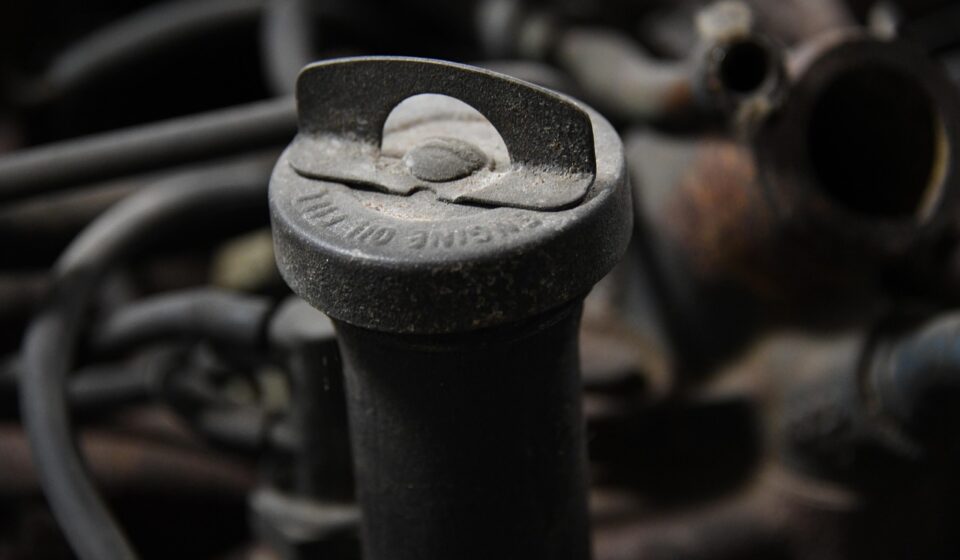
- Read the owner manual and oil cap. The oil cap may show viscosity, but the manual usually gives the full specification and service schedule.
- Match the viscosity exactly unless the manual gives alternatives. Do not move up or down in viscosity based only on mileage, weather, or habit.
- Check the performance category. For many modern gasoline cars in North America, API SQ with ILSAC GF-7A or GF-7B is now the current category path. API SP and GF-6 may still appear in manuals and on shelves during the transition period.
- Look for the required OEM approval. This is critical for many European vehicles, diesel engines, turbocharged engines, and cars with gasoline or diesel particulate filters.
- Choose oil type after specifications are met. Full synthetic is often the practical choice, but the approval matters more than the marketing term.
- Apply the correct service interval. Severe driving usually shortens the interval. Oil-life monitors should not be reset without actually changing the oil and filter.
- Use a quality oil filter and new sealing hardware where required. Oil selection cannot compensate for a collapsed filter, wrong bypass setting, damaged drain plug washer, or leak.
- Dispose of used oil properly. Used engine oil should go to a recycling or collection point, not into drains, soil, or household trash.
The final check is simple: if the container does not clearly show the viscosity and specifications required by the vehicle, choose a different oil. Clear labeling is part of good maintenance.
Frequently asked questions
Can I use 5W-30 instead of 0W-20?
Only if the vehicle manufacturer allows 5W-30 for your engine and driving conditions. The two oils may both be modern formulations, but they are not the same viscosity. Engines designed around 0W-20 may depend on that flow behavior for fuel economy, startup lubrication, and hydraulic control systems.
Is API SQ better than API SP?
API SQ is the newer gasoline engine oil category introduced in March 2025, and API describes it as covering performance areas such as fresh and aged oil LSPI protection, timing chain wear, deposits, and emission-system compatibility. For a car that specifies API SP, API SQ is generally the newer category path, but the full vehicle specification should still be checked.
Does full synthetic oil mean longer oil-change intervals?
Not automatically. Full synthetic oil may support longer intervals when the vehicle manufacturer, oil specification, and service schedule allow it. If the car operates under severe service, the recommended interval may still be shorter.
Is high-mileage engine oil necessary?
High-mileage oil can be useful for some older engines if it meets the required viscosity and performance category. It should not be used as a substitute for diagnosing leaks, worn seals, clogged ventilation, or mechanical oil consumption.
What is the safest rule if I am unsure?
Use the exact viscosity and specification in the owner manual, select a licensed oil from a reputable supplier, replace the filter at the same time, and keep records. If the engine has been modified or is used in racing, towing, or commercial service, follow the manufacturer or builder guidance for that use case.