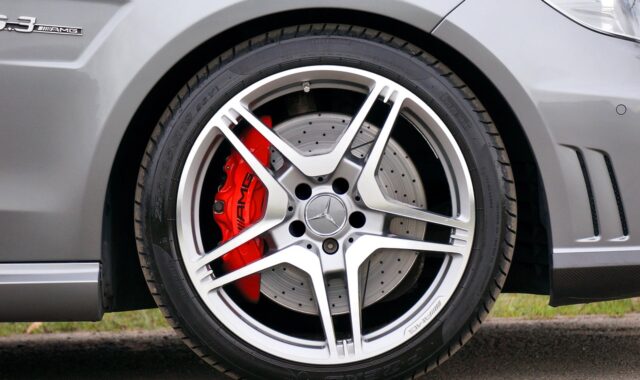
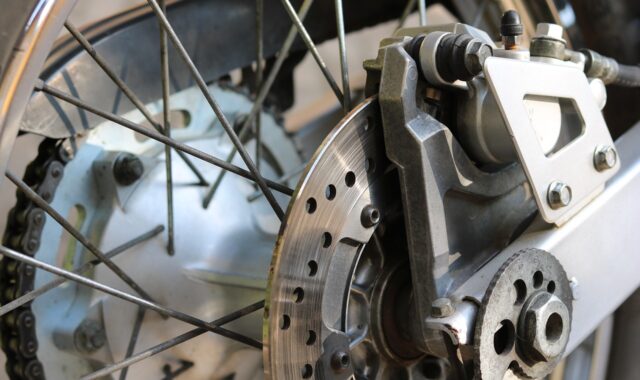
How automobile and auto components are reshaping braking and chassis systems
Why braking and chassis components now carry more responsibility
Automobile and auto components used in braking and chassis systems are no longer judged only by fit, wear life and replacement cost. These parts now influence crash avoidance, emissions compliance, electric-vehicle efficiency, ride quality and repair complexity. Brakes still rely on friction material, rotors, calipers, hydraulic pressure and mechanical integrity, but newer vehicles also add sensors, control software and driver-assistance functions. Chassis parts still manage load paths and wheel control, yet they must now work with heavier battery packs, tighter packaging and more precise calibration.
For parts distributors, repair professionals and industry readers, the practical change is clear: braking and chassis components need to be evaluated as vehicle systems, not isolated parts. That is especially true in the braking and chassis segment, where a small change in material, geometry or software calibration can affect noise, stopping distance, pedal feel, stability control or sensor performance.

A practical map of key braking and chassis components
Braking and chassis cover a wide group of parts. Some remain traditional wear items, while others are structural, electronic or software-dependent. The table below summarizes how their roles are changing.
| Component group | Traditional role | Newer pressure point | Why it matters |
|---|---|---|---|
| Brake pads and shoes | Create friction against a disc or drum | Lower copper content, brake-dust control, NVH tuning | Material choice affects stopping, dust, noise, corrosion and compliance |
| Rotors and drums | Provide friction surface and absorb heat | Coatings, corrosion resistance and thermal management | Regenerative braking can reduce use, which may increase corrosion in some duty cycles |
| Calipers, boosters and actuators | Convert pedal input into clamp force | Integration with AEB, ESC and brake-by-wire concepts | Controlled deceleration now depends on both hardware response and electronic command |
| ABS and ESC hardware | Prevent lockup and help maintain stability | Closer links to ADAS and vehicle motion control | Braking, steering and traction functions increasingly share sensor data |
| Control arms, links and bushings | Locate wheels and absorb vibration | Higher vehicle mass, tighter geometry and lower NVH tolerance | Small compliance changes can affect tire wear, alignment and steering feel |
| Knuckles, hubs and bearings | Carry wheel loads and enable rotation | Heavier vehicles and integrated sensor packaging | Durability and sensor accuracy both matter for safety systems |
This is why a braking or chassis decision is rarely just a price comparison. The better question is whether the part matches the vehicle application, regulatory environment, calibration assumptions and expected duty cycle.
The safety shift from brake hardware to controlled deceleration
The clearest regulatory signal for braking systems is the shift from passive braking hardware toward active crash-avoidance performance. In April 2024, the U.S. National Highway Traffic Safety Administration finalized Federal Motor Vehicle Safety Standard No. 127 for automatic emergency braking on light vehicles. The rule covers forward collision warning, automatic emergency braking and pedestrian automatic emergency braking. NHTSA said the standard would apply to nearly all U.S. light vehicles with a gross vehicle weight rating of 10,000 pounds or less, with a general compliance date of September 1, 2029 and a later date for some small-volume and final-stage manufacturers.
NHTSA projected that the rule would save at least 360 lives per year and prevent at least 24,000 injuries annually. Those figures are agency projections, not guaranteed outcomes. Still, they show why braking hardware is being pulled into the broader safety-electronics architecture. In November 2024, NHTSA issued a response to petitions for reconsideration that clarified warning signal requirements and corrected certain test-scenario language while denying other requested changes.
As of October 21, 2026, public U.S. rulemaking information also showed a proposed-stage item concerning possible amendments to FMVSS No. 127, including potential lead-time changes. Companies should therefore avoid treating any proposed extension as final until a final rule is published. The planning implication is straightforward: brake-related components increasingly need documentation, traceability and compatibility with electronic control strategies, not just dimensional fit.
Electrification changes loads, wear patterns and packaging
Electric vehicles do not remove braking and chassis demand; they change the conditions around it. Regenerative braking can reduce friction-brake use during many everyday deceleration events. Even so, friction brakes remain essential for emergency stops, low-speed control, parking functions, stability interventions and backup braking capacity. Lower friction-brake usage can also create different maintenance issues, including rotor surface corrosion, pad glazing or noise in vehicles that spend long periods using regenerative deceleration.
EV mass and packaging are just as important. Battery packs add weight and shift structural requirements into the lower body. Chassis components must manage this weight while preserving alignment, tire contact, ride comfort and crash-energy pathways. Control arms, subframes, bushings, mounts, hubs and bearings may face higher loads than comparable components on lighter vehicles. At the same time, EV platforms often push suppliers toward more integrated structures and reduced part counts.
Industry analysis from firms such as McKinsey has repeatedly highlighted cost pressure around EV structures and component standardization. The trade takeaway is not that every chassis part becomes high-tech. It is that even mature parts are being judged by additional criteria: weight, packaging, manufacturability, repair access, compatibility with sensors and contribution to overall vehicle efficiency.
Environmental rules are moving into friction materials
Brake components are also affected by environmental regulation. California’s Brake Friction Material Law moved the market toward lower-copper formulations, with the 2025 stage generally associated with brake friction materials containing less than 0.5% copper by weight for covered sales. This is not merely a labeling issue. It affects formulation, sourcing, validation, friction stability, noise performance and inventory planning for replacement parts.
Europe is also moving beyond exhaust-only emissions. Regulation (EU) 2024/1257, commonly referred to as Euro 7, includes requirements and methods related to brake emissions and tyre abrasion as part of a broader vehicle-emissions framework. For braking suppliers, this points to a future in which particle emissions, dust control and material durability become more visible parts of product evaluation.
These developments matter because brake pads and related friction materials must balance several demands at the same time: cold stopping performance, fade resistance, low noise, rotor compatibility, low dust, corrosion behavior and regulatory compliance. A formulation that works in one market or duty cycle may not be the right answer everywhere. See also: driveline systems.
Aftermarket demand still depends on vehicle age and repair economics
Although new-vehicle technology gets most of the attention, the aftermarket remains heavily influenced by the age and size of the vehicle fleet. S&P Global Mobility reported that the average age of U.S. light vehicles rose to 12.8 years in 2025. Older vehicles tend to keep demand steady for conventional wear parts such as pads, rotors, drums, calipers, bushings, ball joints, control arms, tie rods, shocks, struts, hubs and wheel bearings.
At the same time, the repair profile is becoming more mixed. A shop may replace a conventional rotor on one vehicle and then handle sensor-aware diagnostics, calibration checks or electronic parking-brake service on the next. This split explains why aftermarket participants need both traditional parts knowledge and a working understanding of ADAS, electronic stability control and service procedures.
Auto Care Association and AAPEX market materials have pointed to continued growth in the U.S. aftermarket, including a 2025 forecast of $435 billion for the light car and truck aftermarket. Forecasts should always be read as estimates, but the direction supports a practical conclusion: braking and chassis remain high-volume categories, while their technical content continues to rise.
What to check before comparing braking and chassis parts
For a useful comparison, start with application fitment, but do not stop there. The following checks help separate a suitable component from a risky substitution.
- Vehicle configuration: Confirm model year, trim, drivetrain, wheel size, gross vehicle weight rating and regional specification.
- System compatibility: Check whether the vehicle uses ABS, ESC, electronic parking brake, regenerative braking, adaptive cruise control or AEB functions that affect service requirements.
- Material compliance: For brake friction materials, verify whether local rules require copper limits, registration or other certification marks.
- Duty cycle: City driving, towing, mountain roads, ride-hailing use and fleet operation place different thermal and wear demands on parts.
- NVH expectations: Noise, vibration and harshness are not minor details in braking and chassis systems. Customer satisfaction often depends on quiet and predictable operation.
- Documentation: Reliable catalogs, batch traceability, test information and installation guidance reduce risk throughout the distribution and repair chain.
The main point is simple: braking and chassis components should be selected for the system they enter. Fitment data answers whether a part can be installed; performance, compliance and validation determine whether it should be installed.
Frequently asked questions
What are considered braking and chassis components?
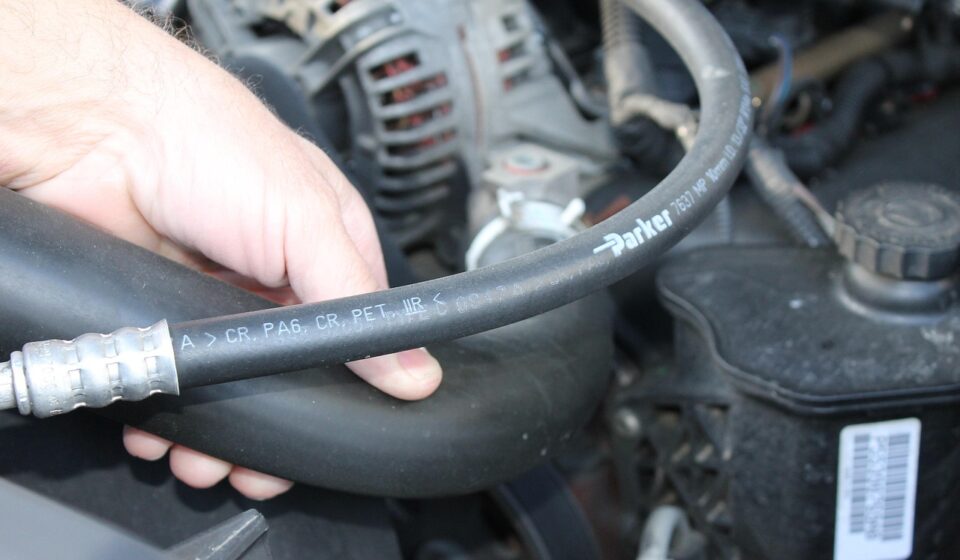
Braking components include pads, shoes, rotors, drums, calipers, master cylinders, boosters, hoses, valves, ABS modules, wheel-speed sensors and electronic parking-brake parts. Chassis components include control arms, bushings, ball joints, tie rods, knuckles, hubs, bearings, subframes, shocks, struts, springs and stabilizer links. The boundary is increasingly blurred because vehicle stability and ADAS functions use both braking and chassis data.
Do EVs wear out brake pads more slowly?
Often, yes, because regenerative braking can handle many routine deceleration events. However, the answer depends on driving style, climate, vehicle weight and control strategy. EV friction brakes may face different issues, including corrosion or noise from infrequent use, so inspection remains important even when pad wear appears low.
Is automatic emergency braking part of the brake system or ADAS?
It is both. AEB is usually discussed as an advanced driver-assistance function, but it depends on the service brake system to deliver controlled deceleration. Sensors and software may decide when to intervene, while brake actuators, hydraulics and friction components must still produce the stopping force.
Why do copper and brake-dust rules matter for replacement parts?
They affect what friction materials can be sold in certain markets and how pads are formulated. Lower-copper and lower-emission materials must still meet braking, noise and durability expectations. For distributors and repairers, this makes accurate sourcing and compliance documentation more important.
What is the most important trend for braking and chassis suppliers?
The most important trend is integration. Mechanical durability is still essential, but braking and chassis parts increasingly interact with electronics, software, emissions rules and EV platform design. Suppliers that understand the full system context are better positioned than those that treat parts as isolated commodities.