Brake pads and rotors replacement guide for accurate service decisions
When brake pads and rotors replacement is actually needed
Brake pads and rotors replacement is needed when the friction material, rotor thickness, or braking performance no longer meets the vehicle manufacturer’s service limits. Mileage alone is not a reliable basis for the decision. Vehicles used in hilly traffic, towing, rideshare service, delivery routes, or frequent stop-and-go conditions can wear brake components far faster than vehicles driven mainly on open highways. A proper decision starts with inspection and measurement: pad thickness, rotor thickness, rotor surface condition, runout, caliper movement, brake fluid condition, warning lights, and road-test symptoms all matter.
Replacing pads without checking the rotors can leave noise, vibration, or uneven bedding problems unresolved. Replacing rotors automatically at every pad change can also be unnecessary when the rotor is still within specification and has a surface that will support the new pads. The practical goal is not to replace the most parts. It is to restore predictable braking, even pad contact, heat control, and component compatibility across the axle.
For a broader look at brake, suspension, and chassis-related topics, see the braking and chassis section.
What pad and rotor wear is telling you
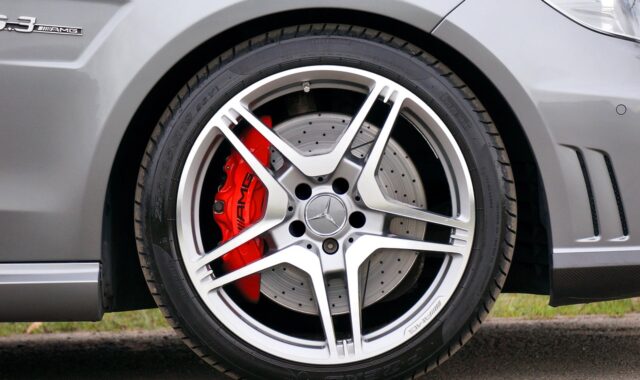
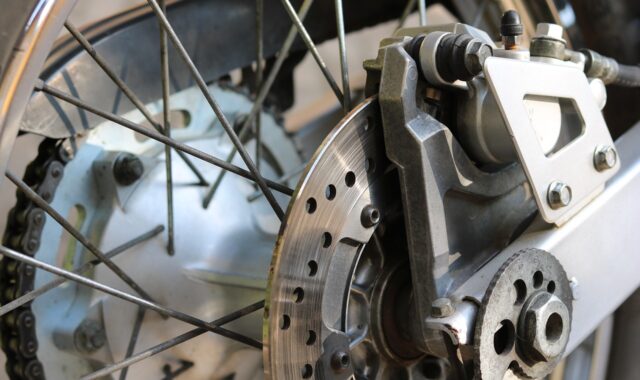
Disc brakes convert vehicle motion into heat through friction. Brake pads press against the rotor faces, while the rotor absorbs and releases heat as the wheel turns. Because these parts work as a pair, a noise or vibration complaint often points to the brake system rather than to one isolated component. Public guidance from the Car Care Council recommends that a brake inspection include brake lining wear, brake fluid level, rotor thickness, hose and line condition, warning lights, and a test drive. That is a useful framework because many brake complaints have more than one contributing cause.
Pad wear signs
Brake pads are designed to wear. The friction material becomes thinner over time until it reaches a service point set by the vehicle or brake component manufacturer. Some pads use acoustic wear indicators that create a high-pitched noise when the pad is near the end of its service life. Some vehicles use electronic pad sensors that trigger a dashboard message. The Federal Trade Commission’s consumer auto repair guidance also lists squealing from brake wear indicators as a sign that maintenance may be due.
Other pad-related warning signs include grinding, longer stopping feel, a brake pedal that feels different from normal, or one wheel producing more dust than the others. Grinding is especially important because it can indicate that the friction material has worn away enough for metal contact to damage the rotor face. Uneven inner and outer pad wear may point to seized slide pins, caliper piston problems, restricted hoses, or incorrect hardware installation rather than normal pad life.
Rotor wear signs
Rotors need enough thickness and surface integrity to manage heat and provide a stable friction surface. A shiny friction track is normal on a vehicle driven regularly, but deep grooves, heavy corrosion in the swept area, heat checking, cracks, thickness variation, and lateral runout can cause noise, pedal pulsation, or steering wheel shake under braking. A raised outer lip can suggest rotor wear, but it is not a substitute for measuring the rotor with the correct tool.
The most reliable rotor decision is based on the minimum thickness stamped on the rotor or listed in the service information. If the rotor is below minimum thickness, it should not be resurfaced or reused. If it is above minimum thickness but has surface defects, a technician may evaluate whether machining is permitted and whether the rotor will still remain above the discard specification after resurfacing.
Pads only, rotor resurfacing, or full replacement
The right brake repair depends on the measured condition of the parts and the customer’s braking complaint. Many disputes about brake service start when the inspection result is not explained clearly. A useful report should identify the measurement, the specification, and the reason behind the recommendation.
| Inspection result | Likely service decision | Why it matters |
|---|---|---|
| Pads are worn, rotors are smooth and above specification | Pad replacement may be enough if the rotor surface is compatible with the new friction material | A measured rotor can sometimes be reused, but the pad must bed correctly and the surface must not cause noise or vibration |
| Pads are worn and rotors have grooves, thickness variation, or runout | Rotor resurfacing or rotor replacement should be considered | New pads on a poor rotor surface may create pedal pulsation, noise, reduced contact area, or uneven wear |
| Rotor is at or below minimum thickness | Rotor replacement is required | A rotor below specification cannot manage heat and wear as intended |
| One pad is much thinner than its axle partner | Inspect caliper slides, pistons, hoses, and hardware before installing new parts | Uneven wear often means a mechanical or hydraulic problem is causing drag or poor release |
| Noise remains after recent pad installation | Check hardware, lubrication points, rotor finish, pad fitment, and bedding procedure | Noise can come from installation details, not only from the friction material itself |
On most passenger vehicles, brake service is performed by axle rather than by one corner at a time. The left and right wheels on the same axle should have consistent braking behavior. Replacing one side only can create uneven response unless there is a specific service reason and the remaining side has been carefully evaluated.
What a complete brake job should include
A brake job is more than installing pads and bolting on rotors. Hardware condition, mounting surfaces, hydraulic parts, and wheel-end details all affect whether the repair feels smooth after the vehicle leaves the shop. At minimum, a professional inspection should compare pad wear on both sides of the axle, measure rotor thickness, look for rotor surface defects, check caliper slide movement, inspect pad abutment areas, and verify that hoses and lines are not leaking, cracked, kinked, or restricted.
Installation quality matters. Hub faces should be clean so the rotor sits flat. Caliper slide pins and contact points should be serviced according to the vehicle manufacturer’s procedure. Wheel fasteners should be tightened evenly to the specified torque because uneven clamping can contribute to rotor distortion complaints. If the brake system has an electronic parking brake, the correct service mode may be required before rear pad replacement. Skipping that step can damage components on some modern vehicles.
Brake fluid should not be ignored in a pad and rotor discussion. Low fluid may reflect pad wear, but it can also indicate leakage. Fluid that is old or contaminated can affect hydraulic performance and corrosion protection. Federal Motor Vehicle Safety Standard No. 135 addresses light vehicle brake system performance at the vehicle level, which reinforces a practical point for repair decisions: pads and rotors are part of a wider system, not standalone wear items.
After installation, many friction materials require a bedding or burnishing procedure. The goal is to establish an even transfer layer between the pad and rotor surfaces. When bedding is skipped or performed incorrectly, the vehicle may develop noise, odor, uneven deposits, or vibration-like complaints that are sometimes mistaken for a warped rotor. See also: driveline systems.
How driving conditions and part selection affect replacement intervals
There is no universal mileage for brake pads and rotors replacement. Vehicle weight, wheel size, brake design, pad material, driver behavior, road grade, climate, and load all change wear rates. A compact commuter driven mostly on open roads may go much longer between brake services than a heavier SUV used in city traffic. A tow vehicle, delivery vehicle, or mountain-region vehicle may consume pads and rotors more quickly because the brakes convert more energy into heat more often.
Pad material also changes the service experience. Ceramic, semi-metallic, low-metallic, and organic formulations can differ in noise tendency, dust, cold bite, rotor wear, and heat tolerance. A pad that is quiet and low dust on a daily commuter may not be the right choice for repeated heavy braking. A more aggressive pad may manage heat better, but depending on the formulation, it can also create more rotor wear, dust, or noise.
Environmental requirements have also influenced brake friction development. The U.S. Environmental Protection Agency’s Copper-Free Brake Initiative, signed with states and automotive industry representatives on January 21, 2015, called for reducing copper in brake pads to less than 5 percent by weight in 2021 and to 0.5 percent by 2025. For replacement parts buyers, the practical takeaway is to confirm that pad specifications match the vehicle, market requirements, and intended use rather than choosing by price or friction label alone.
Hybrid and electric vehicles add another variable. Regenerative braking can reduce friction brake use in some driving conditions, so pads may wear slowly. However, low use can also allow corrosion to develop on rotors, especially in wet or salty climates. For these vehicles, visual inspection and road-test feel can be just as important as pad thickness.
Questions to ask before approving a brake quote
A brake quote should be specific enough for a vehicle owner or fleet operator to understand the reason for the recommendation. Instead of asking only for the price, ask what was measured and what limit was used. A clear estimate should identify front or rear axle work, pad material type, whether rotors are being resurfaced or replaced, whether hardware is included, and whether caliper or hydraulic repairs are needed.
- What are the measured inner and outer pad thicknesses on both sides of the axle?
- What is the measured rotor thickness, and what is the minimum specification?
- Is there rotor runout, thickness variation, cracking, heavy corrosion, or deep scoring?
- Are caliper slide pins, pistons, hoses, and pad hardware moving correctly?
- Will the rotors be replaced, resurfaced, or reused, and why?
- Is a bedding procedure recommended for the selected pads?
- Does the vehicle require electronic parking brake service mode or scan-tool steps?
These questions help separate a measured safety recommendation from a generic parts replacement. They also reduce the risk of replacing pads and rotors while leaving the root cause of uneven wear untouched.
Frequently asked questions
Do brake pads and rotors always need to be replaced together?
No. They work together, but they do not always reach the end of service life at the same time. Pads can sometimes be replaced while rotors are reused if the rotors are smooth, above minimum thickness, and compatible with the new pads. Rotors should be resurfaced or replaced when measurements, surface condition, or braking symptoms justify it.
What happens if new pads are installed on worn rotors?
New pads may not make even contact with a grooved, thin, corroded, or uneven rotor. That can lead to noise, vibration, longer bedding time, uneven pad wear, or reduced braking feel. If the rotor is below its minimum thickness, reuse is not appropriate.
Can a brake vibration mean the rotors are warped?
It can, but the word warped is often used loosely. Pedal pulsation or steering shake under braking may come from rotor thickness variation, lateral runout, uneven pad deposits, hub contamination, or wheel-end issues. Measurement is needed before deciding on machining or replacement.
Why did one pad wear faster than the others?
Uneven pad wear often points to a caliper slide, piston, hose, hardware, or installation issue. If only the pads are replaced, the same problem may return and shorten the life of the new components.
Is brake pad mileage a reliable replacement rule?
Mileage is only a rough clue. Driving style, traffic, terrain, vehicle weight, climate, towing, and brake design can change wear significantly. Inspection measurements and symptoms are more reliable than a fixed mileage number.