CV joint basics for driveline systems, symptoms, design choices, and maintenance
The short answer
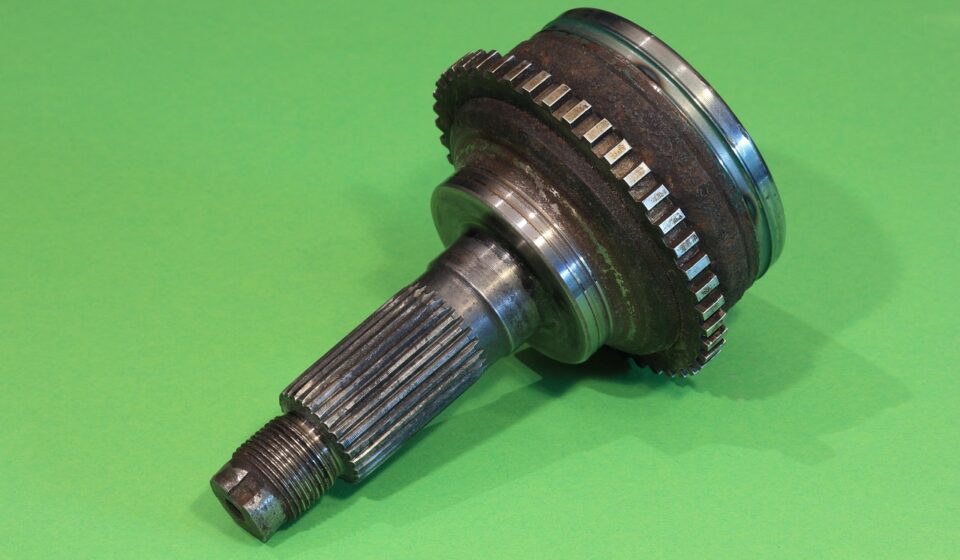
A CV joint, or constant velocity joint, is the flexible coupling in a driveline that transfers torque while allowing the shaft angle and, in some positions, shaft length to change. In everyday vehicle terms, it lets a drive axle keep powering a wheel while that wheel steers, rises, falls, and moves through suspension travel. This is why CV joints are standard on most front-wheel-drive vehicles and are also widely used in all-wheel-drive, four-wheel-drive, and independent rear suspension layouts.
For owners, technicians, and parts buyers, the key point is that CV joint failure often gives warning signs before a complete loss of drive. Many failures start when the rubber boot cracks, loses clamp tension, or begins to leak grease. Once grease escapes and road grit or water enters, wear can accelerate quickly. Clicking during turns, vibration under acceleration, grease around the inner wheel area, or shudder on launch are all reasons to inspect the joint, boot, shaft, and related driveline components more closely.
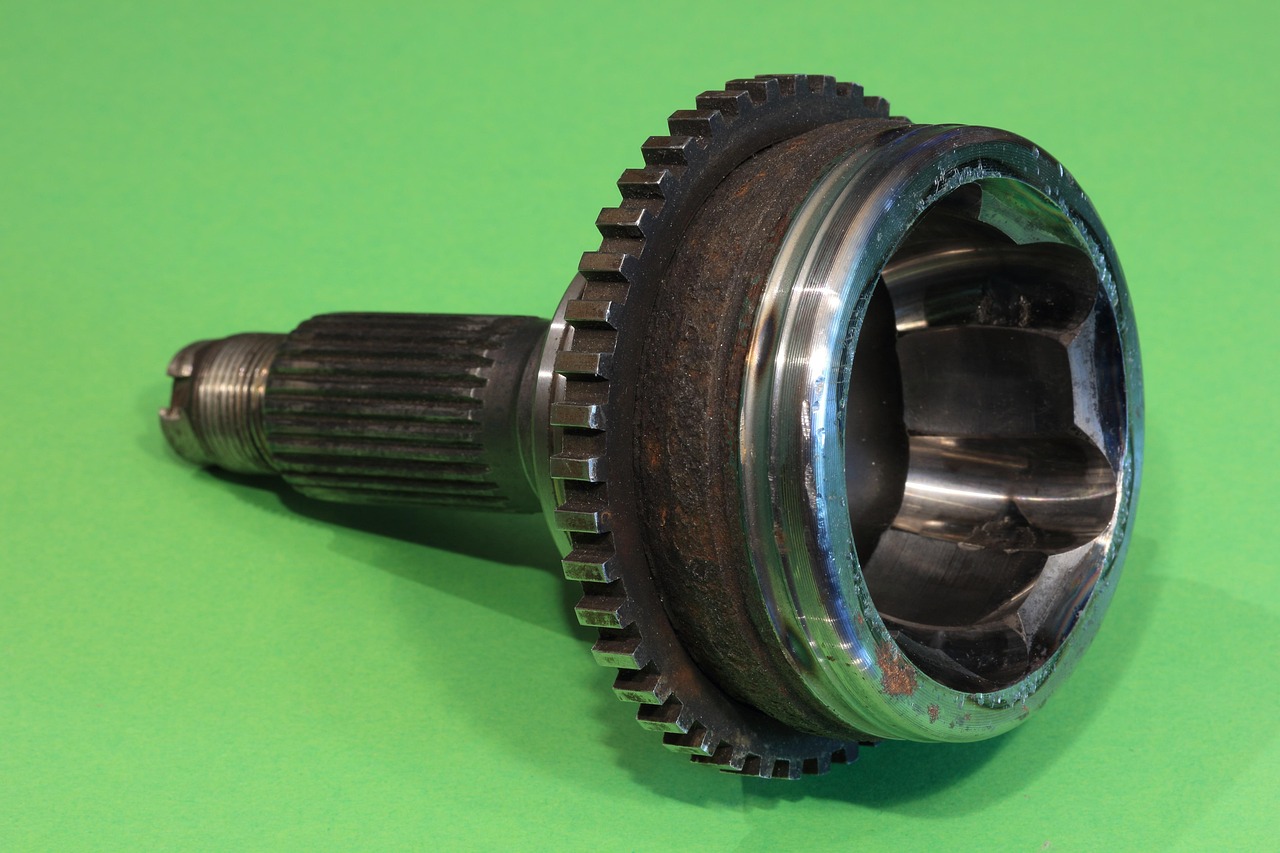
Where a CV joint sits in the driveline
Most passenger-car halfshafts use two CV joints. Supplier literature from major driveline manufacturers commonly describes the layout as a fixed joint at the wheel end and a plunging joint at the gearbox or differential end, connected by an intermediate shaft. The fixed outer joint handles the larger angles created by steering. The inner joint allows axial movement as the suspension compresses and rebounds.
This arrangement solves two practical problems. The wheel hub does not stay in a fixed position relative to the transmission or differential; it moves vertically with the suspension and, on steered axles, turns left and right. At the same time, the distance between the gearbox output and the wheel hub changes slightly through suspension travel. A rigid shaft would bind, transmit harsh loads, or damage bearings and seals. A CV axle assembly absorbs that movement while keeping torque transfer smoother.
A universal joint can also transmit torque through an angle, but a single U-joint does not maintain perfectly uniform output speed at higher operating angles. CV joints became common in automotive halfshaft applications because they are better suited to the combined demands of steering angle, suspension movement, tight packaging, and passenger-car smoothness.
Main CV joint designs and why placement matters
CV joints are not interchangeable by design intent. The right joint depends on operating angle, plunge movement, torque, available package space, friction, noise behavior, cost, and serviceability. The two terms most parts buyers and technicians will see most often are Rzeppa and tripod.
Rzeppa and other fixed ball joints
A Rzeppa-type joint is a ball-style CV joint often used on the outer end of a front halfshaft. Its cage, inner race, outer race, and balls are arranged to transmit torque through a relatively high operating angle. That makes it suitable near the wheel hub, where steering angle is a major requirement. In service discussions, when an outer CV joint clicks during a tight turn, this is often the joint type being referenced.
Tripod and plunging joints
A tripod joint typically uses a three-lobed spider with roller elements running in matching tracks inside a housing. It is commonly used as an inner joint because it can provide plunge movement. That plunge allows the shaft to lengthen and shorten slightly as the powertrain moves on its mounts and the suspension changes position. Tripod joints are valued for compactness, cost effectiveness, and axial movement, although driveline research has long noted that their internal friction and generated axial forces can influence shudder and vibration behavior.
Other variations
Modern sideshafts may also use cross-groove, double-offset, counter-track, and other proprietary joint geometries. These are not just naming differences. They may be selected to reduce friction, improve noise and vibration behavior, fit a tighter package, or support a higher torque duty cycle. In current driveline engineering, the CV joint, shaft, boot, grease, clamps, and balancing strategy are increasingly treated as one system rather than separate parts.
| Joint type | Typical position | Main purpose | Common symptom when worn |
|---|---|---|---|
| Fixed ball or Rzeppa-style joint | Outer wheel end | High-angle operation for steering and suspension movement | Clicking or popping during tight turns |
| Tripod plunging joint | Inner gearbox or differential end | Axial plunge and torque transfer with suspension travel | Vibration, shudder, or knocking under acceleration |
| Cross-groove or double-offset designs | Often inner or specialized applications | Packaging, plunge, friction, and NVH tuning | Application-specific vibration or wear symptoms |
Why most CV joint failures start with the boot
The boot is a simple component with a demanding job. It must flex thousands of times, tolerate heat, resist road splash, hold grease inside the joint, and keep abrasive contamination out. If the boot splits, rotation can throw grease outward. The first visible sign may be dark grease on the inside of the wheel, lower control arm, strut, underbody, or brake splash shield.
Once the joint loses grease, metal contact and heat increase. If water, dust, sand, or road salt enters, the balls, rollers, races, and tracks can become pitted or scored. At that point, replacing only the boot may not restore long-term reliability. OEM service procedures and NHTSA-hosted technical service bulletins for specific vehicles commonly direct technicians to inspect boot leakage, grease condition, and the surrounding area before choosing between a boot kit and a larger axle or joint repair.
Several conditions can shorten boot life, including age-related rubber hardening, incorrect installation, weak clamp tension, contact with nearby components, excessive operating angle from modified suspension geometry, heat from exhaust routing, and contamination during previous service. For that reason, a visual boot inspection is often more useful than waiting for noise to appear.
Symptoms that help separate CV joint issues from other driveline faults
CV joint symptoms can overlap with wheel bearing, tire, brake, engine mount, differential, and transmission problems. A sound diagnosis should connect the symptom to the condition that produces it, not just to the general area of the vehicle.
- Clicking on tight turns: Often associated with outer CV joint wear, especially when the sound is rhythmic and becomes clearer under light throttle in a parking-lot turn.
- Grease around the wheel well: Strong evidence of a boot leak or clamp issue, although the joint condition still depends on how long it has been exposed and whether contamination entered.
- Vibration under acceleration: May point to an inner CV joint, tripod joint wear, shaft imbalance, powertrain mount movement, or another driveline issue.
- Clunk on takeoff or gear changes: Could involve CV joint clearance, splines, mounts, differential backlash, or suspension bushings.
- Noise that changes with road speed but not throttle: May be more consistent with a tire or wheel bearing than a CV joint.
A practical inspection sequence starts with the safest and most visible evidence: boot cracks, thrown grease, clamp position, torn bellows, impact damage, and looseness at the shaft. The next step is to compare symptoms during turning, acceleration, deceleration, and coasting. When a vehicle has several possible faults, replacing an axle based on a single noise can lead to unnecessary cost.
Maintenance and replacement decisions
There is no universal rule that every leaking boot requires a complete axle replacement. The decision depends on exposure time, grease loss, contamination, vehicle value, labor access, part quality, and manufacturer procedure. A clean joint with a fresh boot tear caught early may be a reasonable candidate for a boot kit, new grease, and proper clamps. A noisy joint, a dry joint, or a joint that contains abrasive material is usually a poor candidate for boot-only service.
Grease selection also matters. CV joint grease is formulated for high contact pressure and the sliding or rolling motion inside the joint. Using generic chassis grease or mixing incompatible greases can reduce service life. Service information may specify the amount and type of grease for the inner and outer joints, and those amounts are not always the same. Too little grease increases wear risk; too much grease or poor venting can stress the boot as it heats and flexes.
Installation quality is as important as part selection. The axle nut, circlips, splines, support bearing, seals, and fasteners should be handled according to the vehicle procedure. Many axle nuts are torque-critical, and some are designed for one-time use. Incorrect torque can affect wheel bearing preload, spline seating, or long-term noise. On vehicles with anti-lock braking or wheel-speed sensors near the hub, careless work can also create warning lights that are unrelated to the original CV joint fault.
Why CV joint design matters more in electric and hybrid vehicles
CV joints are mature components, but their design requirements continue to change. Electric and hybrid vehicles place different demands on the driveline. Electric motors can deliver high torque quickly from low speed. They are also quieter than combustion engines in many driving conditions, so noises that were once masked by engine sound can become more noticeable. Regenerative braking can also reverse torque flow through the driveline more often than in a traditional powertrain.
Supplier information from major driveline companies notes that sideshaft solutions are now tailored for internal combustion, hybrid, and electric platforms. The engineering focus is not only strength. Efficiency, plunge resistance, balancing, generated axial force, and noise behavior all matter. A small friction reduction in a rotating driveline component can support efficiency targets, while better vibration control can improve perceived vehicle quality.
SAE technical papers over the past two decades have examined tripod joint friction, sliding behavior, generated axial force, powertrain wiggle, and rattling linked to joint and shaft conditions. The practical takeaway is straightforward: a CV joint is not only a replaceable wear item. It is part of the vehicle’s NVH, durability, and efficiency strategy. As electrified platforms expand, halfshaft design will continue to receive attention because torque delivery is immediate and the cabin is less forgiving of driveline noise.
What parts buyers should compare beyond price
For replacement parts, the lowest purchase price does not always mean the lowest total cost. A CV axle assembly has multiple quality points: joint geometry, heat treatment, boot material, grease specification, clamp design, shaft straightness, balance, spline accuracy, and corrosion protection. A part that fits physically can still create vibration, premature boot failure, or seal problems if these details are weak.
Buyers should compare the exact application, drivetrain layout, transmission type, ABS tone ring or sensor arrangement, shaft length, spline count, and left-right position. Modified ride height, larger tires, or changed suspension arms can increase joint angles and reduce boot life. For fleets and repair shops, tracking repeat failures by axle position and driving condition can help identify whether the root cause is part quality, installation practice, or vehicle geometry.
For engineering and sourcing teams, the better question is not simply whether a CV joint can handle peak torque. It is whether the complete sideshaft can manage torque, angle, plunge, lubrication, heat, sealing, corrosion, and NVH over the intended duty cycle.
Frequently asked questions
Can you drive with a bad CV joint?
A vehicle may still move with a worn CV joint, but continued driving can increase damage and may eventually lead to loss of drive at that wheel. If the joint is clicking loudly, binding, vibrating, or has lost most of its grease, prompt inspection and repair is the safer choice.
Is a CV joint the same as a CV axle?
No. The CV joint is the articulating joint. A CV axle, halfshaft, or sideshaft is the assembly that usually includes an inner joint, outer joint, shaft, boots, clamps, and grease. In many repairs, the complete axle assembly is replaced even if only one joint is worn.
Which CV joint fails first, inner or outer?
There is no fixed rule. Outer joints often show clicking on turns because they operate at larger steering angles. Inner joints may create vibration or shudder under acceleration. Boot condition, operating angle, contamination, and driving conditions are usually more important than position alone.
Can a torn boot be repaired without replacing the axle?
Sometimes, yes. If the tear is found early and the joint is still clean and quiet, a proper boot kit with the correct grease and clamps may be reasonable. If the joint has run dry, become noisy, or taken in grit and water, replacing the joint or axle assembly is usually more reliable.
Do electric vehicles still use CV joints?
Many electric vehicles use halfshafts with CV joints because the wheels still move through steering and suspension travel while receiving torque. The design targets may differ, with more emphasis on instant torque, quiet operation, efficiency, and vibration control.