Ford 9 inch 3rd member explained for gear ratio and differential selection
What a Ford 9 inch 3rd member does
A Ford 9 inch 3rd member is the removable, front-loading center section used in a Ford 9-inch rear axle. Instead of servicing the differential through a rear cover, the ring gear, pinion gear, differential carrier, bearings, pinion support, and yoke are removed as one assembly from the front of the housing.
That dropout layout is a major reason the Ford 9-inch remains common in classic cars, street rods, drag cars, off-road builds, and custom driveline projects. It lets a builder set up gears on the bench, change ratios more easily than with many integral-carrier axles, and choose from a wide aftermarket range of cases, differentials, spline counts, and yokes.
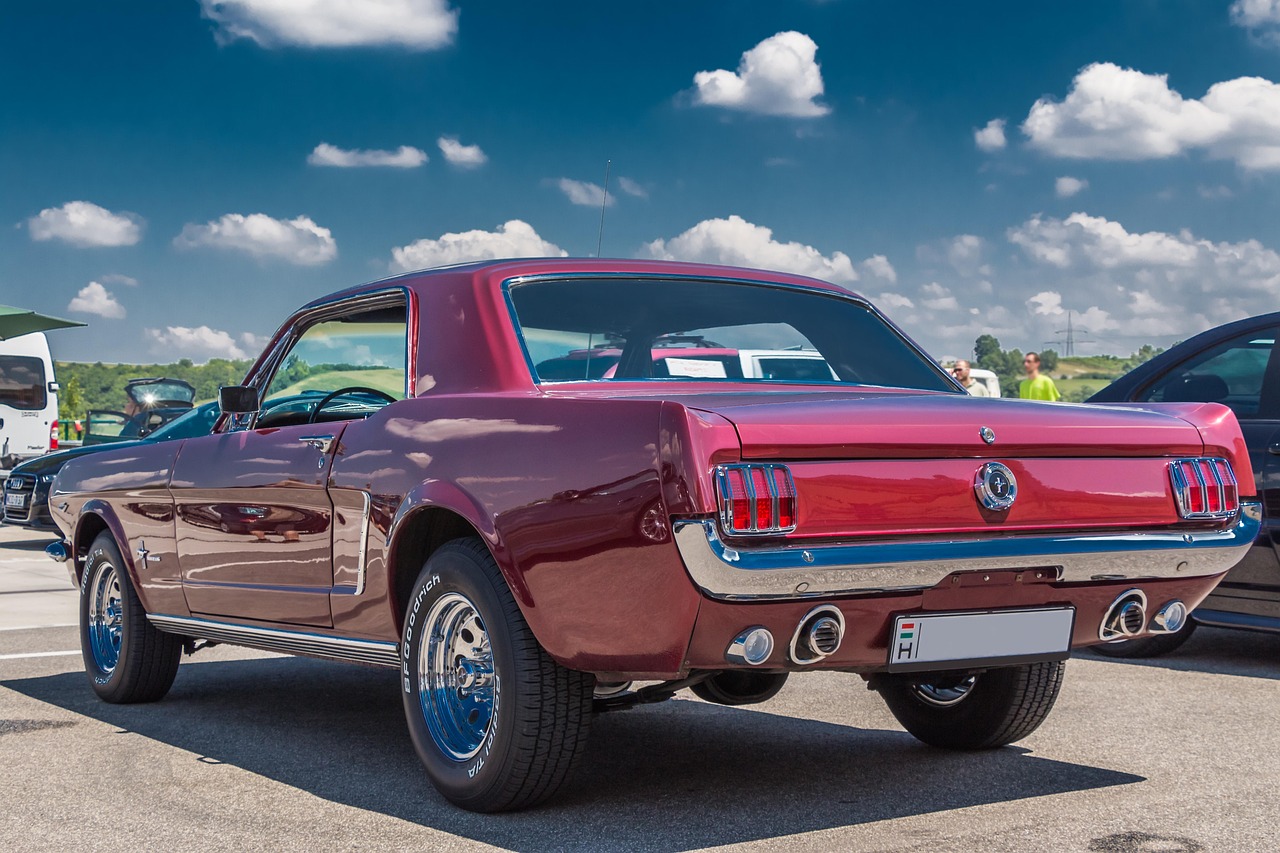
In most buying situations, the practical question is not simply what a third member is. The buyer also needs to confirm which specifications must match the axle and vehicle so the unit fits the housing, axle shafts, driveshaft, and intended duty cycle. For related drivetrain background, see the driveline systems category.
Why the Ford 9-inch uses a removable third member
The Ford 9-inch axle is often described as a dropout or removable-carrier design. The axle housing has a welded rear bowl rather than a conventional service cover. The third member bolts into the front of the housing, where the driveshaft yoke connects to the pinion. Once the axle shafts are removed or pulled outward far enough, the complete center assembly can be unbolted and taken out of the housing.
This construction has clear service advantages. Gear setup can be done on a workbench instead of under the vehicle. A complete spare third member can also be assembled with a different ratio and swapped into the same compatible housing. For racing and custom applications, that modularity helps match the rear axle to tire diameter, transmission gearing, engine torque, vehicle weight, and use case.
There are trade-offs. The third member is heavy, the assembly has to seal correctly to the housing, and ring-and-pinion setup still requires accurate tools and experience. The Ford 9-inch also has design characteristics that can add friction compared with some other axle layouts. It should be selected because the housing, vehicle weight, torque level, packaging, parts availability, and service goals work together, not only because the axle has a strong reputation.
Main parts inside a Ford 9 inch 3rd member
A complete third member is more than a ring-and-pinion set. When suppliers such as Currie Enterprises, Moser Engineering, and Yukon Gear & Axle describe complete Ford 9-inch assemblies, the usual configurable items include the case, differential type, gear ratio, pinion support, yoke, bearings, seals, and axle spline count. The exact content depends on the supplier and the build specification.
Case or center section
The case holds the differential and supports the ring-and-pinion relationship. Factory-style gray iron cases may be suitable for mild restorations or low-stress street use. Many performance assemblies use nodular iron or aluminum cases instead. Nodular iron is commonly chosen where strength and dimensional stability are priorities. Aluminum cases reduce weight, but they should be selected with the vehicle weight, torque level, and duty cycle in mind.
Ring and pinion gear set
The axle ratio comes from the relationship between the ring gear and pinion gear. A 3.00:1 ratio turns the driveshaft about three times for one wheel revolution. A 4.11:1 ratio turns it about 4.11 times. Numerically higher ratios generally improve launch and acceleration but raise engine speed at cruising speed. Numerically lower ratios reduce cruise rpm, although they can feel softer during acceleration, especially with tall tires or a mild engine.
Differential carrier
The differential controls how torque is shared between the left and right axle shafts. Common choices include an open differential, limited-slip differential, automatic locker, selectable locker in some custom applications, and spool for dedicated racing. A street vehicle usually needs predictable cornering behavior. A drag car may put more emphasis on equal torque delivery. A spool is simple and strong, but it locks both axles together at all times and is generally unsuitable for normal street use.
Pinion support and yoke
The pinion support holds the pinion bearings and helps control pinion stability under load. Aftermarket assemblies may specify standard or Daytona-style pinion supports, with big-bearing versions available for higher-load use. The yoke must match the driveshaft U-joint series and the pinion spline specification. If the yoke is wrong, the third member may bolt into the housing but still fail to connect correctly to the driveshaft.
Specifications to check before choosing a third member
The Ford 9-inch aftermarket is broad, but not every third member fits every axle without checking the details. The following table summarizes the main decisions to verify before ordering or assembling a unit.
| Specification | Why it matters | What to verify |
|---|---|---|
| Axle spline count | The side gears or differential must match the axle shafts. | Common counts include 28 and 31 spline for many traditional builds, with 33, 35, and 40 spline used in many aftermarket performance applications. |
| Gear ratio | Changes acceleration, cruise rpm, engine load, and drivability. | Match ratio to tire diameter, transmission, engine torque curve, vehicle weight, and intended speed range. |
| Differential type | Determines traction behavior and cornering manners. | Choose open, limited-slip, locker, or spool based on street, strip, off-road, or mixed use. |
| Case material | Affects strength, weight, and cost. | Compare factory-style, nodular iron, and aluminum cases for the torque and duty cycle. |
| Pinion support | Supports the pinion under load. | Confirm standard or big-bearing support, bearing style, and intended torque level. |
| Pinion yoke | Connects the third member to the driveshaft. | Match U-joint series, pinion spline, seal surface, and driveshaft length requirements. |
| Housing compatibility | The third member must seal and bolt correctly. | Check housing condition, studs, gasket surface, axle bearing style, and axle shaft engagement. |
Aftermarket supplier catalogs commonly list complete third members in many combinations. For example, recent catalog pages from Moser Engineering list Ford 9-inch economy third members with selectable ratios from 3.00 to 5.14, while Currie listings show built-to-order assemblies with choices for case material, gear ratio, carrier, pinion support, and yoke. These catalog ranges are useful references, but the correct choice still depends on the vehicle rather than the widest available option list.
How to choose the right gear ratio
Gear ratio is often the first number buyers compare, but it should not be chosen by itself. The right ratio depends on how the vehicle is driven and how the rest of the driveline is configured.
Street cruising
A street car that spends time on highways usually benefits from a moderate ratio, especially if it has a non-overdrive transmission. Too much gear can make the engine noisy, thirsty, and tiring at cruise speed. With an overdrive transmission, a numerically higher axle ratio may still cruise comfortably because top gear reduces the final drive.
Drag racing and short-distance acceleration
Drag racing setups often use numerically higher ratios to help the engine reach its power band quickly. Even so, tire diameter, transmission gear spread, converter or clutch behavior, and finish-line rpm all matter. A ratio that works with a tall slick may be excessive with a shorter street tire.
Off-road and truck use
In off-road and truck applications, low-speed control, tire size, and torque multiplication are key factors. A larger tire effectively raises the overall gearing, so many builders choose a numerically higher axle ratio to restore acceleration and low-speed response. The third member also needs a differential type suited to the terrain, not only a ring-and-pinion ratio that looks good on paper.
Differential type and spline count should match the use case
The differential choice has a major effect on how the vehicle behaves. An open differential is smooth and inexpensive, but when one tire slips it sends usable drive to the wheel with less traction. A limited-slip differential improves traction while keeping more street-friendly manners. A locker can provide strong traction, but it may create noise, engagement feel, or handling changes that some drivers dislike on pavement. A spool keeps both axles locked together permanently and is mainly a racing part. See also: braking and chassis.
Spline count is both a strength and compatibility issue. Many original and mild street Ford 9-inch applications used 28- or 31-spline axle shafts. Aftermarket performance packages often move to larger counts such as 35 spline. A higher spline count usually pairs with a larger axle shaft diameter and greater torque capacity, but it also requires the correct differential side gears or spool, bearings, and sometimes case clearance. It is not a standalone upgrade if the rest of the axle remains mismatched.
For example, a 35-spline third member will not work in a housing that still has 28-spline axle shafts unless the axle shafts and related parts are changed. Likewise, a strong third member cannot compensate for a weak housing, poor welds, worn bearings, incorrect driveshaft geometry, or tires that create more shock load than the rest of the chassis can handle.
Installation and setup considerations
A Ford 9 inch 3rd member may be easier to remove than many integral-carrier axle assemblies, but setup accuracy still matters. Ring-and-pinion work requires correct pinion depth, bearing preload, backlash, gear contact pattern, fastener torque, and seal installation. These are measurement-based operations, not guesswork.
Builders commonly use tools such as a dial indicator, inch-pound torque wrench, bearing pullers or presses, marking compound, and setup bearings. A complete preassembled third member reduces the amount of setup work for the installer, but the housing, gasket surface, axle shaft engagement, yoke connection, gear oil, and venting still need attention during installation.
- Inspect the housing face for burrs, distortion, old sealant, or damaged studs.
- Confirm that the axle shafts are not bottoming inside the differential.
- Use the gear oil and friction modifier specified by the gear and differential manufacturer.
- Check driveshaft yoke engagement and U-joint compatibility before final tightening.
- Follow the gear manufacturer’s break-in procedure for new ring-and-pinion sets.
- Recheck for leaks, noise, and abnormal heat after the first drive cycle.
Noise after installation is often blamed on the gear set, but it can also come from incorrect backlash, poor pinion preload, a distorted housing, worn axle bearings, incorrect driveshaft angle, or insufficient lubrication. If a new assembly is noisy, it should be inspected rather than driven until the pattern worsens.
Common mistakes when buying a Ford 9-inch third member
The most common mistake is treating the third member as a universal part. It is modular, but it still has to match the axle shafts, housing, driveshaft, and duty cycle. Another mistake is overbuilding one specification while ignoring the system. A nodular case and 35-spline differential may be appropriate for a high-load build, but they will not solve poor suspension geometry or a driveshaft that is too short.
Choosing too much gear for a street car is also common. A ratio that feels exciting during short acceleration can become unpleasant during steady cruising. On the other hand, choosing too little gear for a heavy vehicle with tall tires can make the vehicle feel lazy and place extra load on the clutch or torque converter.
Some buyers also focus on brand or price without confirming the assembled details. Two Ford 9-inch third members can look similar from the outside while using different carriers, yokes, pinion supports, bearings, and gear ratios. A proper specification sheet should identify the ratio, differential type, spline count, yoke series, case type, pinion support, and whether the assembly is new, rebuilt, or used.
Frequently asked questions
Is a Ford 9 inch 3rd member the same as the differential?
Not exactly. The differential is one component inside the third member. The third member is the removable assembly that includes the case, ring gear, pinion gear, differential, bearings, pinion support, and yoke.
Can I change gear ratio by swapping the third member?
Yes, if the replacement third member matches the housing, axle spline count, yoke requirements, and intended application. This is one of the major advantages of the Ford 9-inch design. The axle shafts and driveshaft connection still need to be verified.
What spline count should I choose?
For many mild street builds, 28- or 31-spline parts may already be present depending on the existing axle. Higher spline counts such as 35 spline are common in performance aftermarket assemblies. The right choice depends on torque, tire grip, vehicle weight, and the parts already in the axle.
Is a nodular iron case necessary?
It is not necessary for every vehicle, but it is commonly selected for performance and higher-load applications because it offers more strength than many basic factory-style cases. A restoration, cruiser, drag car, and off-road build may each justify a different case choice.
Should I buy a complete assembled third member or build one from parts?
A complete assembled unit can save setup time and reduce the chance of gear setup errors, especially for builders without differential tools. Building from parts gives more control over the specification, but it requires accurate measurement, experience, and careful inspection.
Practical takeaway
A Ford 9 inch 3rd member is useful because it packages the key gear and differential components into a removable assembly. That makes ratio changes, bench setup, and performance customization more practical than with many rear-cover axle designs. The right unit is not simply the strongest or most expensive option. It is the assembly that matches the axle shafts, housing, driveshaft, vehicle weight, tire size, engine output, transmission gearing, and actual driving use.
Before ordering, record the existing axle spline count, desired ratio, tire diameter, transmission type, yoke requirement, differential preference, and housing condition. With those details confirmed, the Ford 9-inch third member becomes a flexible driveline component rather than a guessing game.