How transmission technology is reshaping driveline systems
Transmission technology is becoming a driveline system decision
A transmission is no longer only the component that selects a gear between the engine and the wheels. In modern driveline systems, it is part of a wider strategy covering efficiency, packaging and control. That strategy can include the engine or traction motor, clutch or torque converter, differential, axle layout, software and thermal management.
Gasoline and diesel vehicles still rely on multi-speed gearboxes to keep combustion engines in efficient speed ranges. Hybrids often use power-split or CVT-style arrangements. Most battery electric vehicles use a single-speed reduction unit, although a small number of performance and commercial EV applications continue to evaluate two-speed designs.

The main industry change is not that one transmission type is replacing all others. A more accurate view is that transmission choice is becoming more application-specific as automakers balance fuel economy rules, EV growth, vehicle weight, towing needs, customer expectations and manufacturing cost.
What a transmission does in a driveline system
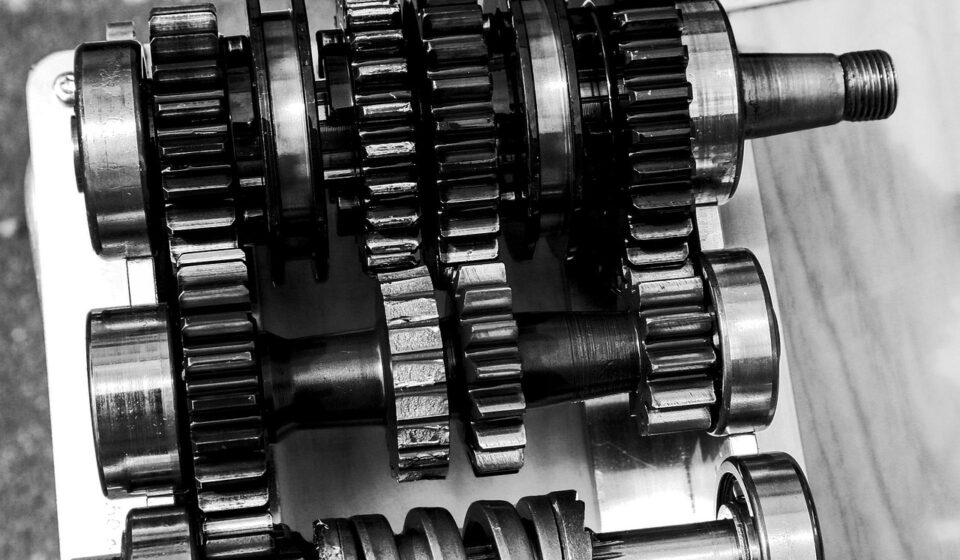
In a conventional driveline, the transmission changes the relationship between rotational speed and torque before power reaches the final drive and wheels. A lower gear multiplies torque for launch, hill climbing or towing. A higher gear lowers engine speed at cruising speed, helping reduce fuel use, noise and heat. The final drive, differential, half shafts, propeller shaft and wheel-end components then complete the mechanical path.
This basic role affects several vehicle characteristics that drivers notice quickly:
- Launch feel: Gear ratio, torque converter behavior or clutch control determines how smoothly the vehicle moves from rest.
- Acceleration: Ratio spacing affects how well the engine or motor stays in its useful power band.
- Cruising efficiency: Overdrive ratios can reduce engine rpm during highway operation.
- Towing and gradeability: Trucks and commercial vehicles need ratios that support high torque at low road speed.
- Noise, vibration and harshness: Shift timing, clutch engagement and gear design influence refinement.
- Durability: Heat, lubrication quality, bearing load and gear tooth stress determine long-term reliability.
For parts suppliers, repair professionals and technical readers, the transmission should be evaluated together with mounts, shafts, joints, sensors, cooling circuits and electronic controls. A driveline complaint may feel like a gearbox problem, while the root cause may sit elsewhere in the torque path.
Why multi-speed automatics still dominate many ICE platforms
Internal combustion engines have a narrower efficient operating range than electric motors, so they benefit from multiple forward ratios. This explains the long shift from 3-speed and 4-speed automatics toward 6-speed, 8-speed, 9-speed and 10-speed units. More ratios allow smaller rpm drops between shifts and give calibration engineers more options for balancing performance and fuel economy.
The U.S. EPA’s 2025 Automotive Trends Report, published in February 2026, provides a useful snapshot of this shift in the U.S. new light-duty vehicle market. According to the report, 6-speed transmissions peaked in model year 2013 at about 60% of new vehicle production, then fell to about 8% by model year 2024. The same report says 8-speed transmissions became the most common transmission category in model year 2019 and accounted for about 33% of new vehicles in model year 2024. Non-hybrid CVTs and transmissions with nine or more speeds each represented more than 20% of new vehicle production in that model year.
The data points to a fragmented market rather than a single winning layout. An 8-speed automatic may suit a broad gasoline vehicle program because it offers a familiar driving feel, strong launch performance and efficient highway cruising. A 10-speed automatic may be attractive for trucks, diesel applications or vehicles that need wider ratio coverage. A CVT may be selected when smooth ratio variation and engine operating efficiency matter more than stepped-shift feel.
Regulatory pressure also matters. NHTSA technical materials on fuel economy have described two major transmission-related efficiency paths: increasing the number of usable ratios so the engine can operate closer to efficient speed-load points, and reducing internal losses through improvements in gears, bearings, seals, clutches and shift systems. In practice, the second path is just as important as the first. Adding ratios without controlling friction, mass, heat and software complexity can reduce the expected benefit.
How hybrids changed the meaning of transmission
Hybrid vehicles complicate the older idea that a transmission is only a stepped gearbox. Many strong hybrids use power-split or hybrid CVT arrangements that blend engine power, motor power and generator operation. In these systems, the driveline may not feel as if it is shifting in the traditional sense, but it is still managing speed, torque and power flow.
The EPA’s model year 2024 data notes that mild hybrids were most often paired with 8-speed or 9-speed transmissions, while strong hybrids most often used a hybrid CVT transmission. Plug-in hybrids used a wider mix, including traditional automatics, CVTs and single-speed designs. This variety reflects the different goals of each hybrid architecture.
A mild hybrid usually keeps a conventional engine and transmission architecture, adding electric assistance for functions such as start-stop, torque fill or accessory loads. Because the combustion engine remains central, the vehicle still needs a multi-speed transmission much like a non-hybrid model. A strong hybrid can operate with more electric assistance and may use a power-split device to keep the engine in efficient zones. A plug-in hybrid must also manage engine-off electric driving, battery state of charge and transitions between electric and hybrid modes.
For the driveline, hybridization changes several design priorities. Clutches may see different duty cycles. Gear oil and cooling systems may face new thermal patterns because the engine can shut down and restart frequently. Software calibration becomes more important because a rough transition between electric drive and engine drive can feel like a mechanical fault even when the hardware is intact.
Most EVs simplify the gearbox but not the driveline
Battery electric vehicles often remove the traditional multi-speed transmission. Because an electric motor can deliver strong torque from low speed and operate over a broad rpm range, most EVs use a single-speed reduction gear between the traction motor and the driven wheels. The EPA’s model year 2024 analysis describes BEVs as generally using a single-speed design, while noting that a limited number of high-performance EVs have used a 2-speed transmission.
This simplification changes the parts mix. EV drive units may have fewer shift components, no torque converter and no conventional clutch pack, but they still require precision gears, bearings, seals, lubrication, differential assemblies, half shafts and robust mounts. Gear whine can become more noticeable because there is no combustion engine masking sound. Lubricant performance remains important because high motor speed and compact packaging can create demanding thermal and load conditions.
EV growth also changes the scale of the opportunity. The International Energy Agency’s Global EV Outlook 2026 reported that global electric car sales exceeded 20 million in 2025 and represented about one quarter of new car sales worldwide. That does not mean conventional transmissions will disappear quickly, especially in trucks, hybrids and markets with slower EV adoption. It does mean driveline engineering is shifting toward electric drive units, integrated axles and software-controlled torque distribution.
Two-speed EV transmissions remain a focused engineering topic. SAE technical papers in recent years have discussed potential benefits such as improved acceleration, higher top speed, better gradeability and reduced energy consumption in selected applications. The trade-off is added cost, packaging space, controls complexity, shift quality risk and durability validation. For many passenger EVs, a single-speed unit is still the practical choice. For performance vehicles, small commercial EVs or heavy-duty use cases, a second ratio may be worth evaluating.
Drive layout is changing alongside transmission choice
Transmission development cannot be separated from vehicle layout. Front-wheel drive, rear-wheel drive, all-wheel drive and four-wheel drive use different packaging solutions. Transaxles combine transmission and differential functions in many front-wheel-drive vehicles. Rear-wheel-drive vehicles may use a longitudinal transmission, propeller shaft and rear differential. All-wheel-drive systems add transfer cases, power transfer units, extra shafts, rear drive modules or additional electric motors.
The EPA’s 2025 report also highlights a major drive-type shift in the U.S. market. Rear-wheel drive accounted for more than 91% of new vehicle production in model year 1975 but about 10% in model year 2024. Front-wheel drive rose strongly in earlier decades, while four-wheel-drive systems, including all-wheel drive, reached about 63% of production in model year 2024. This matters because more driven wheels usually mean more driveline interfaces, more torque transfer components and more calibration work.
In combustion vehicles, AWD can require a transfer case or coupling system that must coordinate with the transmission. In hybrids, electric rear axle drive can deliver AWD without a mechanical propeller shaft. In EVs, dual-motor layouts can place one drive unit at each axle and distribute torque through software. The result is that the transmission’s mechanical role may shrink in some EVs, while the overall driveline becomes more electronically coordinated.
Engineering trade-offs that will shape the next generation
The future of transmission design is likely to be defined by trade-offs rather than a universal technology path. Several pressures are especially important.
| Design pressure | Why it matters | Likely effect on transmission and driveline systems |
|---|---|---|
| Efficiency | Fuel economy, CO2 targets and EV range depend on reducing losses. | More attention to low-friction bearings, optimized gears, smart lubrication and precise controls. |
| Packaging | Vehicles need space for batteries, motors, emissions hardware and crash structures. | Greater use of integrated drive units, compact transaxles and combined motor-gearbox assemblies. |
| Vehicle mass | Heavier vehicles need stronger components and can raise thermal load. | More robust gearsets, improved cooling and careful torque management. |
| Software control | Shift quality, torque blending and AWD behavior depend on calibration. | Closer integration between transmission control units, motor controllers, engine controls and stability systems. |
| Serviceability | Complex integrated units can reduce part count but complicate repair decisions. | More emphasis on diagnostics, fluid condition, sensor data and modular replacement strategies. |
From a market perspective, the likely direction is mixed. High-volume gasoline and mild-hybrid vehicles will continue to use advanced automatic and CVT designs where they meet cost and driving expectations. Strong hybrids will keep using specialized power-split and e-CVT-style systems. EVs will mostly use single-speed reduction units, with two-speed designs appearing where the performance or duty-cycle benefit justifies the added complexity.
For parts and driveline content, the important message is that transmission terminology now covers a wider set of products than it did in the 4-speed automatic era. Gearboxes, transaxles, e-axles, reducers, differentials and electronic torque management are increasingly linked. More automotive parts and driveline system updates can be followed through Sifangdi.
Frequently asked questions
Is a transmission the same as a drivetrain?
No. The transmission is one part of the drivetrain or driveline. The broader system can include the clutch or torque converter, driveshafts, differential, axles, wheel-end components, transfer case, electric drive unit and control electronics, depending on the vehicle layout.
Why do many new vehicles use 8-speed or 10-speed automatic transmissions?
More ratios can help the engine operate closer to efficient speed and load points while still providing strong launch and acceleration. However, gear count alone is not enough. Friction, shift strategy, torque converter control, weight and calibration also determine real-world performance.
Do electric vehicles have transmissions?
Most EVs do have a gear reduction unit, but not a traditional multi-speed transmission. The common layout is a single-speed reducer because electric motors can produce useful torque across a wide speed range. A limited number of EVs use two-speed transmissions for specialized performance or duty-cycle reasons.
Are manual transmissions disappearing?
Manual transmissions have become rare in the U.S. new light-duty vehicle market. The EPA’s 2025 Automotive Trends Report says manuals have been below 1% of production since model year 2021. They remain available in selected enthusiast vehicles and some markets, but they are no longer a mainstream driveline choice.
What should buyers and technicians watch as driveline systems evolve?
They should look beyond the transmission nameplate. Fluid specification, cooling design, software updates, mount condition, axle components, sensors and torque management strategy can all affect driveline behavior. As vehicles electrify, diagnosis will increasingly combine mechanical inspection with electronic data analysis.