Engine air filter replacement guide for modern vehicles

When engine air filter replacement is really needed
Engine air filter replacement is needed when the filter has reached the vehicle maker’s service interval, is visibly damaged, is heavily loaded with dust or debris, or is causing measurable intake restriction. It should not be treated as an automatic add-on at every oil change. Modern filters are designed to hold dust while still passing enough air until they approach the end of their service life.
The safer approach is to combine the owner’s manual with a real inspection. Check the filter more often in dusty, sandy, agricultural, construction or wildfire-smoke environments. Replace it immediately if the sealing edge, pleats or housing are damaged, because a poor seal can let unfiltered air bypass the media.
| Situation | What it usually means | Recommended action |
|---|---|---|
| Normal commuting on paved roads | Filter loading is gradual and predictable | Follow the owner’s manual inspection and replacement schedule |
| Dusty roads, off-road use or construction areas | Dust-holding capacity can be used faster | Inspect more frequently and replace earlier if loaded |
| Leaves, insects or loose debris in the airbox | Airflow path may be blocked before the filter | Clean the airbox and inspect the filter seal |
| Torn media, cracked frame or distorted gasket | Unfiltered air may bypass the filter | Replace the filter, even if mileage is low |
| Restriction indicator or performance complaint | Airflow may be limited under load | Inspect the intake system and replace if confirmed |
What the engine air filter does in the intake system
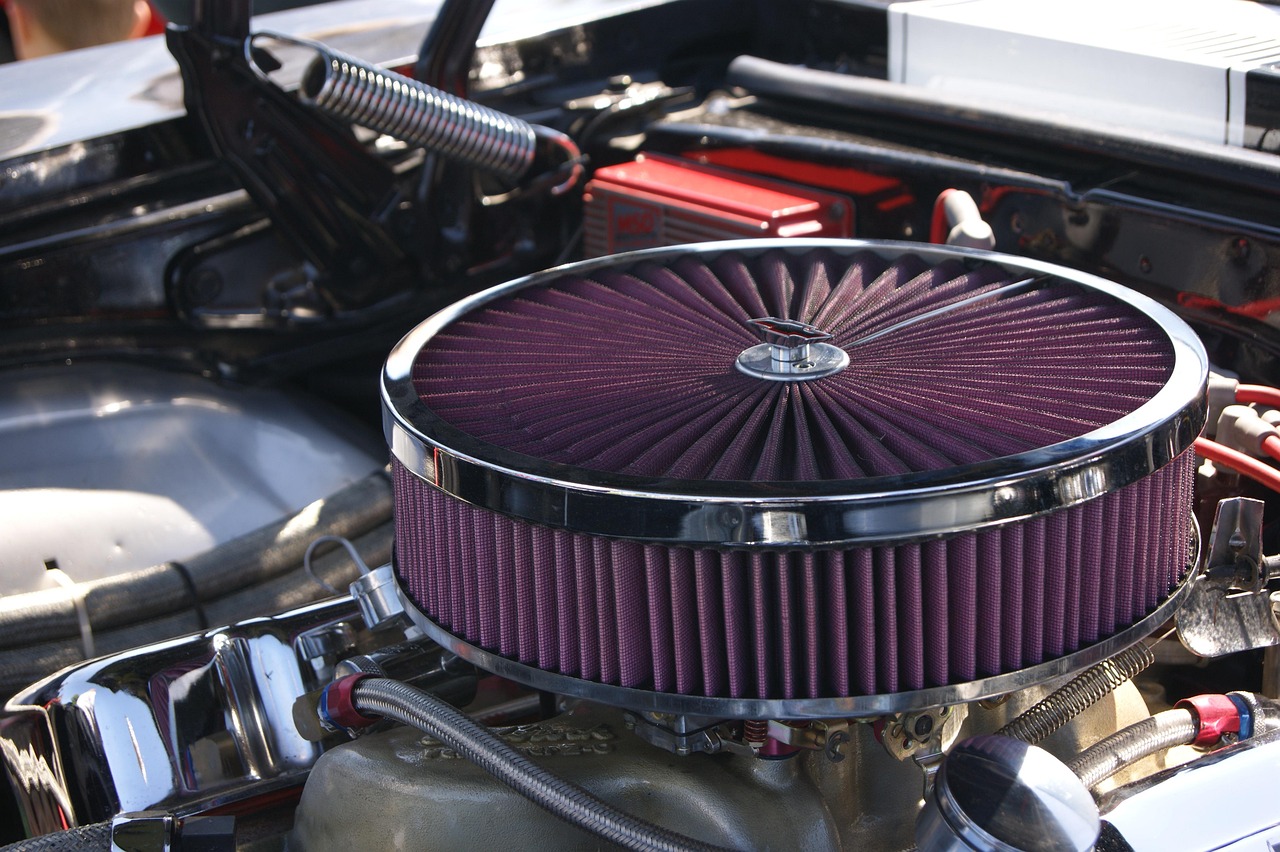
The engine air filter sits upstream of the throttle body, turbocharger inlet or intake manifold, depending on engine design. Its job is not only to stop visible dirt. Fine dust can be abrasive, and unfiltered particles can contribute to wear in cylinders, piston rings, compressor wheels and sensors. For that reason, the filter element, airbox cover, clips, intake duct and gasket should be treated as one sealing system.
For parts buyers and maintenance teams, the air filter belongs in the broader engine and thermal systems environment. Airflow, heat, filtration and engine control are closely linked. A filter that fits poorly can be worse than an old filter that still seals correctly, because bypass leakage sends dirty air around the media instead of through it.
Mileage intervals are only the starting point
Owner manuals from major automakers make a consistent point: engine air filter life depends heavily on exposure to dusty and dirty conditions. Some maintenance schedules separate normal and severe service. Others ask owners to inspect the filter at set service visits and replace it when the condition requires. That is why one mileage number can be misleading across different vehicles, duty cycles and regions.
A car used mostly on clean highways may not need early replacement, even if the filter surface looks slightly gray. A pickup working on unpaved roads, a fleet vehicle near construction sites or a vehicle driven during heavy pollen and smoke seasons may need inspection much sooner. The manual remains the primary reference because the automaker knows the airbox volume, filter area, engine airflow demand and sensor strategy for that model.
- Use the manual’s mileage or maintenance reminder as the baseline.
- Shorten inspection intervals for dust, sand, off-road use, agricultural work and repeated idling in dirty environments.
- Do not replace only because the surface is darker; look for deep dust loading, blocked pleats, deformation or damage.
- Replace immediately if the filter no longer seats flat in the housing.
Symptoms that may point to a restricted or damaged filter
A dirty air filter is only one possible cause of drivability problems, so symptoms need to be assessed carefully. A severely restricted filter can reduce power at higher throttle openings because the engine cannot draw in air as easily. Drivers may notice slower acceleration, hesitation under load or a different intake sound. In extreme cases, loose debris or a badly fitted filter can disturb airflow readings near the mass air flow sensor.
At the same time, rough running, poor fuel economy or a warning light can also come from ignition, fuel delivery, vacuum leaks, sensor faults, exhaust restriction or software issues. The filter is easy to inspect, but it should not replace proper diagnosis. If the filter is clean and correctly seated, the technician should continue checking the rest of the intake and engine management system.
Fuel economy, acceleration and the modern engine myth
A common gap in replacement advice is the difference between older carbureted engines and modern fuel-injected engines. The U.S. Department of Energy summarized Oak Ridge National Laboratory testing that found replacing a clogged air filter on modern computer-controlled, fuel-injected gasoline vehicles did not produce a significant fuel economy gain in that study, but it did improve acceleration. The reported acceleration improvement was about 6 to 11 percent in the tested modern vehicles. For the older carbureted vehicle in the same research context, fuel economy gains from replacing a clogged filter were reported in the range of about 2 to 6 percent.
SAE technical paper 2012-01-1717 reached the same broad conclusion: modern closed-loop gasoline systems can compensate for restriction well enough that fuel economy may not change much, while performance can still suffer when airflow is restricted. The practical takeaway is simple. Engine air filter replacement should be sold and understood as protection and drivability maintenance, not as a guaranteed fuel-saving repair for every modern vehicle.
| Engine type | Likely effect of a clogged filter | Replacement message |
|---|---|---|
| Modern fuel-injected gasoline engine | Acceleration and power may drop before fuel economy changes | Replace for airflow, protection and drivability |
| Older carbureted gasoline engine | Fuel mixture and fuel economy may be affected more directly | Replacement may improve both performance and economy |
| Turbocharged or diesel applications | Restriction can matter under higher airflow demand | Use the correct specification and inspect sealing carefully |
How to replace an engine air filter without causing intake problems
Most passenger vehicles place the engine air filter in a plastic airbox secured by clips, screws or tabs. The job is usually simple, but careless installation can create problems that were not present before. Before opening the airbox, make sure the engine is off and the area around the housing is reasonably clean. Dirt that falls into the clean side of the intake can defeat the purpose of the replacement. See also: braking and chassis.
- Confirm the correct filter by vehicle year, make, model, engine and market version.
- Open the airbox carefully without overstressing clips, hinges, wiring or intake ducts.
- Note the old filter’s orientation before removal.
- Lift the filter out slowly so trapped leaves or grit do not fall into the clean side.
- Wipe loose debris from the lower airbox, keeping dirt away from the outlet duct.
- Inspect the airbox gasket surface, clips and ducting for cracks or gaps.
- Install the new filter flat, with the sealing edge fully seated around the perimeter.
- Close the cover evenly and make sure all clips or screws are secured.
- Start the engine and listen for abnormal intake noise that could indicate an open housing or loose duct.
Cleaning rules vary by filter design. Some Toyota and Kia owner information allows light cleaning with compressed air for certain filters, while other service information warns against it. Paper filters should not be washed or oiled unless the specific filter design and manufacturer instructions say otherwise. Reusable oiled filters are a different product category and require the correct cleaning and oiling procedure; over-oiling can contaminate nearby sensors.
Choosing the correct replacement filter
The best replacement is not simply the filter with the strongest airflow claim. A good engine air filter balances filtration efficiency, dust-holding capacity, airflow restriction, media strength and sealing accuracy. ISO 5011:2025 describes laboratory performance testing for inlet air cleaning equipment used on internal combustion engines and compressors. It is a useful reminder that filter comparison should be based on measured performance, not only appearance or marketing language.
Fit is especially important. Pleated media can look similar across brands, but small differences in frame height, gasket softness or corner shape can affect sealing. For normal vehicles, an OEM-equivalent filter from a reputable supplier is usually the most defensible choice. Performance filters may be appropriate in some applications, but buyers should look for credible filtration and restriction data, not only peak airflow claims.
- Match the filter to the exact engine, not only the vehicle nameplate.
- Check that the gasket compresses evenly when the airbox closes.
- Avoid filters with crushed pleats, loose glue, warped frames or unclear fitment data.
- Be cautious with low-cost filters that save material in the sealing edge or media depth.
Frequently asked questions
How often should an engine air filter be replaced?
Use the owner’s manual as the baseline, then adjust for real operating conditions. Dusty roads, off-road driving, agricultural work, construction zones and heavy debris exposure justify more frequent inspections and earlier replacement.
Can a dirty engine air filter reduce fuel economy?
On older carbureted engines, a clogged filter can affect fuel mixture and fuel economy more directly. On modern computer-controlled gasoline engines, research summarized by the U.S. Department of Energy found little measurable fuel economy effect in the tested vehicles, but acceleration still improved after replacing a clogged filter.
Is it okay to drive without an engine air filter for a short time?
No. Driving without the filter allows unfiltered dust and debris into the intake. Even a short drive can expose the engine and sensors to contaminants, especially in dirty environments.
Should the filter be replaced if only one corner is dirty?
Uneven dirt can point to airflow pattern, airbox leakage or poor seating. Inspect the gasket and housing first. If the media is loaded, damaged or distorted, replace the filter and make sure the new one seals evenly.
Is the cabin air filter the same as the engine air filter?
No. The engine air filter cleans air going into the engine for combustion. The cabin air filter cleans air entering the passenger compartment through the HVAC system. They are separate parts with different locations and service goals.