Tesla electric vehicle systems and the changing parts landscape in 2026
Why Tesla electric vehicle systems matter to vehicle electrics
A Tesla electric vehicle is more than a conventional car with the engine removed. It is an electrical platform built around a high-voltage battery, power electronics, software-controlled modules, charging hardware, sensors, thermal circuits, and increasingly complex low-voltage networks. For parts distributors, repair planners, and automotive electronics readers, Tesla matters because its scale can turn design choices into supply-chain signals. In Q2 2026, Tesla reported 480,126 vehicle deliveries, 451,758 vehicles produced, and 82,357 Supercharger connectors in service, according to its quarterly update filed with the SEC. Those figures do not prove future dominance, but they explain why Tesla-related electrical architecture, connector strategy, recall patterns, and service limits are relevant well beyond one brand.
For the vehicle electrics category, the practical point is straightforward: Tesla EVs place more vehicle value in electrical parts than a comparable internal combustion vehicle. Drive units, contactors, inverters, battery management electronics, DC fast-charging circuits, heat pump controls, cameras, body controllers, and software-enabled features all affect reliability, repairability, parts demand, and safety procedures.
The 2026 EV market context around Tesla
The broader EV market is still growing, but it is no longer a simple volume-expansion story. The International Energy Agency’s Global EV Outlook 2026 estimated that electric car sales exceeded 20 million globally in 2025, up about 20% from 2024, and represented about one in four new cars sold worldwide. The IEA also projected 23 million electric car sales in 2026, equal to roughly 28% of total car sales. The definition matters: the IEA includes battery electric vehicles and plug-in hybrids, while Tesla’s passenger vehicles are battery electric.
Regional differences are important for anyone planning parts demand. The IEA reported strong 2025 growth in Europe and China, while the United States remained near a 10% electric car sales share for the full year after a sharp drop in Q4 2025. As a result, Tesla-related demand is not uniform across markets. In regions with faster EV adoption, workshops and parts channels face a steeper learning curve for high-voltage safety, diagnostic tooling, charging hardware, and software-linked replacement processes. In slower regions, the transition is more gradual, but the direction still points toward more electrified components per vehicle.
Tesla’s Q2 2026 update also shows how concentrated its vehicle volume is. Model 3 and Model Y accounted for 467,762 of the company’s 480,126 deliveries in the quarter. For the parts market, that concentration can simplify some inventory decisions because common vehicle platforms may create repeatable service needs. It can also increase exposure: if a specific component issue appears across a large production batch, the affected population can be meaningful even when the defect rate is low.
Core electrical systems inside a Tesla vehicle
The battery pack is the most visible Tesla component, but it is only one part of the electrical ecosystem. The vehicle depends on controlled energy flow from the charging inlet to the battery cells, from the battery to the inverter, from the inverter to the motors, and from DC-DC conversion to lower-voltage loads. The following areas are especially important for understanding Tesla electric vehicle parts.
High-voltage battery pack and contactors
The high-voltage battery stores traction energy and supplies power to the drive units. Contactors act as high-voltage switches that connect and disconnect the battery from the rest of the vehicle. They are safety-critical because they must handle high current reliably while isolating the pack when required. The October 2025 NHTSA recall filing for Tesla recall 25V690 is a useful parts lesson: it covered 12,963 potentially involved vehicles, including certain 2025 Model 3 and 2026 Model Y units equipped with specific battery pack contactors. The filing stated that a contactor could suddenly open because of poor coil termination, potentially causing loss of propulsion.
That recall did not point to a battery cell chemistry problem. It pointed to a switching component in the high-voltage path. The distinction matters because EV reliability discussions often focus on cells, range, or degradation, while smaller electrical parts such as relays, sensors, connectors, harnesses, and contactors can also become critical failure points. For service planning, high-voltage parts need traceability by model year, build date, part number, supplier batch, and firmware context.
Power electronics and drive units
Tesla drive units combine electric motors with power electronics and mechanical reduction gearing. The inverter converts battery DC into AC for the motor and must manage heat, switching speed, torque response, and regenerative braking. Compared with internal combustion powertrains, there are fewer fluid, belt, and exhaust-related parts, but the remaining components are more electronics-intensive. A failure in a power module, sensor, coolant path, or control board can affect propulsion even when the battery itself is healthy.
For the aftermarket, this shifts value toward diagnostic capability and verified replacement parts. It also leaves less room for guesswork. Replacing an electrical component without confirming isolation, software compatibility, calibration requirements, or cooling integrity can create new faults rather than solve the original one.
Low-voltage and mid-voltage systems
Traditional cars rely heavily on 12V systems. Tesla has been moving parts of vehicle electronics beyond that convention, most visibly with Cybertruck. Tesla owner and service documentation states that Cybertruck uses a 48V lithium-ion low-voltage battery, and Tesla service material describes low-voltage, mid-voltage, and high-voltage circuits with different handling precautions. Tesla has also described a Low-Voltage Connector Standard initiative intended to reduce the number of connector types used in its electrical architecture.
This does not mean every Tesla model uses the same 48V architecture. Model 3 and Model Y service needs should not be assumed from Cybertruck documentation. The broader trend is that vehicle electrics are becoming more voltage-diverse. Accessory installers and repairers must know whether they are working on a traditional low-voltage line, a 48V circuit, or a high-voltage component. Misidentification can lead to arcing, component damage, or personal injury.
Software-controlled body and safety electronics
Tesla vehicles integrate software deeply into body control, driver assistance, charging, thermal management, and infotainment. Tesla’s Q2 2026 Form 10-Q referenced deferred revenue related to internet connectivity, Full Self-Driving supervised features, free Supercharging programs, and over-the-air software updates. For parts readers, this is more than a financial note. It shows that some vehicle functions are tied to software entitlement, ongoing maintenance, connectivity, and update management.
That changes the replacement parts discussion. A camera, control unit, door component, charge port, or sensor may require more than physical installation. It may also require configuration, calibration, diagnostic authorization, or software validation. As vehicles become more software-defined, parts quality includes electrical performance, mechanical fit, firmware compatibility, and post-installation behavior.
Charging standards are now part of the parts conversation
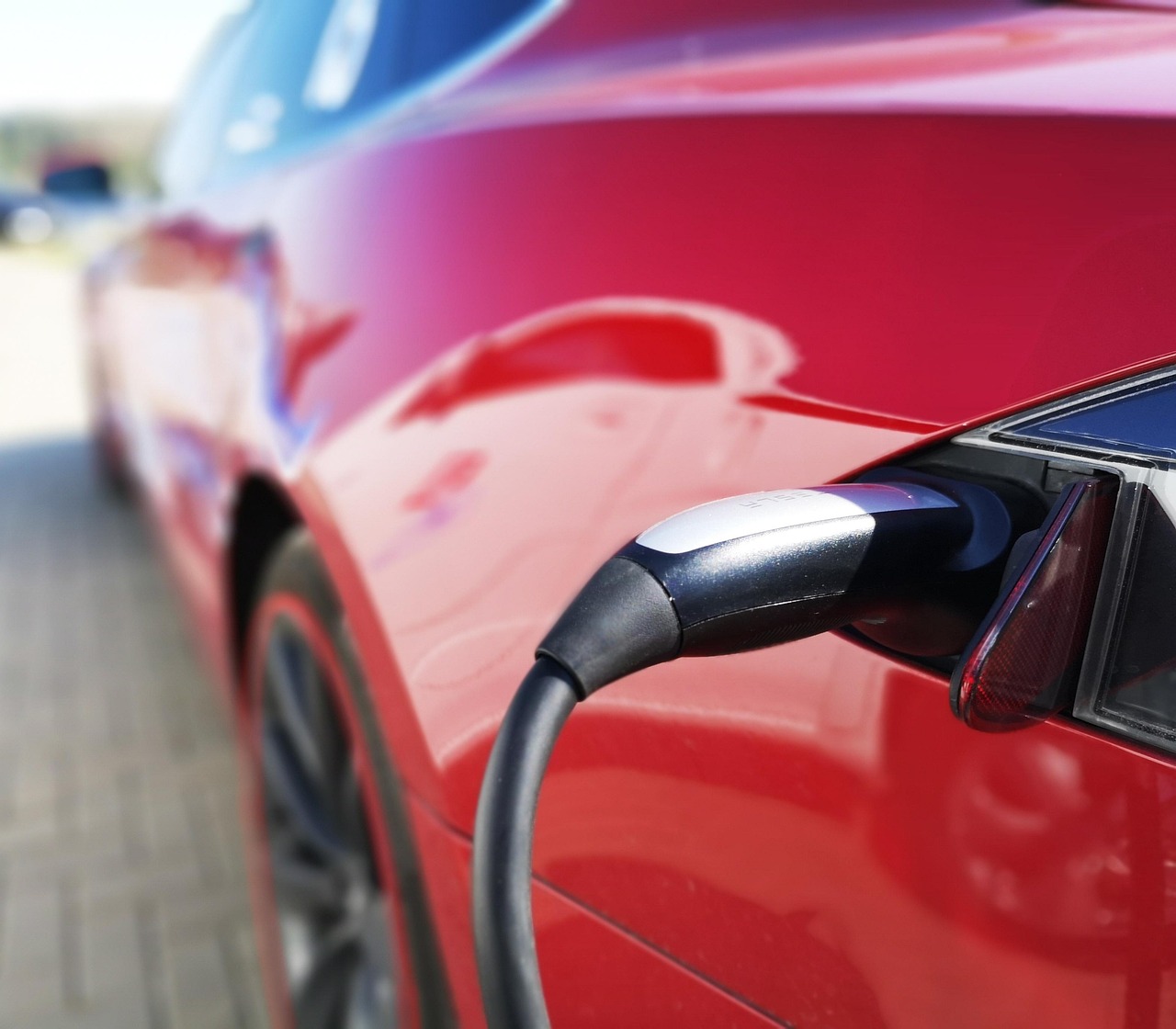
Charging hardware has become one of the most important external electrical systems connected to a Tesla electric vehicle. In North America, Tesla’s connector design became the basis for the North American Charging System, now standardized through SAE J3400. SAE lists J3400_202409 as revised in September 2024 and originally issued in December 2023. Tesla had opened the connector design in November 2022, and the standardization process made the connector more relevant to other automakers, charging equipment makers, and infrastructure planners.
For parts and service teams, the issue goes beyond plug shape. The charging inlet, cable assembly, charge port door, thermal behavior, onboard charging electronics, fast-charging communication, and adapter ecosystem all become more important. A charging complaint may originate from the vehicle, the cable, the station, billing authorization, battery temperature, software limits, or the user’s charging curve expectations.
Tesla’s own Supercharger documentation adds another practical constraint. V3 Superchargers can deliver peak rates up to 250 kW, but actual charging speed varies by battery pack, state of charge, ambient temperature, vehicle configuration, and site conditions. Tesla also states that North American V4 Superchargers can charge Model S, Model 3, Model X, and Model Y up to 250 kW, while Cybertruck can charge up to 325 kW at V4 Superchargers. Service teams should therefore avoid treating charging power as a fixed parts specification. It is an operating result produced by hardware, software, battery condition, temperature, and infrastructure.
Timeline of verified developments for electrical parts planning
| Date or period | Development | Why it matters for vehicle electrics |
|---|---|---|
| November 2022 | Tesla opened its charging connector design under the North American Charging System name. | Charging inlets, plugs, adapters, and EVSE compatibility became a wider industry issue, not only a Tesla issue. |
| December 2023 to September 2024 | SAE J3400 was issued and later revised as a recommended practice for the North American Charging System. | Standardization increased the importance of verified connector design, compliance, and cross-brand compatibility. |
| 2025 | Global electric car sales exceeded 20 million, according to the IEA. | Higher EV volume increases demand for high-voltage service knowledge, charging diagnostics, and electrical replacement parts. |
| October 10, 2025 | NHTSA recall 25V690 documented a Tesla Model 3 and Model Y battery pack contactor issue. | The case shows how a relatively small high-voltage switching part can affect propulsion and trigger traceable replacement work. |
| Q2 2026 | Tesla reported 480,126 deliveries, 13.5 GWh of energy storage deployments, and 82,357 Supercharger connectors. | Tesla’s scale keeps its electrical architecture relevant for suppliers, service networks, and charging infrastructure planning. |
What parts suppliers and repairers should watch
The Tesla parts landscape is not defined by one component. It is shaped by the interaction among hardware, software, safety procedure, and supply-chain traceability. Several areas deserve close attention.
-
High-voltage switching parts: Contactors, fuses, busbars, current sensors, and pack connectors should be treated as safety-critical parts with strict part-number verification.
-
Charging components: NACS and SAE J3400 adoption make charge ports, cables, adapters, and EVSE-side connectors more important across North America.
-
Thermal management: Battery and power electronics performance depend on pumps, valves, sensors, coolants, heat exchangers, and software logic.
-
Low-voltage architecture: Cybertruck’s 48V design suggests that accessory and body-electrical service will become less standardized around legacy 12V assumptions.
-
Calibration and software: Cameras, sensors, controllers, and charge-related modules may require validation beyond physical replacement.
-
Documentation discipline: Build date, VIN range, recall status, service bulletin scope, and regional specification can matter as much as the visible part shape.
For independent repair businesses, the main risk is treating EV electrical parts like conventional plug-and-play components. Some parts may be straightforward, but many are linked to safety interlocks, software states, or thermal limits. For distributors, the risk is carrying look-alike components without reliable compatibility data. A part that fits physically may still be incorrect electrically.
Limits, safety, and the recall lesson
Two common mistakes appear in Tesla electric vehicle discussions. One is assuming every Tesla system is fully proprietary and therefore impossible to understand. The other is assuming standardization makes every part interchangeable. The reality sits between those positions. SAE J3400 makes the charging connector more standardized, but it does not make every charge port, cable, station, adapter, or software implementation identical. Likewise, Tesla’s large fleet creates repeatable service patterns, but model year and configuration details still matter.
The 2025 contactor recall is a good example of how to read EV problems accurately. NHTSA identified a defined population, production dates, a supplier-linked component condition, and a remedy. Tesla’s support information stated that affected contactors would be replaced at no charge and estimated the repair at roughly one hour. That is a specific electrical-parts event, not a broad conclusion about EV batteries or Tesla vehicles.
Safety remains non-negotiable. High-voltage components should only be serviced by trained personnel using suitable protective equipment and approved procedures. Even lower-voltage systems can be hazardous when current is high or when a 48V architecture is involved. Vehicle electrics are becoming more capable, but they are also less forgiving of shortcuts.
Frequently asked questions
What is the most important electrical part in a Tesla electric vehicle?
The battery pack is the largest and most valuable electrical component, but it is not the only critical one. Contactors, inverters, DC-DC converters, thermal sensors, charge port assemblies, body controllers, cameras, and wiring harnesses can all affect drivability, charging, and safety.
Does SAE J3400 mean Tesla charging parts are universal?
No. SAE J3400 standardizes the North American Charging System connector framework, but vehicle-side parts still depend on model, region, power rating, software, thermal design, and manufacturer implementation. A standardized connector does not automatically make all charging hardware interchangeable.
Are all Tesla vehicles moving to 48V low-voltage systems?
Cybertruck uses a 48V lithium-ion low-voltage battery, and Tesla has discussed broader 48V and low-voltage connector standardization. However, it should not be assumed that every current Tesla model uses the same low-voltage architecture. Service decisions should follow model-specific documentation.
Why do Tesla recalls matter for parts planning?
Recalls identify real-world component issues with defined populations, production dates, symptoms, and remedies. For parts planners, they provide useful evidence about traceability, supplier batches, electrical failure modes, and the importance of using correct replacement components.
Can conventional repair shops service Tesla electrical systems?
Some basic work may be possible where local rules, training, tools, and documentation allow it. High-voltage repairs, safety-critical electrical work, and software-linked components require proper training, protective equipment, and approved procedures. Guesswork is unsafe and can damage the vehicle.