Flaming River rack and pinion guide for fitment, steering feel and installation planning

What to know before choosing a Flaming River rack and pinion
A Flaming River rack and pinion is not a single universal steering part. The term can refer to a manual replacement rack, a power rack, a vehicle-specific conversion system or a universal rack intended for fabrication. The correct choice depends less on the brand name and more on steering layout, pivot width, rack travel, steering ratio, pinion angle, mounting style and how the finished vehicle will be used.
For classic cars, hot rods, trucks and Mustang-based projects, a rack that appears close in overall length can still be wrong if the inner tie-rod points or the front-steer versus rear-steer layout do not match the suspension geometry. Before treating any Flaming River rack as a fitment match, a shop or builder should verify the rack as part of the complete steering and suspension system.

For related steering, suspension and brake system topics, see our braking and chassis coverage.
How Flaming River rack options are organized
Flaming River’s published product information groups rack-and-pinion steering into several broad categories: manual racks, power racks, conversion kits and universal-style racks. The distinction matters because someone searching for a Flaming River rack and pinion may actually need one of several different solutions.
- Manual rack-and-pinion units are commonly used where simplicity, fewer hydraulic components and a more direct steering feel are priorities. Manufacturer-published examples include Pinto-style, Mustang II-style, Omni rear-steer, Fox-body Mustang, later Mustang and Cobra/MGB applications.
- Power rack-and-pinion units are used when low-speed steering effort is a concern, especially on street-driven vehicles, heavier front ends or builds with wider front tires. Flaming River lists power racks for Mustang II-style front ends, universal front-steer and rear-steer layouts, as well as extra-long and narrowed applications.
- Conversion systems package the rack with brackets, shafts and related parts for specific classic-vehicle platforms. They are different from buying a loose rack for fabrication.
- Universal or custom racks can help solve unusual packaging problems, but they place more responsibility on the builder because geometry, mounting rigidity and tie-rod location still have to be verified.
The company’s own FAQ also notes that product suitability is the customer’s responsibility. In practical terms, a catalog application should be treated as the start of the fitment check, not final proof that the rack will work safely in a modified chassis.
Fitment terms that matter more than brand name
Front steer or rear steer
Front steer means the rack is mounted ahead of the spindle centerline. Rear steer means it is mounted behind it. This is not a cosmetic distinction. It affects steering direction, tie-rod angle, Ackermann behavior and packaging around the oil pan, crossmember and exhaust. A rack designed for front steer should not be substituted into a rear-steer layout simply because the overall width looks similar.
Pivot points and inner tie-rod location
The pivot point dimension describes the distance between the rack’s effective inner tie-rod pivot locations. This dimension is central to bump-steer control because the tie rods need to move through suspension travel in harmony with the control arms. If the rack is too wide or too narrow for the suspension, the wheels may toe in or toe out as the suspension compresses and rebounds. The result can be nervous straight-line behavior, tire wear and unpredictable response over bumps.
Rack travel, steering arm length and turning radius
Total rack travel determines how far the tie rods can move. Steering arm length at the spindle then converts that linear movement into wheel angle. Too little travel can increase turning radius. Too much travel without proper stops can let tires contact bodywork, wheels contact suspension parts or the rack reach a mechanical limit before the chassis does. Flaming River’s standard power rack information refers to more than 6 inches of travel, while several manual examples are listed around the 5.25 to 6.25 inch range, depending on the application.
Rack gain and turns lock-to-lock
Rack gain is the linear rack movement per steering wheel revolution. Turns lock-to-lock describe how many steering wheel turns move the rack from one end of travel to the other. A quicker rack can feel more responsive, but it can also increase effort in a manual setup and make a short-wheelbase vehicle feel more sensitive. A slower rack may be easier to manage, although it may require more hand movement in tight maneuvering.
Input spline, pinion length and shaft angle
The input shaft details determine which steering universal joint, intermediate shaft and support bearings are needed. Pinion angle also affects header clearance, steering column angle and universal-joint operating angle. A rack can have the right width and still create installation problems if the input shaft points into the exhaust, frame rail or engine accessory drive.
Manual versus power Flaming River rack and pinion options
The manual-versus-power decision should be based on the finished vehicle, not only on weight savings or steering feel. Manual racks reduce hydraulic complexity and can suit lightweight cars, drag-focused builds or vehicles with modest front tire width. Power racks are more comfortable in street traffic and parking maneuvers, but they add a pump, hoses, fluid, bleeding steps and pressure/flow compatibility checks.
| Choice | Where it often makes sense | Main advantages | Main cautions |
|---|---|---|---|
| Manual rack | Lightweight builds, engine bays with limited space, cars where steering effort is acceptable | Fewer hydraulic parts, lower system complexity, direct feel | Can be heavy at parking speeds, especially with wide tires or high front axle load |
| Power rack | Street cars, heavier classics, trucks, cars with wide front tires | Lower low-speed effort, easier daily drivability | Requires pump, hoses, fluid, bleeding and clearance for hydraulic lines |
| Conversion kit | Common classic platforms where a packaged solution exists | May reduce fabrication compared with a universal rack | Factory-platform assumptions may not hold on modified chassis, altered ride height or nonstandard suspension |
| Universal or custom rack | Fabricated chassis, hot rods, unusual track widths | More packaging flexibility | Requires careful geometry work and experienced fabrication |
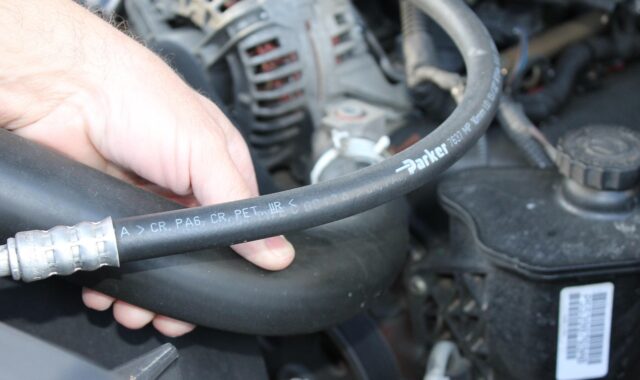
For power systems, Flaming River’s FAQ states that its power rack kits may require specific universal joints, hose kits, suitable power steering fluid, a remote reservoir and a pump matched to the rack’s pressure and flow needs. A power rack therefore needs to be planned as a system, not as a single component purchase.
Verified specification examples from manufacturer-published sheets
The table below is not a complete product catalog and should not replace a current part page or installation sheet. It is included as a comparison because it shows how rack families can vary in weight, travel and steering speed even within the same brand.
| Example part family | Steering layout | Approx. weight | Rack gain | Turns lock-to-lock | Total rack travel | Pivot point |
|---|---|---|---|---|---|---|
| FR1501 Pinto-style manual rack | Front steer | 12 lb | 1.3 in per turn | 3.75 | 5.25 in | 24.29 in |
| FR1502 Mustang II manual rack | Front steer | 14 lb | 1.36 in per turn | 3.92 | 5.34 in | 24.5 in |
| FR1520 1979-93 Mustang quick manual rack | Front steer | 15 lb | 1.75 in per turn | 3.1 | 5.5 in | 24.5 in |
| FR1512 Cobra/MGB manual rack | Application-specific manual | 14 lb | 2.08 in per turn | 3.0 | 6.25 in | 24 in |
| FR40001 Mustang II-style power rack | Front steer | 20 lb | 2.27 in per revolution | 2.7 | More than 6 in for standard power racks | 24.25 in |
These figures show why two racks that look similar on a workbench can produce different steering feel and different suspension behavior. A quicker rack may be appealing, but it should be checked against steering arm length, tire clearance, front-end weight and the driver’s intended use. See also: driveline systems.
Installation checks before final assembly
Steering is a safety-critical system, so rack installation should be verified with the same discipline as brake or suspension work. The following checks are practical starting points before final welding, final torque or road testing.
- Confirm the steering layout. Verify front-steer or rear-steer orientation before comparing dimensions.
- Measure pivot width. Compare the rack’s inner pivot points with the suspension’s required tie-rod pivot location, not just the overall length.
- Check rack travel and steering stops. Make sure the tires, wheels and steering arms reach their intended range without relying on the rack as the only hard stop.
- Mock up at ride height. A rack that looks correct at full droop may create poor tie-rod angles at normal ride height.
- Cycle the suspension. Check toe change through bump and rebound before finalizing mounts.
- Verify shaft routing. Confirm universal-joint angles, support bearing placement, header clearance and column alignment.
- Check tie-rod thread engagement. Flaming River’s FAQ specifies minimum engagement of 2.5 times the diameter of the outer end. For a 1/2 inch thread, that means at least 1-1/4 inches of engagement.
- Plan final alignment. Toe, caster, camber and steering wheel centering should be set after the rack is installed and the vehicle is at finished ride height.
Modified vehicles need extra caution. Flaming River states that its rack-and-pinion cradle systems are designed and tested around factory-original platform vehicles, and that changes to chassis, suspension, drivetrain or ride height can change steering geometry. Lowering a car, swapping crossmembers or changing control-arm pickup points can move a build outside the assumptions behind a bolt-in kit.
What this means for buying or specifying a rack
The best approach is to prepare a fitment sheet before ordering a Flaming River rack and pinion. That sheet should include front or rear steer, desired manual or power assist, inner pivot width, overall length, rack travel, turns lock-to-lock, input spline, pinion angle, mounting style and required outer tie-rod ends. For power steering, add pump type, hose routing, reservoir location and bleeding access.
For a lightweight hot rod, a manual Pinto-style or Mustang II-style rack may be attractive if geometry and steering effort are acceptable. For a heavier street car or truck, a power rack may be easier to live with. For a classic Mustang, Corvette, Tri-Five or other common platform, a packaged conversion system may reduce fabrication, but only if the car remains close enough to the factory platform assumptions. For a custom chassis, a universal or custom rack can be useful, but it should be treated as a design component that requires geometry verification.
The key point is straightforward: the rack is only one part of the steering system. Safe steering behavior comes from the relationship between rack location, tie rods, spindles, control arms, wheel and tire package, steering shaft and hydraulic support parts where applicable.
Frequently asked questions
Is a Flaming River rack and pinion a bolt-in upgrade?
Sometimes, but not always. A vehicle-specific conversion kit may be designed to bolt into certain original mounting locations, while a loose manual, power or universal rack can require brackets, shafting, tie-rod adaptation and geometry work. Modified ride height or suspension changes can also affect whether a kit behaves as intended.
Is a manual rack better than a power rack?
Neither is automatically better. A manual rack can reduce parts count and provide direct feel, but it can be heavy at low speeds. A power rack improves low-speed drivability, especially in heavier cars, but requires hydraulic components and proper bleeding. The better choice depends on vehicle weight, tire size, use case and packaging.
Which dimension should be checked first?
Start with steering layout and pivot point width. Overall length matters for packaging, but the inner tie-rod pivot locations have a larger effect on bump steer and suspension behavior. Rack travel and input shaft angle should be checked soon after.
Can a narrowed rack fix bump steer?
A narrowed rack can help when the suspension needs a shorter inner pivot width, but it is not a universal cure. Rack height, fore-aft location, tie-rod length, steering arm position and ride height all affect bump steer. Measurements and suspension cycling are still required.
Do power rack installations need bleeding?
Yes. Flaming River’s FAQ states that a new or existing power steering system must be purged and bled for proper installation and operation. Air in the system can cause noise, erratic assist and possible component wear, so bleeding should be treated as a required installation step.