Constant velocity joint diagnosis for noise, vibration and boot failure
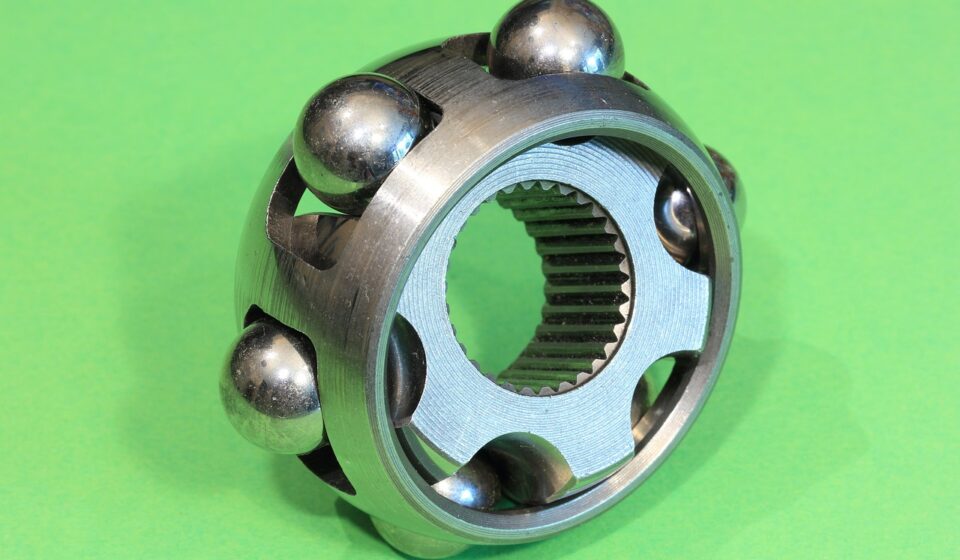
A constant velocity joint allows a drive axle to transmit torque while the suspension moves and, on steerable wheels, while the wheels turn. In workshop diagnostics, the key question is not simply whether the CV joint is “bad.” It is which symptom points to the outer joint, the inner joint, the boot, or another component in the driveline or suspension.
Clicking on turns often points toward an outer CV joint. A clunk or shudder under acceleration can involve an inner joint, but similar complaints can also come from mounts, bearings, backlash, tires, or suspension wear. This guide explains how to inspect CV joints methodically before recommending a boot repair, joint service, or complete halfshaft replacement.
What a constant velocity joint does
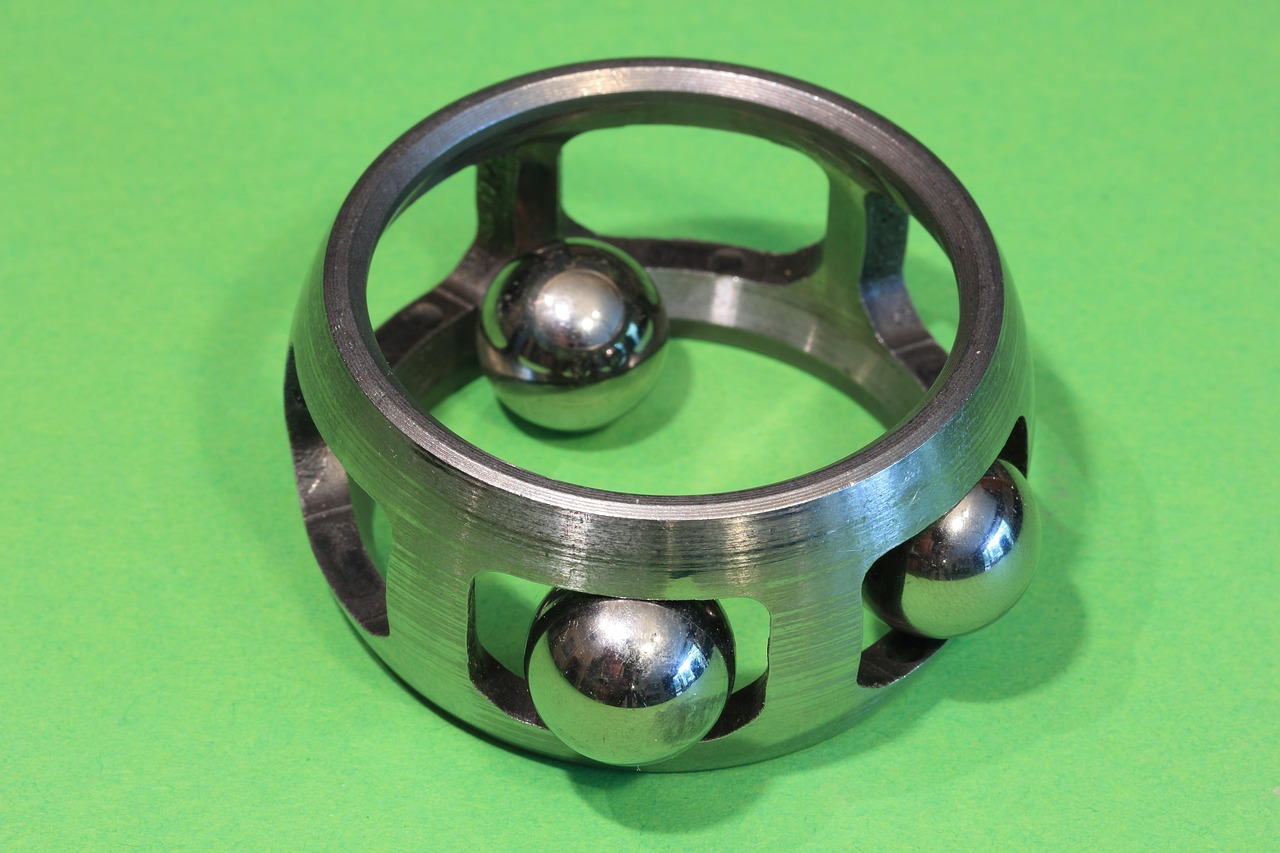
A constant velocity joint, commonly shortened to CV joint, is part of the drive axle or halfshaft assembly. Its job is to transfer rotational force from the transmission, transaxle, differential, or transfer case to the wheel while keeping shaft speed consistent as operating angles change.
That matters because the wheel end of an axle does not stay perfectly straight in normal driving. It moves up and down with the suspension, and on front-wheel-drive and many all-wheel-drive vehicles, it also turns left and right with the steering knuckle.
Most passenger vehicles use an outer CV joint near the wheel hub and an inner CV joint near the transaxle or differential. The outer joint usually works through larger steering angles, so it is more exposed to the clicking and popping symptoms many drivers associate with CV joint failure. The inner joint often includes a plunge function, allowing the axle length to change slightly as the suspension moves through its travel.
Service literature and parts diagrams from manufacturers commonly treat the CV joint, axle shaft, retaining hardware, boot, clamps, and grease as a connected system. That is important during diagnosis. A damaged boot can lead to grease loss and contamination; contamination can accelerate wear inside the joint; and wear can eventually create noise, play, vibration, or, in severe cases, loss of drive.
Core symptoms and what they usually mean
CV joint symptoms are useful clues, but they are not absolute proof. A professional diagnosis should match the driver complaint with a road test, visual inspection, and checks for related faults. The table below summarizes common symptom patterns and the usual diagnostic direction.
| Observed symptom | Common diagnostic direction | Important cautions |
|---|---|---|
| Clicking or popping while turning | Often associated with outer CV joint wear, especially on front drive axles | Confirm side, steering angle, and load. Do not ignore loose wheel hardware or suspension faults. |
| Clunk when shifting from drive to reverse or during acceleration changes | May involve inner CV joint play, axle spline movement, driveline backlash, or mounts | Differential backlash, worn engine mounts, or transmission movement can feel similar. |
| Shudder under acceleration | Possible inner plunge joint wear or binding | Also check tires, wheels, engine/transaxle mounts, intermediate shaft support, and misfire-related vibration. |
| Grease on wheel well, control arm, strut, or inside of rim | Likely torn, cracked, loose, or leaking CV boot | Joint condition depends on how long it has run with low grease or contamination. |
| Speed-related vibration | Often not the CV joint as the first suspect | Wheel balance, tire condition, bent wheels, and hub issues should be checked early. |
Industry service guidance often notes that clicking during low-speed turns is one of the stronger indicators of outer joint wear. Even then, the diagnosis should not stop at the sound. A torn boot, grease spray, looseness, or roughness during axle movement strengthens the case. If the main complaint is vibration rather than clicking, the inspection should broaden quickly because tire, wheel, hub, and mount problems are often more likely than an outer CV joint.
How to inspect the CV boot before judging the joint
The boot is often the first visible clue. A CV joint depends on the correct grease and a sealed boot to keep lubricant in and abrasive material out. Once the boot splits, loosens, or leaks around a clamp, centrifugal force can throw grease onto nearby parts. A small crack can become a significant repair issue if the vehicle continues to operate in wet, dusty, or salty conditions.
During inspection, look at both the large and small ends of the boot. Check whether the boot is cracked between the folds, twisted, pulled out of its groove, cut by debris, or leaking at a clamp. Grease on the inside of the wheel, lower control arm, strut body, splash shield, or underbody panel should be treated as evidence of a leak until proven otherwise.
The next question is contamination. If the boot has recently been damaged and the joint is still quiet, cleaning, inspection, fresh CV grease, and boot replacement may be reasonable where the vehicle design and service procedure support it. If the grease is gritty, the joint is noisy, the joint has noticeable play, or the boot has been open for an unknown period, replacing the complete axle assembly is often the more defensible repair.
Many shops prefer complete halfshaft replacement because it reduces labor risk and avoids rebuilding a precision joint that may already be worn internally.
Road test patterns that help separate outer and inner joint faults
A controlled road test helps connect symptoms to operating conditions. The test should be performed safely, in an open area, and within the limits of local road rules and workshop policy. The goal is to reproduce the complaint without creating unnecessary stress on the vehicle.
Outer joint noise during turns
For a suspected outer CV joint, listen during slow, tight turns in both directions. A repeated click, pop, or snap that becomes more obvious with steering angle and light acceleration often supports an outer joint diagnosis. The side of the noise may not always be obvious from the driver seat, so a second technician observation, chassis ears, or a lift inspection may be needed.
Inner joint shudder under load
For a suspected inner joint, focus on acceleration from low speed, especially when the suspension is loaded normally. A worn or binding inner plunge joint can produce a shudder or vibration under torque. However, this symptom overlaps with engine movement, worn mounts, tire issues, axle angle problems, and intermediate shaft bearing faults. If the vibration changes with engine load rather than vehicle speed, mounts and powertrain operation deserve close attention.
Reverse and acceleration change checks
Some service guidance describes reverse maneuvering and alternating acceleration-deceleration as ways to exaggerate joint wear. These checks should be used carefully, not as a shortcut. A stronger clunk in reverse may support a driveline play concern, but it does not automatically isolate the CV joint. The result must be compared with mount movement, differential backlash, subframe condition, and axle retaining hardware.
For broader diagnostic context, see the workshop diagnostics section for related approaches to noise, vibration, and driveline fault isolation.
Workshop lift checks and measurement clues
After the road test, lift inspection should confirm or challenge the initial suspicion. Start with the basics: tire condition, wheel security, obvious impact damage, leaking boots, missing clamps, bent shafts, and contact marks. A CV axle that has been rubbing against a bracket or exhaust shield may create a misleading noise complaint. See also: braking and chassis.
With the vehicle safely supported, rotate the axle by hand where practical and feel for roughness, binding, or uneven movement. Check for excessive radial or rotational play, while remembering that some movement in driveline components can be normal depending on design. Compare left and right sides. A large difference between sides is often more useful than judging one axle in isolation.
Inspect the hub nut, retaining ring area, and inner joint seating. Manufacturer recall and service documents have shown that an incorrect axle or halfshaft assembly can, in certain cases, create serious safety concerns, including disengagement and loss of drive. That does not mean every clicking CV joint is a recall issue, but it reinforces why axle retention and correct installation matter.
Also inspect components that commonly imitate CV joint symptoms. Wheel bearings can growl, hum, or rumble. Worn control arm bushings or ball joints can knock under load. Engine or transaxle mounts can create clunks and shudder. A bent wheel, separated tire belt, or imbalance can create speed-related vibration that drivers may describe as an axle problem.
Repair decision matrix for boot, joint, or axle replacement
The correct repair depends on condition, mileage, parts availability, labor time, and risk tolerance. The decision should be documented clearly because two vehicles with the same torn boot may not deserve the same repair.
- Boot service may be reasonable when the tear is recent, the joint is quiet, grease has not become gritty, and the joint passes inspection after cleaning.
- Joint replacement may be suitable when the axle shaft is reusable, the specific joint is available, and the shop can service it according to the manufacturer procedure.
- Complete halfshaft replacement is often preferred when the joint is noisy, contaminated, loose, difficult to service separately, or when labor cost makes rebuilding uneconomical.
- Both sides should be evaluated on high-mileage vehicles because opposite-side boots and joints may be similar in age and exposure, even if only one side is currently noisy.
For many modern vehicles, axle assemblies are supplied as complete units with inner and outer joints, boots, clamps, and shaft already assembled. This can improve repair consistency, but it also makes part quality important. A replacement axle should match the vehicle application, length, spline count, ABS tone ring or encoder requirements, and retention design. Incorrect fitment can create vibration, warning lights, leaks, or installation damage.
Boot clamp technique also matters. A new boot can fail early if it is twisted, poorly seated, over-stretched, or clamped with the wrong tool. CV grease should be the lubricant specified for the joint type. Ordinary chassis grease is not a substitute for proper CV joint lubricant.
Why misdiagnosis is common
CV joint diagnosis is difficult because drivers often use the same words for different problems. “Clicking,” “clunking,” “shaking,” and “grinding” can describe different frequencies, loads, and locations. A technician has to translate the complaint into test conditions: turning or straight ahead, acceleration or coast, hot or cold, low speed or highway speed, one direction or both directions.
Symptom overlap is another reason. A worn outer CV joint is a classic cause of clicking on turns, but suspension joints can also click. Inner joint wear can cause acceleration shudder, but tire and mount faults can do the same. A wheel bearing can create a growl that changes with load, while a tire can create a repeating vibration that feels like driveline imbalance.
The best diagnostic value comes from combining evidence. A clicking noise on full lock, a torn outer boot, grease spray, and joint play together create a strong case. A single vague vibration complaint with no boot damage and uneven tire wear should lead to a wider inspection before condemning the CV axle.
Frequently asked questions
Can a vehicle be driven with a bad CV joint?
It depends on severity, but continued driving is risky when the joint is noisy, loose, or losing grease. A worn joint can worsen, and a severely failed axle can lead to loss of drive. The safer advice is to inspect and repair the fault promptly rather than waiting for complete failure.
Is a torn CV boot an automatic axle replacement?
No. A torn boot is not automatically the same as a failed joint. If the damage is recent and the joint is clean and quiet, boot service may be possible. If the joint has run without grease, contains grit, clicks, binds, or has excessive play, axle or joint replacement is usually more appropriate.
Does CV joint failure always cause vibration?
No. Many outer CV joint problems are more strongly associated with clicking during turns than with vibration. Acceleration shudder can involve an inner joint, but speed-related vibration often requires checking tires, wheels, hubs, mounts, and other driveline parts.
Should both CV axles be replaced at the same time?
Not always. Replace both only when inspection supports it, when both sides show similar deterioration, or when the customer approves preventive replacement based on age, mileage, and labor considerations. A single confirmed failure does not prove the opposite side has failed.
What is the most useful first inspection step?
Start with the boots and surrounding parts. Grease spray, torn folds, loose clamps, or contamination provide immediate evidence. Then connect those findings to road-test symptoms and lift inspection before choosing the repair path.