How braking and chassis systems are changing vehicle safety and motion control

Why braking and chassis now matter as one system
Braking and chassis systems were once treated as separate areas. Brakes slowed the vehicle; suspension, steering, wheels, tires, and structural mounting points managed ride and handling. That split is becoming less useful. Modern vehicles increasingly coordinate brake pressure, wheel-speed data, steering input, damping, tire grip, electric powertrain torque, and driver-assistance software to control vehicle motion in real time.
For automotive parts suppliers, distributors, and repair professionals, this changes how component value is judged. A braking or chassis part is no longer defined only by material, dimensions, or fitment position. It may also be affected by sensor compatibility, control logic, calibration tolerance, noise and vibration behavior, thermal stability, and interaction with advanced driver assistance systems. In practical terms, a brake pad, caliper, wheel bearing, control arm, damper, or hub assembly can influence both mechanical performance and electronic safety functions.
For industry coverage on automotive parts categories, Sifangdi follows these shifts from a component and supply-chain perspective.
What belongs in braking and chassis
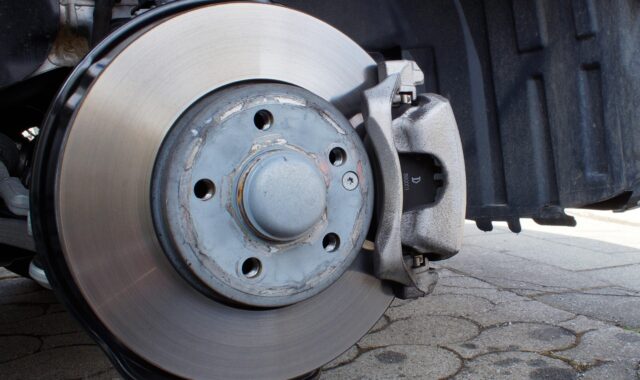
The braking and chassis category covers a wide range of safety-critical systems. In traditional parts catalog language, braking often includes pads, discs, drums, shoes, calipers, master cylinders, wheel cylinders, brake boosters, hoses, ABS modules, electronic parking brake actuators, sensors, and brake fluids. Chassis usually includes suspension arms, ball joints, tie rods, stabilizer links, bushings, shock absorbers, struts, wheel hubs, bearings, subframes, steering components, and related fasteners.
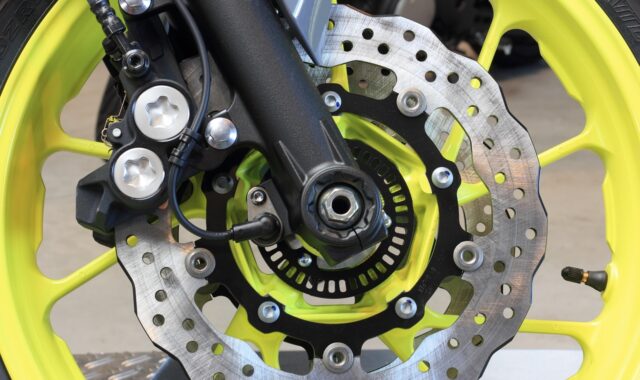
In vehicle engineering, the boundary is more complex. Anti-lock braking systems, electronic stability control, traction control, brake assist, adaptive damping, rear-wheel steering, torque vectoring, and automatic emergency braking all depend on shared information. Wheel-speed sensors are a simple example: they support ABS, stability control, traction control, tire-pressure monitoring strategies in some vehicles, and diagnostic functions. A fault in a small sensor or tone ring can therefore affect several systems at once.
The same integration is visible in electric vehicles. Regenerative braking shifts part of the deceleration workload from friction brakes to the electric motor. Even so, friction brakes still need to respond predictably during emergency stops, low-speed maneuvers, battery-limited regeneration, wet conditions, and stability-control interventions. This can create different wear patterns and corrosion risks compared with conventional vehicles that use friction brakes more frequently.
Regulation and safety ratings are pushing integration
Public safety rules and consumer-test protocols are major reasons braking and chassis development is accelerating. In the United States, the National Highway Traffic Safety Administration finalized Federal Motor Vehicle Safety Standard No. 127 for automatic emergency braking systems for light vehicles. The final rule was published in the Federal Register on May 9, 2024, and requires forward collision warning, automatic emergency braking, and pedestrian automatic emergency braking on nearly all light vehicles with a gross vehicle weight rating of 10,000 pounds or less by September 2029. NHTSA estimated the rule would save at least 360 lives and prevent at least 24,000 injuries each year.
That requirement is not only a software issue. AEB performance depends on sensors and algorithms, but it also depends on how quickly and consistently the braking system can generate deceleration while the tires and chassis maintain stability. Brake actuation, tire-road friction, suspension geometry, weight transfer, damper response, and wheel control can all affect stopping performance.
Electronic stability control shows the same pattern. NHTSA’s FMVSS No. 126 rule required ESC systems on applicable light vehicles by model year 2012, with limited exceptions. The U.S. Department of Transportation described ESC as a way to reduce single-vehicle loss-of-control crashes by automatically helping the driver maintain the intended direction of travel. ESC works by selectively braking individual wheels and, where appropriate, reducing engine torque. In that role, the brake system becomes a chassis-control actuator, not only a deceleration device.
In Europe, Euro NCAP’s 2026 assessment protocol changes add another layer of pressure. The organization has stated that its updated testing looks more closely at safe driving, crash avoidance, driver engagement, human-machine interface design, and the availability or usability of essential physical controls. Euro NCAP is a consumer safety assessment program rather than a type-approval law, but its ratings still influence vehicle design decisions because manufacturers compete for strong public safety scores.
From hydraulic brakes to by-wire motion control
Most vehicles on the road still rely on hydraulic or electrohydraulic brake actuation. S&P Global Mobility’s public summary of its brake-by-wire analysis reported that hydraulic brakes and electrohydraulic brakes together accounted for 99.9% of global brake actuation fitments in 2024. That figure is important because it shows that the transition is real, but not immediate. Conventional hydraulic technology remains dominant, especially in the service market and in lower-cost vehicle segments.
At the same time, major suppliers are preparing for wider by-wire adoption. Bosch has publicly discussed hydraulic brake-by-wire technology and stated that market launch was planned from fall 2025. The company has described by-wire braking as removing the direct mechanical connection between the brake pedal and the braking system while preserving controlled actuation through electronic commands and redundant system design. ZF announced in January 2025 that it had secured a brake-by-wire business win that included planned volume production and a contract scope covering nearly five million vehicles over the life of the agreement.
The technical direction is clear: braking, steering, damping, and powertrain torque are being coordinated as a vehicle motion-control system. In this architecture, the vehicle interprets driver input, sensor data, road conditions, and safety-system requests, then distributes commands to actuators. The brake system may help stabilize the vehicle during cornering, reduce pitch under hard stops, blend regenerative and friction braking, or support automated-driving functions.
For parts manufacturers and distributors, this transition creates both opportunity and complexity. Mechanical quality remains essential, but electronic compatibility, software validation, actuator response, diagnostic communication, and fail-safe behavior become more important. A replacement part that fits physically but does not meet expected response characteristics may create warning lights, drivability complaints, or reduced performance in assisted-driving scenarios.
What the shift means for parts quality and sourcing
The integration of braking and chassis systems changes how parts should be evaluated. Price, fitment, and basic material claims are not enough for safety-critical components. Buyers, distributors, and repair professionals need to consider the operating environment of the part and the systems around it.
| Component area | Traditional evaluation | Additional modern evaluation |
|---|---|---|
| Brake pads and discs | Friction material, dimensions, noise, wear | AEB response consistency, low-temperature bite, corrosion behavior, regeneration-related usage patterns |
| Calipers and actuators | Sealing, piston movement, pressure retention | Electronic parking brake integration, response time, diagnostic compatibility |
| Wheel hubs and bearings | Load rating, bearing durability, fitment | Sensor signal quality, ABS tone ring accuracy, contamination resistance |
| Suspension arms and bushings | Geometry, material strength, bushing hardness | ADAS alignment sensitivity, tire contact stability, NVH impact |
| Dampers and struts | Ride control, leakage resistance, durability | Interaction with stability control, vehicle attitude control, sensor-calibrated ride modes |
One practical issue is tolerance stacking. A single aftermarket component may be within a broad physical tolerance, but several small variations across tires, hubs, suspension links, brake components, and alignment can affect how the vehicle behaves during emergency braking or stability-control intervention. This does not mean every vehicle requires original-equipment parts. It does mean safety-critical replacements need credible manufacturing control and application-specific validation.
Diagnostics are another concern. Modern braking and chassis faults may not appear first as obvious mechanical symptoms. A driver may report intermittent warning lights, uneven intervention by driver-assistance systems, steering pull under braking, brake noise after low-use EV operation, or calibration problems after suspension repair. In those cases, parts selection and installation quality both matter.
Electric vehicles make braking and chassis more specialized
Electric vehicles add weight, torque, and regenerative braking complexity to the category. Battery packs increase vehicle mass, which can raise loads on suspension arms, bushings, wheel bearings, tires, and brake hardware. Instant motor torque can also stress driveline and chassis components differently from internal-combustion vehicles. At the same time, regenerative braking can reduce everyday friction-brake use, which may lower pad wear but increase the risk of disc corrosion or uneven surface condition in some operating environments.
The result is not a simple rule that EV brakes always last longer or chassis parts always wear faster. Real outcomes depend on vehicle weight, brake blending strategy, climate, driving style, road salt exposure, wheel and tire size, and maintenance habits. However, it is reasonable to say that EV-focused braking and chassis parts need careful attention to corrosion protection, noise control, thermal capacity, load rating, and compatibility with brake-blending strategies.
For workshops, EV braking service also requires awareness of high-voltage safety procedures and manufacturer-specific brake service modes. Some electronic parking brake and brake-by-wire-related systems require scan-tool operations before pad replacement or hydraulic service. Skipping those steps can damage components or create post-service faults.
A practical checklist for braking and chassis decisions
Because braking and chassis parts directly affect safety, sourcing decisions should be based on documented performance rather than broad marketing language. The following checklist can help buyers and technicians compare options more consistently:
- Confirm exact application data, including model year, drivetrain, axle load, brake package, wheel size, and ADAS equipment where relevant.
- Check whether the part interfaces with ABS, ESC, AEB, electronic parking brake, adaptive suspension, or steering-angle calibration.
- Review material and process information, including heat treatment, coating, friction formulation, rubber compound, and sealing design.
- Look for test evidence that matches the part type, such as dynamometer testing for friction parts, endurance testing for bearings, corrosion testing for coated components, or fatigue testing for suspension arms.
- Consider NVH performance, especially for brake pads, bushings, hubs, and dampers, because quiet operation is often linked to correct fit and stable system behavior.
- Follow torque specifications, bedding procedures, alignment requirements, scan-tool steps, and calibration instructions during installation.
- Treat warning lights, abnormal intervention, steering pull, or repeated sensor faults as system-level issues rather than isolated part complaints.
The main takeaway is that braking and chassis work has become more interdisciplinary. Mechanical durability, electronic communication, software expectations, and driver-assistance behavior now meet in the same repair bay and supply chain.
Frequently asked questions
What does braking and chassis mean in automotive parts?
It refers to the components that slow, stabilize, support, steer, and control the vehicle. Braking parts include friction brakes, hydraulic components, ABS-related parts, sensors, and actuators. Chassis parts include suspension, steering, hubs, bearings, bushings, subframes, and ride-control components.
Why are braking and chassis systems discussed together?
They are increasingly controlled together by vehicle electronics. ABS, ESC, AEB, traction control, adaptive damping, and torque management all depend on the interaction between brake force, tire grip, steering direction, suspension movement, and vehicle weight transfer.
Will brake-by-wire replace hydraulic brakes soon?
Brake-by-wire adoption is growing, but hydraulic and electrohydraulic brakes still dominate current vehicle fitments and the replacement market. Supplier announcements show a move toward volume production, yet the transition will vary by region, vehicle segment, cost level, and regulatory environment.
Do electric vehicles need different brake and chassis parts?
Many EVs place different demands on parts because of higher mass, regenerative braking, instant torque, and specialized electronic control. Some parts may look similar to conventional components, but load rating, corrosion resistance, NVH performance, and electronic compatibility can be different.
What should buyers prioritize when sourcing braking and chassis parts?
Buyers should prioritize correct fitment, safety-related test evidence, consistent manufacturing quality, compatibility with electronic systems, and clear installation requirements. For modern vehicles, the cheapest physically fitting part may not be the best choice if it affects sensor signals, calibration, noise, or system response.