Brake discs and pads guide for replacement, compatibility, and compliance
Why brake discs and pads should be considered together
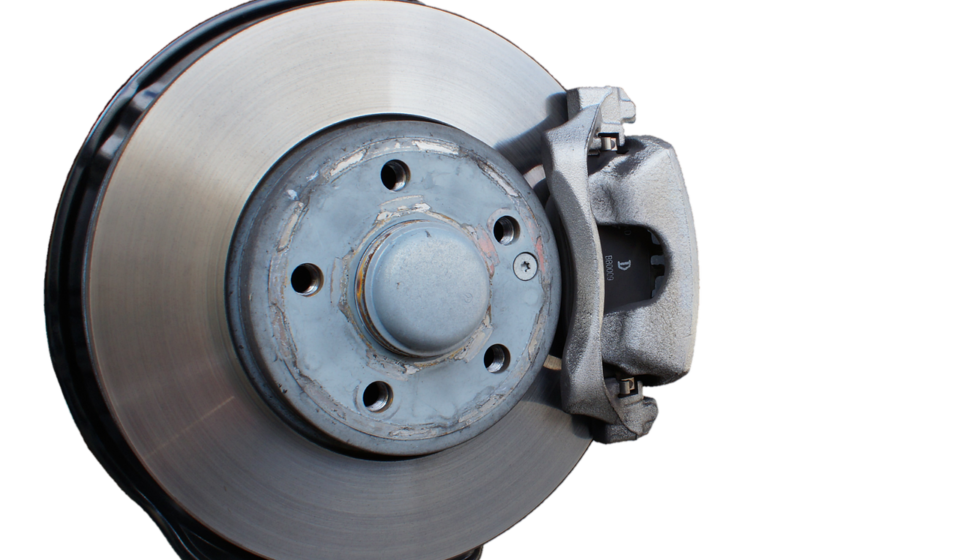
Brake discs and pads work as a paired friction system. The caliper presses the pad material against the rotating disc, creating friction that slows the wheel and converts vehicle motion into heat. For replacement buyers, the key question is not only whether a pad or disc fits the vehicle. The parts also need to suit the vehicle application, braking load, heat range, wear condition, regulatory expectations, and driver use case.
A quiet commuter pad, a heavy-duty commercial pad, and a performance-oriented pad can behave very differently on the same disc design. Selecting brake discs and pads as a set helps reduce the risk of noise, uneven wear, vibration, poor bedding, premature disc scoring, and inconsistent pedal feel.
This matters in aftermarket purchasing because discs and pads are often sold separately. A disc may be dimensionally correct but still unsuitable if the pad compound is too aggressive for the disc metallurgy or surface finish. A pad may meet basic fitment needs but perform poorly if the existing disc is below minimum thickness, heavily corroded, cracked, oil-contaminated, or unevenly worn.
What each part does in the braking system
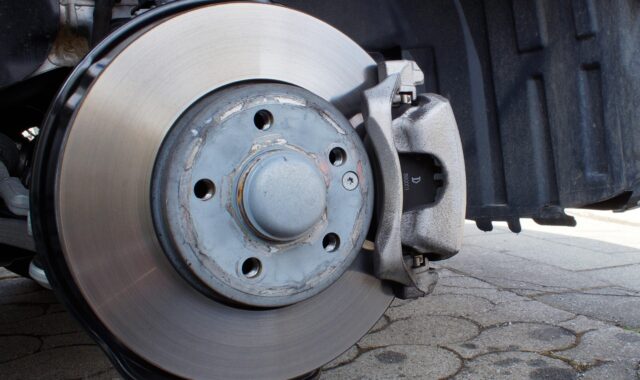
A brake disc, also called a rotor in many markets, is the rotating metal surface fixed to the wheel hub. It has to absorb and dissipate heat while maintaining stable geometry under repeated braking. Key specifications normally include outside diameter, thickness, minimum service thickness, height, bolt pattern, center bore, ventilation design, surface finish, coating, and material grade.
A brake pad is the friction component mounted in the caliper. Its backing plate carries the friction material, which is formulated to balance stopping response, operating temperature, noise control, wear rate, dust, and disc compatibility. Common replacement categories include organic or NAO compounds, low-metallic compounds, semi-metallic compounds, and ceramic formulations. These labels are useful for comparison, but they are not complete performance guarantees. Two ceramic pads from different manufacturers can differ significantly in bite, fade resistance, dust behavior, and wear pattern.
Other parts of the vehicle also influence braking results, including the caliper, piston, slide pins, brake fluid, hoses, ABS control strategy, tires, suspension, and vehicle weight. Replacing pads alone may not solve vibration, pull, noise, or long stopping distance if the root cause is disc runout, seized caliper slides, contaminated friction material, old brake fluid, or limited tire grip.
When brake discs and pads should be replaced
Pads normally wear faster than discs, but replacement timing should be based on measured condition rather than mileage alone. Stop-start city driving, towing, mountain roads, commercial routes, aggressive driving, corrosion-prone climates, and heavy vehicle loads can all shorten service life.
Common signs that pads need inspection include squealing from a mechanical wear indicator, grinding noise, reduced friction material thickness, warning lights on vehicles with electronic wear sensors, longer pedal travel, vibration under braking, or visible cracking and crumbling at the pad edge. UK DVSA MOT guidance, updated on June 1, 2026, classifies brake lining or pad wear down to the wear indicator as a major defect and wear below 1.5 mm as dangerous in that inspection context. That figure should not be treated as a universal service limit for every market or vehicle, but it shows how safety inspections distinguish worn friction material from critically worn friction material.
Discs should be checked against the manufacturer’s minimum thickness specification, not judged by appearance alone. Replacement is usually required when a disc is below minimum thickness, cracked, deeply scored, heavily corroded on the friction surface, heat-spotted, distorted, contaminated, or worn unevenly. The same DVSA MOT guidance treats significantly and obviously worn discs as a major defect, while fractured, insecure, or likely-to-fail discs are classified as dangerous. In practical service terms, a new pad should not be installed on a disc that cannot provide a flat, stable, clean, and correctly dimensioned friction surface.
Key compatibility checks before buying replacements
Correct fitment starts with vehicle identification data, but it should not stop there. Model year, engine, body style, axle load, brake package, wheel size, production date, market version, and trim level can all change the disc and pad specification. Some vehicles use different front brake sizes within the same model range. Others have sport, towing, police, taxi, electric, hybrid, or commercial packages with different friction requirements.
- Disc dimensions: Confirm outside diameter, thickness, minimum thickness, total height, center bore, bolt pattern, ventilation type, and handed design if applicable.
- Pad shape and hardware: Match the backing plate shape, locating ears, clips, shims, chamfers, slots, spring hardware, and sensor provision.
- Axle position: Front and rear parts are not interchangeable, and left-right orientation may matter for directional discs or chamfered pads.
- Brake package: Check whether the vehicle has standard, performance, towing, heavy-duty, electric parking brake, or regenerative braking hardware.
- Wear sensors: Verify whether the pad uses a mechanical indicator, electronic sensor, reusable sensor, or integrated sensor lead.
- Disc condition: Measure thickness and runout before assuming pads alone will restore braking quality.
For distributors and workshops, the strongest catalog data combines OE references, cross-references, vehicle application notes, production date ranges, and physical measurement checks. A low-price pad that fits the caliper but omits the correct shim, clip, or sensor can still create noise complaints, installation delays, or returns.
Materials, heat, noise, and wear trade-offs
No brake pad formulation is ideal for every driver. Softer compounds may feel smooth and quiet but wear faster. More aggressive compounds may improve initial bite or high-temperature stability, but they can also increase disc wear, dust, or noise. Ceramic-labeled pads are often marketed for low dust and quiet operation in passenger vehicles, but the label alone does not prove performance. Semi-metallic and low-metallic formulations can be suitable where higher heat capacity and stronger bite are needed, although their behavior depends on the exact formulation and disc pairing.
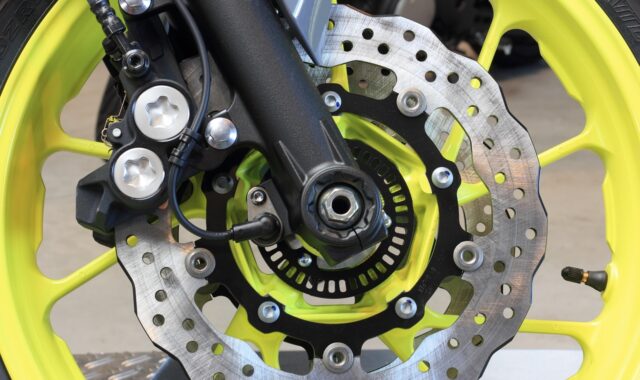
Disc design also affects the system. Vented discs improve heat management compared with solid discs where the vehicle design allows them. Coated discs can help reduce cosmetic corrosion on non-friction areas, especially in wet or salted-road environments. Slotted or drilled discs may have value in specific performance or appearance applications, but they are not automatically better for daily-use vehicles. Poor-quality drilled discs can be more vulnerable to cracking, and unnecessary surface features may increase pad wear or noise.
| Use case | Pad priority | Disc priority | Main caution |
|---|---|---|---|
| Daily commuting | Low noise, stable cold response, moderate dust | OE-style surface, corrosion protection where useful | Do not sacrifice fitment hardware or sensor compatibility |
| Towing or heavy loads | Higher heat tolerance and fade resistance | Correct ventilation and minimum thickness margin | Check calipers, fluid, tires, and axle load rating |
| Performance driving | Temperature stability and consistent pedal feel | Heat capacity, runout control, crack resistance | Track-capable parts may be noisy or dusty on the street |
| Fleet service | Predictable wear, availability, low comeback rate | Durability and consistent machining quality | Standardize inspections and record wear data by route |
Compliance references that matter in the aftermarket
Regulation and compliance language can be confusing because brake rules differ by market. UNECE Regulation No. 90 is a major reference for replacement brake linings, drum-brake linings, discs, and drums in markets that apply UNECE rules. The regulation entered into force on November 1, 1992, and its scope includes replacement brake lining assemblies and replacement brake discs and drums for multiple vehicle categories. In aftermarket terms, R90 approval is important because it connects replacement friction parts to defined approval, testing, marking, packaging, and conformity requirements rather than relying only on catalog claims.
Environmental requirements are also shaping pad formulation. The U.S. EPA’s Copper-Free Brake Initiative began with a January 21, 2015 agreement among EPA, states, and automotive industry groups. The initiative called for copper in motor vehicle brake pads to be reduced to less than 5 percent by weight in 2021 and to 0.5 percent by 2025. EPA materials also describe related reductions in mercury, lead, cadmium, asbestiform fibers, and chromium-six salts. For global aftermarket buyers, pad chemistry, packaging labels, and regional availability can be as important as friction performance.
In the United States, federal vehicle brake standards focus mainly on vehicle-level brake performance, while replacement pads are treated as motor vehicle equipment and remain subject to safety recall obligations. This distinction matters for importers and distributors: a part may be sold as a replacement component, but inaccurate application data, defective material, or inconsistent production can still create safety and liability exposure.
The practical lesson is to separate three questions: Does the part fit the vehicle? Has it been validated for the relevant market or application? Can the supplier provide consistent production quality and accurate traceability? A part that answers only the first question is not enough for a safety-critical system.
Installation and bedding factors that affect results
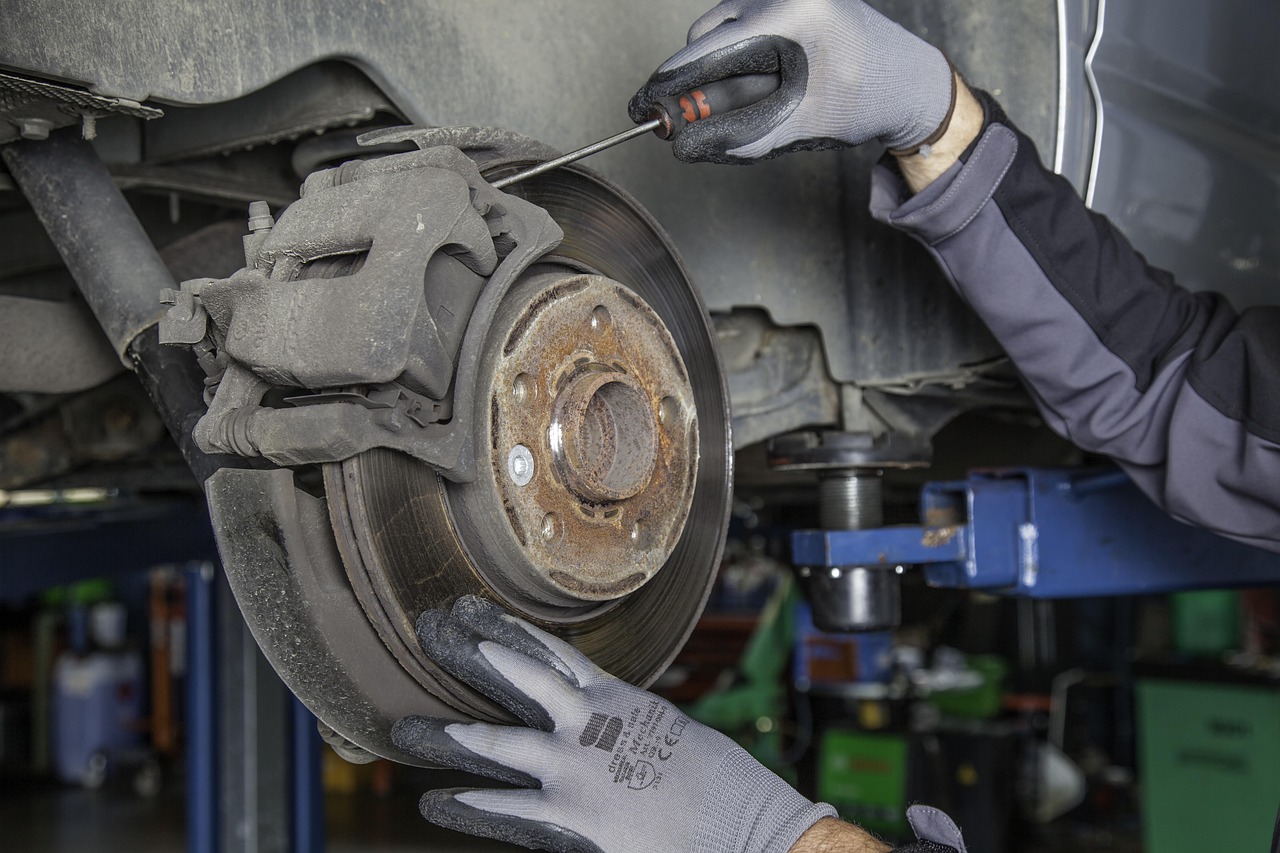
Even well-selected brake discs and pads can perform badly if installation is careless. Hub face corrosion can create disc runout. Reusing damaged hardware can cause pad drag or vibration. Over-lubricating areas near the friction surfaces can contaminate pads. Incorrect wheel bolt torque can distort the disc. Skipping slide-pin service can make one pad wear faster than the other.
Before installation, the hub face should be cleaned, disc runout checked where appropriate, caliper slides inspected, piston movement verified, and brake fluid condition considered. New pads and discs also need proper bedding. Bedding transfers a controlled layer of friction material onto the disc face and stabilizes the contact surface. The exact procedure varies by manufacturer and compound, so installers should follow the supplied instructions rather than using one generic method for every pad.
After installation, the first road test should check pedal feel, noise, pull, ABS warning lights, parking brake operation where applicable, and abnormal heat at any wheel. If one wheel is significantly hotter than the others after light use, dragging brakes, seized slides, collapsed hoses, or incorrect assembly should be investigated before the vehicle returns to normal service.
How buyers can compare brake discs and pads more effectively
Price matters, but it should be assessed alongside return risk, installation time, warranty rate, and customer expectation. For workshops, a very low-cost pad that creates noise complaints can be more expensive than a better-matched kit. For distributors, inconsistent packaging data or missing hardware can increase support costs. For vehicle owners, replacing pads without addressing worn discs can lead to repeat labor.
- Think in complete axle sets: pads, discs, sensors, shims, clips, and fitting hardware should be considered together.
- Use measured disc condition rather than guessing from mileage.
- Check whether regional compliance, such as UNECE R90 approval or copper-content labeling expectations, applies to the target market.
- Match the pad compound to the vehicle’s duty cycle instead of assuming one material label is always superior.
- Document part numbers, batch codes, inspection measurements, and bedding instructions for safety-critical traceability.
For more braking and chassis industry coverage, visit Sifangdi.
Frequently asked questions
Should brake discs and pads be replaced at the same time?
Not always. Pads can often be replaced without new discs if the discs are within thickness limits, flat, clean, free from cracks, and compatible with the new pad compound. However, replacing both together is usually sensible when discs are worn, scored, corroded, heat-damaged, or close to minimum thickness.
Are ceramic brake pads always better?
No. Ceramic pads can be quiet and low-dust in many passenger vehicle applications, but the term does not guarantee the best stopping response, towing performance, or high-temperature durability. Application, formulation quality, and disc compatibility matter more than the label alone.
What causes vibration after fitting new pads?
Common causes include disc runout, uneven pad transfer, hub face corrosion, incorrect wheel torque, seized caliper slides, contaminated surfaces, or using new pads on damaged discs. The problem is often blamed on the pad, but the disc and installation conditions should be checked first.
Why does brake pad copper content matter?
Copper has historically been used in some friction materials, but environmental initiatives and state-level rules in the United States pushed the market toward lower-copper formulations. The issue affects compliance, labeling, sourcing, and long-term availability, especially for suppliers serving multiple regions.
What is the safest way to choose aftermarket brake discs and pads?
Start with exact vehicle fitment, confirm physical dimensions, check the disc condition, choose a pad compound suitable for the driving duty, and verify relevant market compliance. For safety-critical parts, traceability and consistent supplier quality should be treated as core selection criteria, not optional extras.