Shocks and struts explained for ride control, braking, and chassis stability

Why shocks and struts matter beyond ride comfort
Shocks and struts are often described as comfort parts, but their main value is control. They manage spring movement, help keep the tire contact patch stable, and limit the bouncing, pitching, and rolling that can make a vehicle harder to stop or steer. In braking and chassis work, worn ride-control parts can affect how weight transfers to the front axle, how quickly tires recover after bumps, and how consistently ABS and stability systems can work with the road surface.
No single mileage figure proves that a shock or strut is bad on every vehicle. Load, road quality, climate, corrosion, tire condition, and driving style all influence wear. A better approach is to understand what the part does, inspect it with the surrounding chassis components, and replace it when symptoms and evidence point to lost damping or structural wear.
What shocks and struts actually do
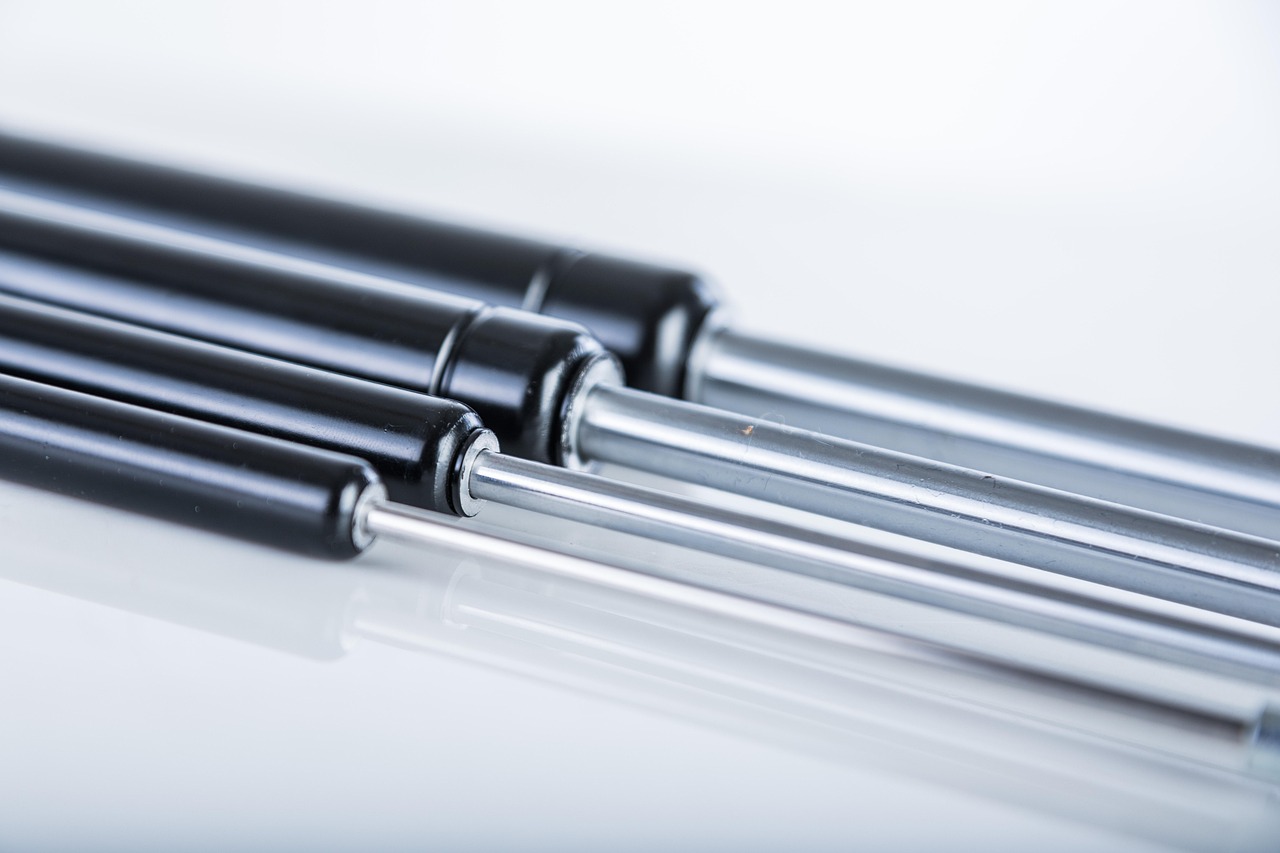
A vehicle spring carries vehicle weight and allows the wheel to move over road irregularities. Without a damper, that spring would continue oscillating after each bump, causing repeated tire movement and poor body control. A shock absorber resists that motion by forcing fluid through internal valves. The energy from suspension movement is converted into heat and then dissipated through the damper body.
A strut also contains a damper, but it is more than a shock absorber. In many front suspension designs, especially MacPherson-type layouts, the strut is a structural member. It helps locate the wheel, supports a spring seat, connects to the steering knuckle, and often includes an upper mount that allows steering rotation. Because of that structural role, strut condition can affect alignment angles, steering feel, tire wear, and noise as well as damping.
For braking and chassis diagnosis, this distinction matters. A worn shock can reduce ride control, while a damaged strut assembly or mount may also create alignment changes, clunks, steering bind, or uneven ride height symptoms that cannot be corrected by replacing the damper cartridge alone.
| Feature | Shock absorber | Strut assembly |
|---|---|---|
| Main purpose | Controls spring movement and body motion | Controls spring movement and helps support suspension geometry |
| Structural role | Usually not a primary structural locating member | Often part of the wheel-locating and steering structure |
| Common related parts | Mounting bushings, bolts, dust boot, bump stop | Spring, upper mount, bearing plate, spring seat, boot, bump stop |
| Alignment impact | Usually limited unless mounts or related arms are affected | Alignment is commonly needed after removal or replacement |
| Typical installation position | Common on rear suspensions and trucks, also used with some front designs | Common on front suspensions and some rear independent layouts |
How worn damping can affect braking and chassis behavior
During hard braking, vehicle weight shifts forward. Good damping helps control the speed and recovery of that pitch movement. When shocks or struts are weak, the front of the vehicle may dive more sharply, the rear may feel light, and the tires may not maintain consistent contact over uneven pavement. Drivers may notice longer-feeling stops, extra steering corrections, or reduced confidence when braking and turning at the same time.
This does not mean every braking complaint is caused by shocks and struts. Brake pads, rotors, calipers, tires, wheel bearings, control arm bushings, and electronic brake system faults can produce similar complaints. The practical point is that ride-control parts should be included in the braking and chassis inspection, not treated as unrelated comfort items.
Worn damping can also influence tire wear. When a tire repeatedly hops or loses consistent road contact, tread blocks may wear in a cupped or scalloped pattern. However, cupping can also result from imbalance, misalignment, loose suspension joints, or tire construction issues. A complete diagnosis should compare damping condition with tire rotation history, alignment readings, wheel balance, and play in chassis joints.
Common warning signs that deserve inspection
Drivers rarely describe a failed shock or strut in technical terms. They are more likely to report that the vehicle feels floaty, unstable, noisy, or less controlled than it used to. The symptoms below are useful starting points, but none of them should be used as a standalone diagnosis.
- Excessive bounce after bumps. If the body continues moving after the road surface levels out, damping may be weak.
- Nose dive under braking. Some dive is normal, but sudden or exaggerated pitch can indicate loss of control in the front dampers or related suspension wear.
- Body roll and wandering. Poor damping can make the vehicle feel delayed in lane changes or unsettled in curves.
- Uneven or cupped tire wear. This can point to poor tire contact, but alignment, balance, and worn joints must also be checked.
- Oil leakage on the damper body. Heavy wet leakage is a stronger concern than light staining or road grime.
- Clunks, rattles, or popping noises. These may come from strut mounts, bushings, sway bar links, ball joints, or loose hardware rather than the damper itself.
- Steering bind or memory steer. On strut-equipped vehicles, a worn upper bearing or mount can make the steering wheel slow to return or inconsistent.
- Uneven ride height. Springs usually determine ride height, but damaged strut seats, mounts, or broken coils can contribute to visible imbalance.
The traditional bounce test can reveal extreme wear, but it is not a complete inspection. Modern dampers may pass a simple driveway bounce test while still performing poorly under heat, repeated bumps, or higher-speed body motion. A road test and visual inspection provide better context.
A practical inspection sequence for braking and chassis work
A structured inspection helps avoid replacing shocks and struts when the real issue is elsewhere. It also helps prevent a new damper from being installed into a worn mount, broken spring, or corroded bracket that could shorten service life.
- Start with the customer complaint. Note when the problem occurs: braking, turning, highway driving, rough roads, loaded driving, or cold starts.
- Check tires first. Record tread depth, pressure, wear pattern, age, and any mismatched sizes or load ratings.
- Inspect visible damping condition. Look for heavy fluid leakage, dented bodies, damaged rods, torn boots, missing bump stops, and loose or corroded mounts.
- Inspect related chassis parts. Check control arms, ball joints, tie rods, sway bar links, bushings, wheel bearings, and subframe attachment points.
- Evaluate springs and ride height. Look for broken coils, sagging, cracked seats, and uneven left-to-right height.
- Road test safely. Listen for noise, observe steering return, feel brake dive, and note how the vehicle settles after bumps.
- Confirm alignment needs. Strut removal commonly affects alignment, and any ride-height or steering-angle change may require additional setup according to vehicle service information.
This sequence is especially useful because ride-control symptoms overlap with brake and tire symptoms. For example, a steering shake during braking may come from rotor thickness variation, loose front-end parts, tire issues, or a combination of weak damping and worn chassis components. The inspection must identify the system involved, not just the symptom.
Replacement choices and trade-offs
When replacement is justified, the next decision is which part type and service approach fit the vehicle. Replacing shocks or struts in axle pairs is generally preferred because left and right damping balance matters for braking, cornering, and stability. Mixing one new damper with one worn damper can create uneven response even if the vehicle appears level in the service bay.
Bare struts, complete strut assemblies, and shock absorbers each involve different trade-offs. A bare strut may preserve an original spring when the spring and mount are still serviceable, but it requires safe spring compression and inspection of all reused parts. A complete strut assembly can reduce labor time and renew several wear items at once, but application accuracy and component quality are critical. Standard shock replacement may be simpler, yet mounts, bushings, washers, sleeves, and hardware condition still matter.
| Replacement option | Potential advantage | Important limitation |
|---|---|---|
| Shock absorber only | Direct solution when the shock is the worn item and mounts are sound | Does not correct worn springs, bushings, arms, or tire problems |
| Bare strut | Allows reuse of suitable springs and selected original components | Requires correct spring handling and careful inspection of reused mounts and seats |
| Complete strut assembly | Can renew spring seat, boot, bump stop, and mount-related parts together | May change ride height or feel if the assembly specification differs from the original |
| Performance-oriented damper | May improve control for specific loads, roads, or driving preferences | Can increase harshness if not matched to the vehicle and tire setup |
Part selection should be based on vehicle application, curb weight, axle load, suspension design, tire size, and intended use. A commuter sedan, delivery van, pickup used for towing, and performance hatchback do not need the same damping personality. For parts professionals, the key checks are VIN fitment, left-right orientation, mount design, electronic suspension compatibility where applicable, and whether the vehicle uses conventional, self-leveling, or adaptive damping.
Why alignment and calibration checks should not be skipped
Strut replacement can disturb camber, toe, and steering wheel position. Even when the bolt holes look fixed, tolerances, bracket movement, worn mounts, and ride-height changes can alter the final alignment. A post-repair alignment is a sensible step after strut work and after any related steering or suspension component replacement.
Some modern vehicles also connect chassis work with electronic systems. Steering angle sensors, stability control, lane assistance, or adaptive lighting may rely on accurate alignment and ride-height information. Not every vehicle needs recalibration after every damper replacement, so the correct answer depends on the service information for that exact model. The safe position is straightforward: inspect mechanically first, align when geometry has been disturbed, and follow the vehicle maker’s service procedure for any electronic reset or calibration requirement.
Frequently asked questions
Are shocks and struts the same thing?
No. Both control suspension movement, but a strut usually has a structural role in the suspension. A shock absorber mainly provides damping, while a strut can also help locate the wheel and support spring and steering components.
How often should shocks and struts be replaced?
There is no universal replacement mileage that applies to every vehicle. They should be inspected during regular tire, brake, and chassis service and replaced when symptoms, leakage, damage, or measured wear justify it.
Should shocks or struts be replaced in pairs?
Replacing them in axle pairs is generally preferred because balanced damping helps the vehicle respond consistently during braking, turning, and rough-road driving. Replacing only one side can create uneven chassis behavior.
Can bad shocks and struts damage tires?
They can contribute to cupped or uneven tire wear by allowing excessive wheel and body movement. However, tire wear diagnosis should also include alignment, balance, inflation pressure, wheel bearings, and loose suspension parts.
Is a complete strut assembly always better than a bare strut?
Not always. A complete assembly can be efficient when mounts, boots, bump stops, or spring seats are worn, but a bare strut may be appropriate when the surrounding parts are in good condition and the correct service tools are available.
The bottom line for braking and chassis decisions
Shocks and struts should be evaluated as part of the whole braking and chassis system. Their job is not only to soften bumps; it is to control vehicle motion so the tires, brakes, steering, and stability systems can work with a more consistent contact patch. The best replacement decision comes from inspection evidence, correct fitment, balanced axle service, and attention to alignment after the work is complete.
For parts buyers, service teams, and automotive parts sites, the useful distinction is between true damping problems and tire, brake, or chassis faults that create similar symptoms. That distinction reduces guesswork, supports safer maintenance decisions, and keeps the focus on how each component affects the vehicle as a system. More automotive parts coverage is available at sifangdi.com.