Brake and clutch fluid explained by DOT grade, boiling point and compatibility
What brake and clutch fluid does in a hydraulic system
Brake and clutch fluid is the hydraulic medium that transfers pedal force through sealed lines to brake calipers, wheel cylinders or a hydraulic clutch actuator. In many passenger vehicles with a hydraulic clutch, the clutch circuit uses the same type of fluid as the brake system. The correct specification, however, is always the one printed on the reservoir cap or stated in the owner’s manual. For most modern road vehicles, that means a DOT-rated, non-petroleum fluid such as DOT 3, DOT 4 or DOT 5.1. The key selection points are not brand name or color alone, but specification, chemical family, boiling performance, seal compatibility and fluid cleanliness.
For readers comparing brake parts, hydraulic service items and related chassis topics, the braking and chassis section is the most relevant internal category.
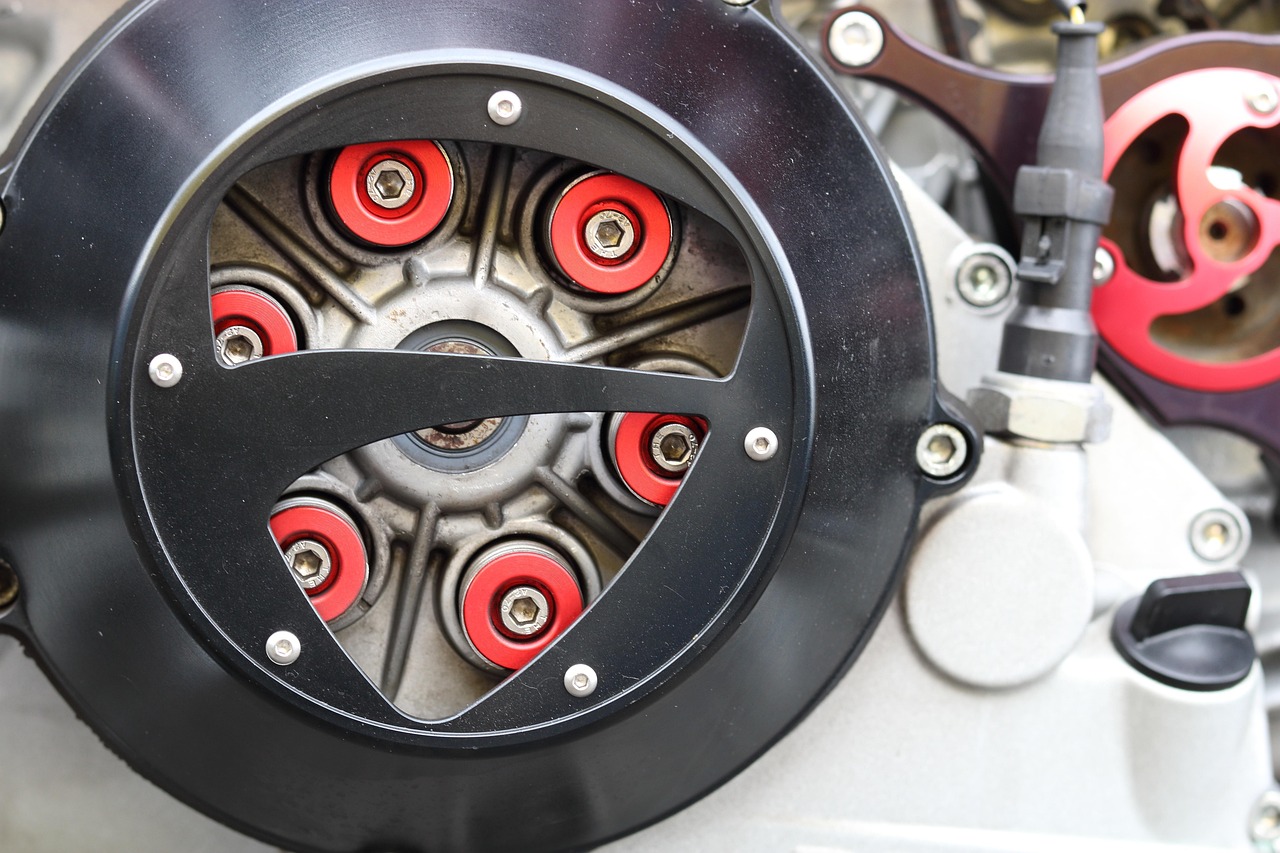
A hydraulic brake system works because fluid is difficult to compress. When the driver presses the brake pedal, the master cylinder pressurizes the fluid, which pushes pistons in the calipers or wheel cylinders. A hydraulic clutch system uses the same basic principle: pedal movement pressurizes fluid, moving a slave cylinder or concentric release bearing to disengage the clutch. Because both systems depend on predictable hydraulic pressure, the fluid must resist boiling, protect metal parts from corrosion, lubricate rubber seals and remain fluid at low temperature.
DOT grades are performance specifications, not simple quality rankings
The most common labels are DOT 3, DOT 4, DOT 5 and DOT 5.1. These labels come from U.S. Federal Motor Vehicle Safety Standard No. 116, commonly called FMVSS 116, which sets requirements for motor vehicle brake fluids, container sealing, labeling and related safety warnings. The regulation requires DOT containers to identify the grade and show information such as the minimum wet boiling point and conformity with the standard. It also requires warnings to follow the vehicle manufacturer’s recommendations, keep brake fluid clean and dry, and store it in the original tightly closed container. (law.cornell.edu)
DOT numbers should not be read as a straight upgrade ladder. DOT 4 generally has higher minimum boiling requirements than DOT 3, and DOT 5.1 has DOT 5-level boiling requirements while remaining non-silicone. DOT 5, however, is silicone-based under the DOT labeling system and is not the same as DOT 5.1. That decimal point matters. DOT 5.1 is normally selected when a non-silicone system needs a higher boiling point and suitable low-temperature viscosity. DOT 5 is used only where the vehicle or equipment is designed for silicone brake fluid.
FMVSS 116 also uses color as an identification aid: DOT 3, DOT 4 and DOT 5.1 non-silicone fluids are specified as colorless to amber, DOT 5 silicone-base brake fluid is purple, and hydraulic system mineral oil is green. Color can help flag an obvious mismatch, but it should never replace the written specification. Used fluid can darken with age, heat and contamination. (law.cornell.edu)
Boiling point is the main reason DOT grades matter
Brake fluid is exposed to heat from pads, rotors, drums, calipers and repeated braking. If the fluid boils, vapor bubbles can form. Vapor is compressible, so the pedal can feel long, soft or ineffective. That is why brake fluid standards define both dry and wet boiling performance. Dry boiling point describes new, unused fluid. Wet boiling point reflects fluid after water exposure under the test method, which is especially important for glycol-based fluids that can absorb moisture during service.
| DOT grade | Typical chemistry | Minimum dry boiling point | Minimum wet boiling point | General use note |
|---|---|---|---|---|
| DOT 3 | Non-silicone, glycol-based family | 205°C / 401°F | 140°C / 284°F | Common in many standard passenger vehicles where specified |
| DOT 4 | Non-silicone, glycol/borate-based family | 230°C / 446°F | 155°C / 311°F | Common where higher boiling performance is required |
| DOT 5 | Silicone-based | 260°C / 500°F | 180°C / 356°F | Only for systems designed for silicone brake fluid |
| DOT 5.1 | Non-silicone, glycol-based family | 260°C / 500°F | 180°C / 356°F | Higher boiling specification without switching to silicone chemistry |
The minimum values above come from the DOT framework in FMVSS 116. The standard also defines viscosity limits, corrosion behavior, oxidation resistance, effects on rubber cups, stroking properties and fluid appearance tests. In practice, a product can exceed the minimum requirements, but the DOT grade tells the buyer the floor it must meet, not every detail of the formulation. (law.cornell.edu)
For modern vehicles with anti-lock braking and stability-control systems, low-temperature viscosity can be as important as boiling point. Some fluids are marketed as DOT 4 LV or low-viscosity DOT 4. These are not simply “better DOT 4” for every vehicle; they are intended for systems that need fast hydraulic response at low temperature. ISO 4925:2026, the international road-vehicle brake-fluid standard, covers non-petroleum fluids used in hydraulic brake and clutch systems and includes classes such as 3, 4, 5.1, 6 and 7. The 2026 edition adds lubrication-related requirements compared with the 2020 edition. (iso.org)
Brake fluid and clutch fluid are often the same, but the vehicle specification decides
The phrase “brake and clutch fluid” exists because many hydraulic clutch systems use the same non-petroleum DOT fluid family as the brake system. ISO 4925 describes non-petroleum fluids for road-vehicle hydraulic brake and clutch systems designed for such fluids and compatible elastomer seals. Some owner manuals also state this directly. For example, Honda manuals commonly instruct owners to use the same fluid specified for the brake system in the clutch system, and some GM manuals note that manual-transmission clutch hydraulics and the brake master cylinder can share the same reservoir. (iso.org)
That does not mean every clutch reservoir can accept any brake fluid on the shelf. The safe rule is narrower: use the exact DOT or ISO specification required by the vehicle manufacturer. If the cap says DOT 3, DOT 4 or DOT 5.1, stay within that family and avoid silicone DOT 5 unless the vehicle specifically calls for it. If the system specifies mineral oil, central hydraulic fluid or a manufacturer-specific hydraulic oil, do not substitute DOT brake fluid. FMVSS 116 labeling specifically warns that hydraulic system mineral oil is not compatible with rubber components of brake systems designed for DOT brake fluids. (law.cornell.edu)
For workshops and parts buyers, this distinction matters because a wrong-fluid event is not just a performance issue. Petroleum or mineral-oil contamination can swell seals, damage hoses and create expensive repairs. Even a small top-up with the wrong chemical family may require a full hydraulic inspection, replacement of affected rubber parts and a complete flush. When the previous fluid is unknown, the conservative service approach is to identify the vehicle requirement first and treat the system as contaminated if there is evidence of mixing, swelling, sludge or abnormal pedal feel.
Compatibility and mixing rules for DOT 3, DOT 4, DOT 5 and DOT 5.1
The practical compatibility rule is simple, but it is often misunderstood. DOT 3, DOT 4 and DOT 5.1 belong to the non-silicone glycol-based family used in most modern vehicles, so they are generally compatible as chemical families. Compatibility, however, does not mean “use anything.” If a vehicle requires DOT 4, topping up with DOT 3 can reduce boiling margin. If a vehicle requires low-viscosity DOT 4 or an ISO Class 6 fluid, a standard DOT 4 may not provide the intended cold-temperature behavior. The owner’s manual and reservoir cap remain the controlling references.
DOT 5 silicone-base brake fluid is the main exception. It is identified separately in FMVSS 116 labeling and color requirements, and vehicle manufacturers that specify DOT 3 or DOT 4 commonly warn against DOT 5 use. Honda owner information, for example, states that DOT 5 is not compatible with certain Honda braking systems and can cause extensive damage. (techinfo.honda.com) See also: driveline systems.
Another common misconception is that a higher DOT number always means shorter stopping distance. Brake fluid does not create braking torque by itself; pads, rotors, tires, calipers, hydraulic pressure and electronic controls do that. Higher boiling performance helps preserve pedal feel and hydraulic function under heat. If the brakes are not overheating, changing from the specified DOT 3 to a high-performance DOT 4 will not automatically make the vehicle stop shorter in normal street use. The value is heat margin, not extra friction.
- Use DOT 3 where the vehicle specifies DOT 3, unless the manufacturer permits DOT 4 as an alternative.
- Use DOT 4 where DOT 4 is specified, especially where the vehicle requires a higher boiling margin.
- Use low-viscosity DOT 4 or ISO Class 6 only when the vehicle calls for that low-temperature behavior.
- Use DOT 5 only in systems designed for silicone brake fluid.
- Use DOT 5.1 when the vehicle or service plan calls for non-silicone fluid with DOT 5-level boiling performance.
Service intervals depend on time, moisture and vehicle requirements
Brake fluid is not a lifetime fluid for most service schedules. The exact interval varies by vehicle maker, climate, driving profile and maintenance system. Honda owner materials commonly state replacement every three years independent of mileage for certain vehicles, while BMW service literature has historically referenced a two-year brake-fluid flush interval. These examples show why a universal mileage number is not reliable; brake fluid ages with time as well as use. (techinfo.honda.com)
Moisture is the central reason service intervals exist. Glycol-based brake fluids can absorb water over time, which lowers boiling performance and can contribute to internal corrosion. FMVSS 116 container warnings therefore emphasize keeping brake fluid clean and dry, using fluid from the original container and keeping the container tightly closed to prevent moisture absorption. Once a bottle has been opened and stored for a long period, it may no longer be suitable for critical hydraulic service even if fluid remains inside. (law.cornell.edu)
Visual inspection is useful, but it has limits. Fresh DOT 3, DOT 4 and DOT 5.1 fluid is usually clear to amber, yet color alone cannot measure water content or boiling point. Dark fluid, suspended particles, a damaged reservoir diaphragm, swollen rubber parts or sludge are warning signs. Clear fluid can still be old. A low reservoir level also deserves attention. It may drop as brake pads wear, but it can also indicate a leak. The correct response is not simply to keep topping up; inspect pads, lines, calipers, cylinders and the clutch hydraulic circuit if fitted.
How to choose the right brake and clutch fluid
The safest selection process starts with the vehicle, not the shelf label. Check the owner’s manual, reservoir cap and service information. Then match the DOT grade, viscosity class and any manufacturer approval. For fleet or workshop purchasing, keep sealed containers, track opening dates, avoid transferring fluid into unmarked bottles and never use a container that has held another liquid.
- Confirm the specification. Look for DOT 3, DOT 4, DOT 4 LV, DOT 5, DOT 5.1, ISO Class 6 or a manufacturer-specific instruction.
- Confirm the system type. Identify whether the clutch shares the brake reservoir or has a separate reservoir with the same or different specification.
- Do not downgrade boiling performance. A DOT 4 system should not be filled with DOT 3 unless the manufacturer explicitly allows it.
- Avoid silicone conversion unless engineered. DOT 5 is not a casual upgrade for most DOT 3, DOT 4 or DOT 5.1 systems.
- Use clean tools and sealed fluid. Dirt, water and petroleum contamination can turn a simple service into a hydraulic repair.
- Bleed correctly after service. Air left in brake or clutch hydraulics can create a soft pedal, incomplete clutch release or unstable brake feel.
The practical takeaway is straightforward: brake and clutch fluid should be selected as a safety specification, not as a generic consumable. DOT grade, wet boiling point, low-temperature viscosity and chemical compatibility all matter, but none of them overrides the vehicle manufacturer’s requirement. When in doubt, verify the cap, manual and service data before adding fluid.
Frequently asked questions
Can I use brake fluid as clutch fluid?
Yes, if the hydraulic clutch system specifies a DOT brake fluid. Many hydraulic clutches use DOT 3 or DOT 4, and some share the brake reservoir. Do not assume every clutch system is the same. Always verify the required fluid on the reservoir cap or in the owner’s manual.
Is DOT 4 better than DOT 3?
DOT 4 has higher minimum dry and wet boiling point requirements than DOT 3, so it offers more heat margin when the system is designed for it. That does not mean every DOT 3 vehicle should automatically switch. Use DOT 4 only if the vehicle manufacturer permits or requires it.
Can DOT 3, DOT 4 and DOT 5.1 be mixed?
They are generally compatible as non-silicone glycol-based fluid families, but mixing can lower the overall performance to the weaker fluid in the blend. A full flush with the correct specification is better than repeated top-ups with mixed grades.
Why should DOT 5 not be mixed with DOT 4?
DOT 5 is silicone-based, while DOT 4 is non-silicone. They are intended for different system designs. Mixing chemical families can create performance, bleeding, seal and contamination problems, so DOT 5 should be used only where the vehicle specifies silicone brake fluid.
How often should brake and clutch fluid be changed?
There is no single interval for all vehicles. Some manufacturers specify two years, others three years, and some use maintenance reminders. Time, moisture exposure, driving conditions and system design all matter. Follow the vehicle maintenance schedule and inspect the system if the fluid is low, dark, contaminated or associated with soft pedal feel.