Brake pads and rotors explained for better replacement decisions
Why brake pads and rotors should be considered as a system
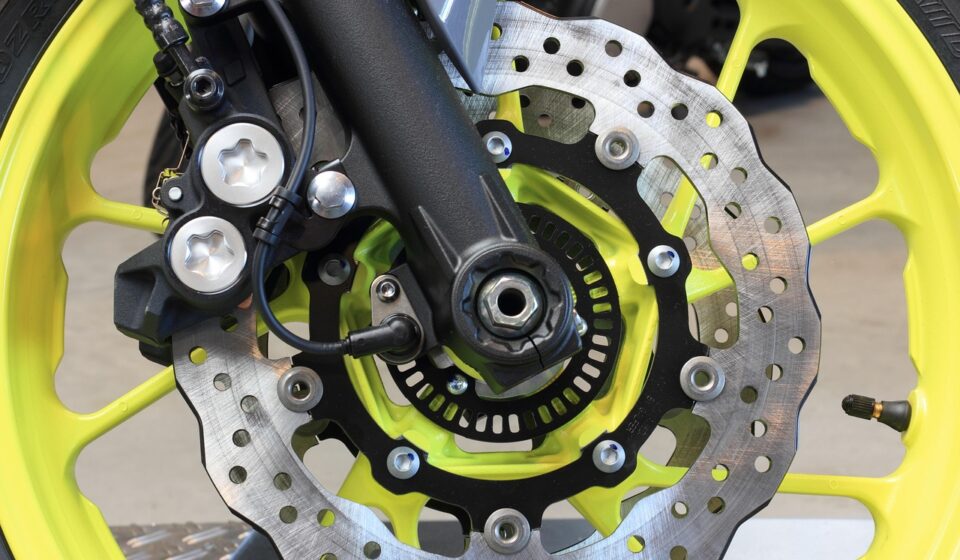
Brake pads and rotors are often priced, listed, and replaced as separate parts, but they work as one friction system. The pad provides the friction material, the rotor absorbs and releases heat, and the caliper supplies the clamping force. If any part is mismatched, worn unevenly, contaminated, or installed without proper preparation, the result may be noise, vibration, uneven pedal feel, premature wear, or less confidence during repeated stops. For parts buyers, technicians, distributors, and readers in the braking and chassis category, the useful question is not simply which brake pad is harder or which rotor looks stronger. It is whether the pad material, rotor design, vehicle weight, driving pattern, and service condition fit the application.
Brake service is also influenced by regulation, environmental pressure, and vehicle technology. U.S. Federal Motor Vehicle Safety Standard No. 135 sets performance requirements for light vehicle brake systems as installed on vehicles. The U.S. Environmental Protection Agency’s Copper-Free Brake Initiative has also pushed friction material formulations toward very low copper content. These frameworks do not tell a driver exactly which pad to buy, but they help explain why brake components are engineered, tested, labeled, and selected with more care than many basic replacement guides suggest.
How disc brakes create stopping force
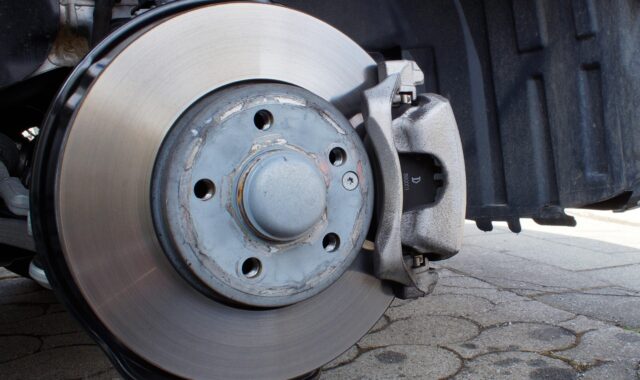
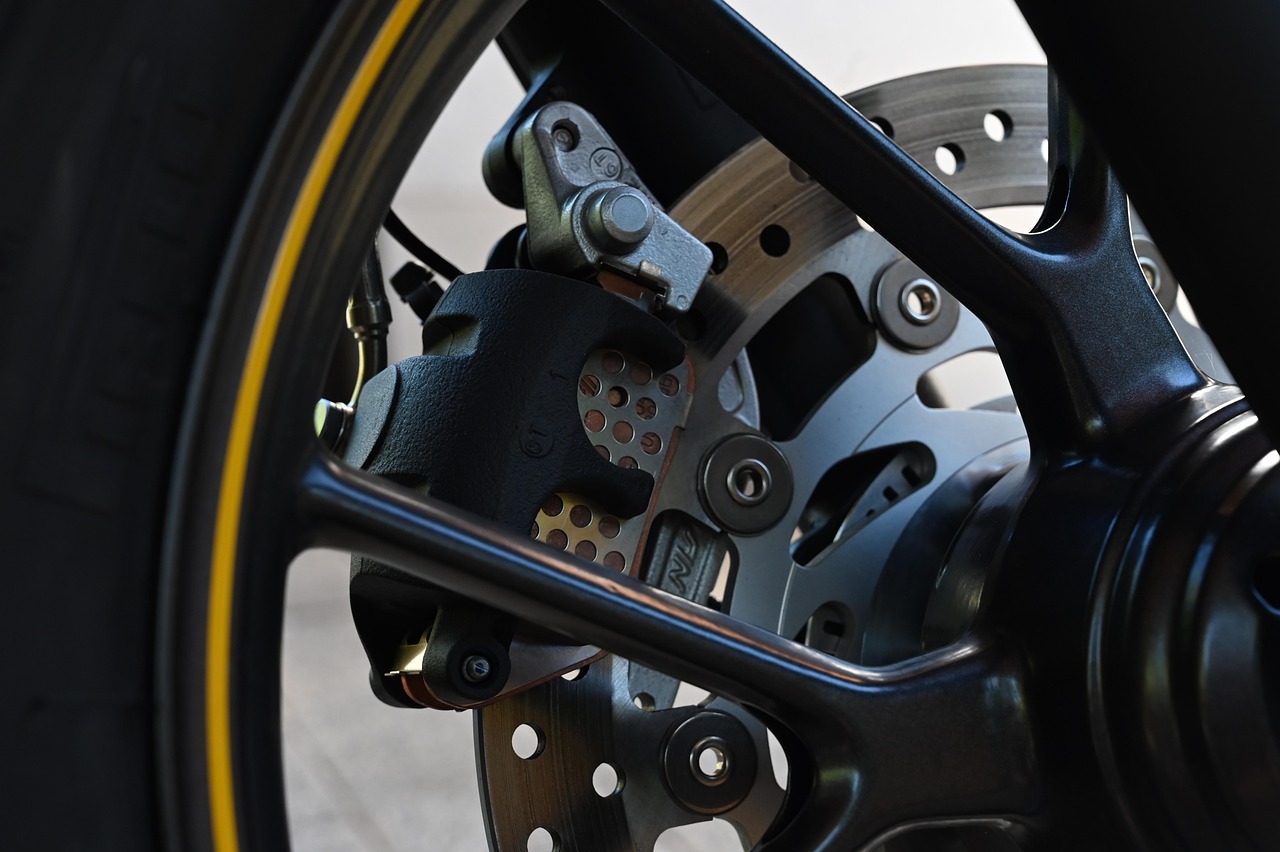
In a typical disc brake system, the rotor is fixed to the wheel hub and turns with the wheel. When the driver presses the brake pedal, hydraulic pressure moves the caliper piston and forces the brake pads against both sides of the rotor. Friction converts the vehicle’s kinetic energy into heat, which then has to move through the pad, rotor, caliper, wheel, and surrounding air.
That simple process involves several engineering trade-offs. A pad must create enough friction when cold, stay stable as temperature rises, resist fade during repeated braking, limit noise, and avoid excessive rotor wear. A rotor must maintain dimensional stability, provide a consistent friction surface, and tolerate heat cycling without cracking, distortion often described as warping, or severe thickness variation. In normal service, the driver usually notices the system only when something changes: a squeal, pedal pulsation, longer stopping feel, burning odor, or visible scoring.
The rotor is more than a metal disc. It is a heat management component. Ventilated rotors, common on front axles and many rear applications, use internal vanes to improve cooling. Solid rotors are simpler and are often used in lower-load rear applications. The correct design depends on axle load, brake balance, wheel package, and manufacturer engineering, not appearance alone.
Pad materials and what they mean in daily use
Brake pad formulations vary widely, but most passenger vehicle pads fall into several broad categories. These labels are useful for comparison, but they are not absolute quality rankings. A well-engineered ceramic pad may be quiet and clean on one platform, while a semi-metallic pad may handle heavier heat loads better on another.
| Pad type | Typical strengths | Possible limitations | Common fit |
|---|---|---|---|
| Ceramic | Low visible dust, stable noise behavior, smooth pedal feel | May not be ideal for severe heat or heavy towing unless specifically engineered for it | Commuter cars, crossovers, light-duty daily driving |
| Semi-metallic | Good heat tolerance, strong bite, durable under higher loads | Can be noisier and may produce more rotor wear or darker dust | Performance driving, heavier vehicles, demanding use |
| Non-asbestos organic | Softer engagement, often quiet, broad cost range | May wear faster depending on formulation and driving cycle | Light-duty applications and economy-focused service |
| Low-metallic formulations | Balanced heat performance and friction response | Dust and noise can vary significantly by formulation | Mixed urban and highway driving |
Because friction material is proprietary, the category label does not show the full compound. Two ceramic pads can behave differently because of binders, abrasives, fibers, fillers, backing plate design, shim system, slotting, chamfers, and manufacturing consistency. This is why application-specific fitment, credible certification or testing claims, and correct installation matter more than broad assumptions about material type.
Environmental requirements are another reason pad chemistry has changed. Under the EPA Copper-Free Brake Initiative and related state and industry commitments, brake friction material targets moved to no more than 5 percent copper by weight by 2021 and 0.5 percent by 2025. For the aftermarket, this has encouraged reformulation and closer attention to friction material compliance. It does not mean every older vehicle immediately needs a different brake design, but copper content is now part of the North American supply-chain discussion.
Rotor choices beyond price and appearance
Rotors are often marketed by style: blank, coated, drilled, slotted, drilled-and-slotted, high-carbon, or performance grade. These descriptions can be useful, but the right choice starts with the vehicle and the service objective.
Blank and coated rotors
Plain blank rotors remain the standard choice for many daily-use vehicles because they provide maximum swept surface area and predictable behavior. Coated rotors add corrosion-resistant coating on non-friction surfaces, and sometimes on the full rotor before initial bedding removes the coating from the friction face. In regions with road salt, humidity, or seasonal storage, coating can improve appearance and reduce rust buildup on hats and vanes. It does not eliminate normal friction-surface wear.
Drilled and slotted rotors
Drilled and slotted designs can help with gas, dust, water evacuation, or pad surface refreshing in certain use cases, but they are not automatically better for every street vehicle. Removing material can reduce thermal mass, and drilled holes may create stress concentration if the rotor is not properly engineered and manufactured. For daily driving, a high-quality blank or coated rotor is often a better value than an aggressive-looking rotor that does not match the vehicle’s braking demands.
Rotor thickness and runout
Rotor condition cannot be judged by surface shine alone. Important measurements include overall thickness, minimum discard thickness, lateral runout, parallelism, and thickness variation. A rotor below its specified minimum thickness has less heat capacity and should not be reused. Excessive runout or uneven thickness can cause pedal pulsation, steering wheel vibration, and repeat service complaints even when new pads have been installed.
When should pads and rotors be replaced together?
There is no universal rule that pads and rotors must always be replaced together. However, installing new pads on worn, scored, heat-spotted, below-spec, or uneven rotors can shorten pad life and create noise or vibration. The decision should be based on inspection, measurement, and the vehicle’s service history.
- Replace pads only when the rotors are above minimum thickness, smooth enough for the pad manufacturer’s surface requirements, free from severe heat checking, and within runout and thickness variation limits.
- Machine or resurface rotors only when the rotor design allows it, there is enough remaining thickness after machining, and the shop has equipment capable of producing the required finish and geometry.
- Replace pads and rotors together when rotors are below specification, deeply scored, cracked, heavily corroded at the friction surface, badly heat damaged, or likely to cause noise and pulsation with new pads.
- Inspect hardware and calipers whenever one side wears faster than the other, because seized slide pins, sticking pistons, torn boots, or binding pad ears can quickly damage new components.
Many poor brake outcomes are blamed on the pad or rotor brand when the root cause is the service environment. Hub face rust, uneven lug nut torque, dirty caliper brackets, reused hardware, missing lubrication at the correct contact points, and skipped bedding procedures can all create problems that look like part failure. Brake service is a system process, not just a parts swap.
A practical selection framework for buyers and installers
A useful brake selection process starts with how the vehicle is used. A compact commuter car, a family crossover, a delivery van, and a modified performance car place different demands on the same basic disc brake architecture. At minimum, selection should consider the following factors.
Vehicle weight and duty cycle
Heavier vehicles and vehicles that frequently carry passengers, cargo, or trailers need more thermal capacity. In these cases, a pad with higher heat tolerance and a rotor that matches the original size and vane design are usually more important than low-dust claims.
Driving environment
Urban stop-and-go driving creates frequent low-to-medium energy stops and can accelerate pad wear. Mountain driving, high-speed highway exits, and towing can move brakes into higher temperature ranges. Coastal and snow-belt regions add corrosion concerns that may justify coated rotors and careful hardware replacement. See also: driveline systems.
Noise and dust expectations
Drivers who prioritize quiet operation and clean wheels may prefer ceramic-type formulations when they are suitable for the vehicle. Drivers who want stronger high-temperature bite may accept more dust or noise from a more aggressive friction material. The right answer depends on expectations as well as specification sheets.
Fitment accuracy
Small fitment errors can create large service problems. Pad shape, abutment clip design, backing plate thickness, electronic wear sensor location, rotor diameter, hat height, bolt pattern, center bore, and parking brake configuration must match the exact vehicle application. This is especially important where one model line has multiple brake packages.
Total service package
A complete brake job may include pads, rotors, hardware kits, wear sensors, caliper guide pin service, brake fluid inspection, and the correct wheel torque procedure. Choosing the lowest-cost pad and rotor combination while ignoring hardware can increase noise risk and reduce real-world value.
Common symptoms and what they may indicate
Brake symptoms should be treated as diagnostic clues, not instant conclusions. A squeal does not always mean the pad is unsafe, and vibration does not always mean a rotor is permanently distorted. Inspection is required.
| Symptom | Possible causes | Recommended check |
|---|---|---|
| High-pitched squeal | Wear indicator contact, glazing, vibration, missing shim, poor bedding | Measure pad thickness, inspect hardware, confirm pad surface condition |
| Grinding noise | Pad material worn away, debris trapped, severe rotor scoring | Stop driving if severe and inspect immediately |
| Pedal pulsation | Rotor thickness variation, hub runout, uneven deposits, torque issues | Measure runout and rotor thickness variation |
| Vehicle pulls while braking | Caliper issue, hydraulic imbalance, tire problem, uneven pad friction | Inspect calipers, hoses, pads, tires, and suspension |
| Burning smell after braking | Overheating, dragging caliper, improper break-in, heavy load | Check wheel temperature, caliper movement, and driving conditions |
Drivers should not ignore grinding, fluid leaks, warning lights, severe vibration, or a soft pedal. These conditions can indicate safety-critical faults that need prompt inspection by a qualified technician.
What 2026 market and technology trends mean for brake service
The brake aftermarket remains closely tied to vehicle age, mileage, and consumer maintenance behavior. In 2026, the Auto Care Association and MEMA Aftermarket Suppliers projected continued growth in the U.S. light vehicle aftermarket, reflecting the ongoing need to maintain an aging and diverse vehicle fleet. Brake pads and rotors remain central to that maintenance cycle because they are normal-wear parts, but the replacement decision is becoming more technical.
Three trends are especially relevant. First, material formulation is changing as low-copper and copper-free friction targets become embedded in supply chains. Second, vehicle electronics are changing driver expectations. Advanced driver assistance systems and automatic emergency braking depend on sensors and controls, but the physical brake system still has to deliver stable mechanical stopping performance. Third, electrified vehicles can use regenerative braking to reduce friction brake use, which may extend pad life in some driving patterns while increasing corrosion risk if rotors are used less frequently.
These trends do not replace the basics. Clean installation, accurate measurement, correct fitment, and matched pad-rotor selection remain the foundation of brake reliability. The newer challenge is that buyers must evaluate parts not only by price, but also by material compliance, duty cycle, corrosion resistance, and compatibility with increasingly complex vehicle platforms.
Frequently asked questions
Are ceramic brake pads always better than semi-metallic pads?
No. Ceramic pads are often selected for quiet operation and low visible dust, but semi-metallic pads can be better suited to heavier loads, higher temperatures, or performance-oriented use. The best choice depends on the vehicle, driving pattern, and pad engineering.
Can new pads be installed on old rotors?
Yes, but only if the rotors measure within specification and meet surface condition requirements. If the rotor is too thin, uneven, deeply scored, cracked, or heat damaged, new pads alone are unlikely to deliver a good result.
Why do brakes make noise after replacement?
Noise can come from pad vibration, improper bedding, missing or reused hardware, rough rotor finish, contamination, caliper movement problems, or a pad compound that does not suit the application. The cause should be diagnosed rather than assumed.
Do drilled and slotted rotors stop a car faster?
Not necessarily. Their benefit depends on design, pad match, heat load, and use case. For many daily vehicles, high-quality blank or coated rotors provide more predictable value and durability.
What is the most important brake service habit?
Measure before replacing. Pad thickness, rotor thickness, runout, hardware condition, caliper movement, and hub cleanliness all affect the final result. Good brake work is based on inspection rather than guesswork.
Bottom line
Brake pads and rotors should be selected and serviced as one friction and heat-management system. Pad material, rotor design, vehicle load, driving environment, environmental compliance, and installation quality all influence the outcome. For everyday vehicles, the most reliable decision is usually not the most aggressive-looking part or the cheapest kit. It is the combination that matches the original brake package, the driver’s use case, and the measured condition of the existing system.