Brake shoes and drums explained for modern braking systems
Why brake shoes and drums still matter
Brake shoes and drums are older than disc brakes, but they are not obsolete. Drum assemblies still earn their place because they can provide strong parking-brake holding force, package neatly inside rear wheels, shield friction surfaces from some road splash, and support many trailer and commercial-vehicle brake systems. For repair planners, parts distributors, and fleet maintenance teams, the useful question is not whether drums are modern or old-fashioned. It is whether the shoe, lining, drum, adjuster, and hardware are correctly matched to the vehicle duty cycle and maintained within measurable limits.
Within the wider braking and chassis category, drums deserve close attention because they bring several service issues together: friction material compliance, heat management, inspection access, parking-brake performance, and replacement economics. A low-cost shoe set can quickly become an expensive comeback if the drum is beyond diameter, the wheel cylinder leaks, or the self-adjuster is not working.
How a drum brake creates stopping force
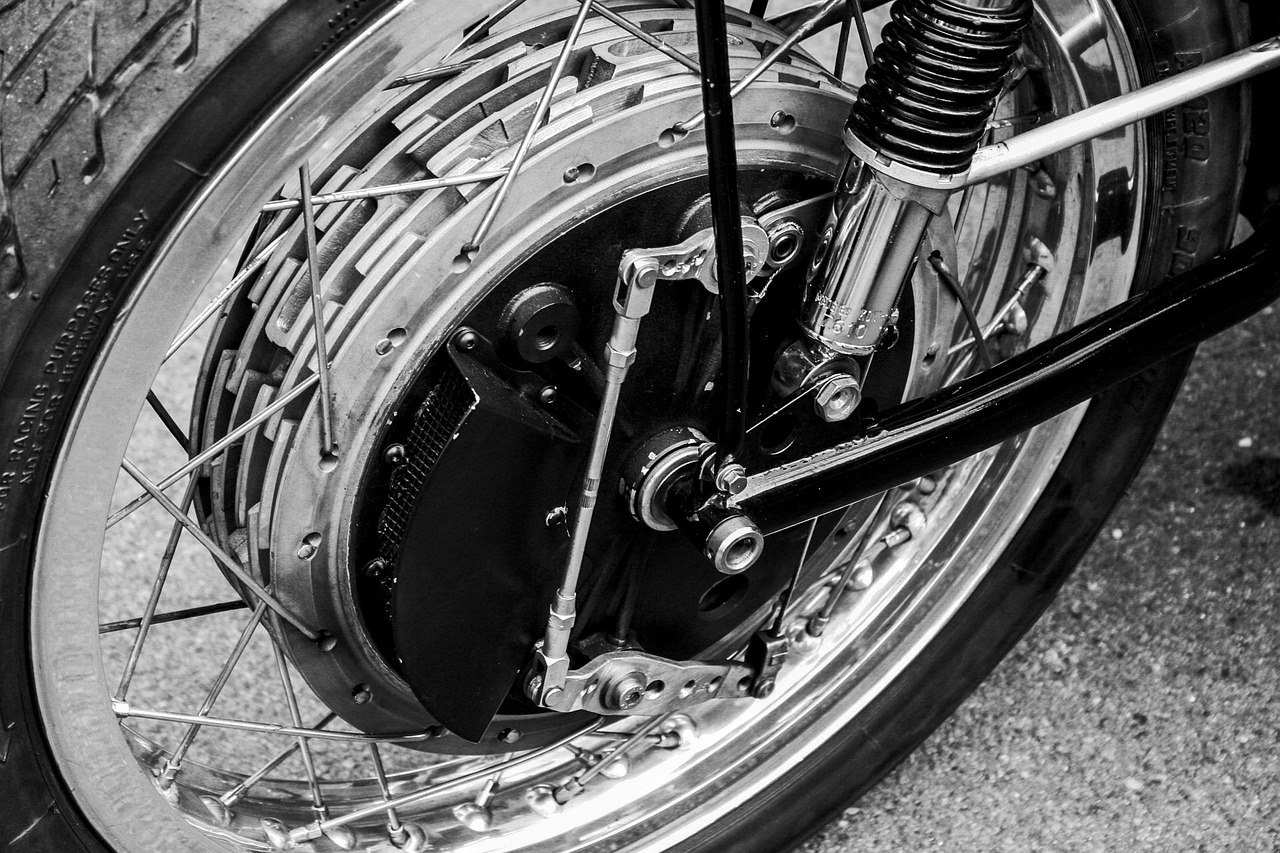
A drum brake uses a rotating cylindrical drum attached to the wheel hub. Inside the drum, curved brake shoes carry friction linings. When the driver applies the brake, hydraulic wheel cylinders, mechanical levers, electric trailer magnets, or air-brake cam mechanisms push the shoes outward. The linings press against the inner surface of the drum, converting vehicle kinetic energy into heat through friction.
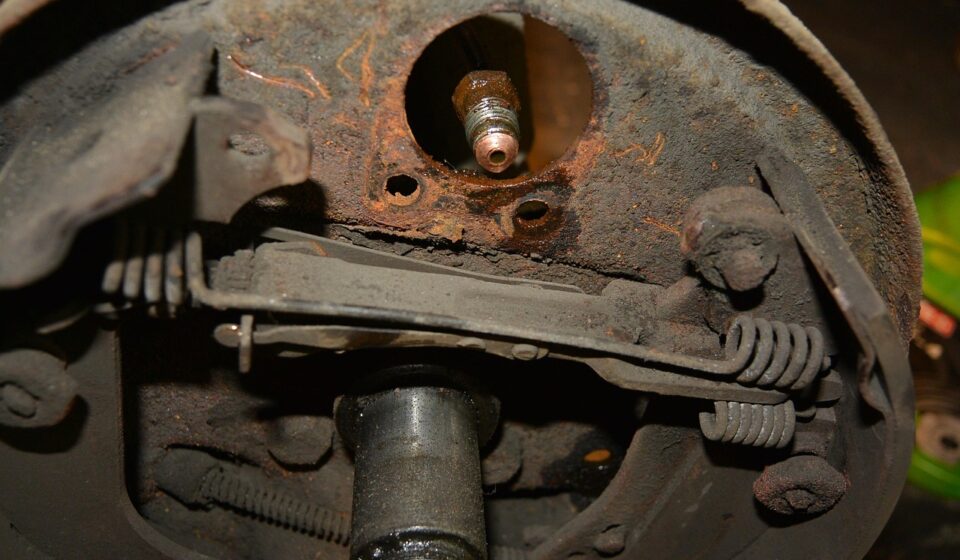
The foundation parts look simple, but small faults can change how the brake behaves. The backing plate holds the shoes, anchor points, and hardware. Return springs pull the shoes away from the drum when pressure is released. Hold-down pins keep the shoes located. An adjuster mechanism compensates for lining wear so the shoe-to-drum clearance stays within the intended range. On many passenger vehicles, the drum assembly also provides the parking brake, either as the main rear brake or as a compact drum-in-hat mechanism inside a rear disc rotor.
The self-energizing effect
One reason drum brakes can produce high brake torque from a given input force is the self-energizing effect. As the rotating drum pulls the leading shoe into the friction surface, part of the braking force helps wedge the shoe harder against the drum. Leading-trailing and duo-servo layouts manage this effect in different ways. The benefit is strong output and reliable parking-brake holding ability. The tradeoff is that adjustment, shoe geometry, and drum condition have a large influence on pedal feel, brake balance, and wear.
How drums differ from discs
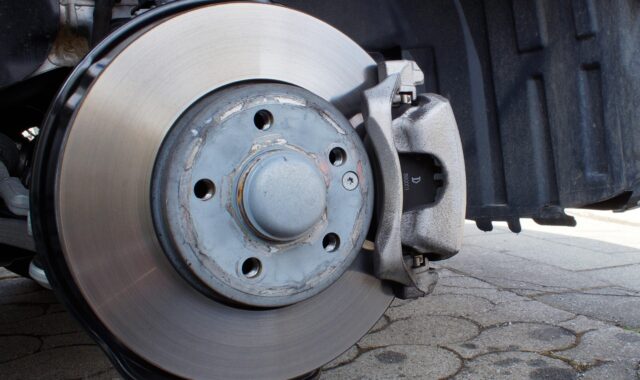
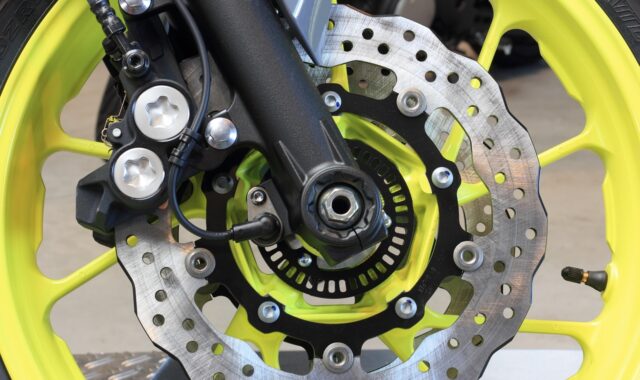
Disc brakes place pads on both sides of an exposed rotor, allowing heat to leave the friction area more directly. Drum brakes enclose the friction pair inside the drum. That enclosure can protect components from light contamination, but it also makes heat and dust management more dependent on brake design and duty cycle. For repeated high-speed stops, heavy downhill braking, or severe fleet service, heat capacity and fade resistance become central selection factors. For lower rear-axle brake loads, parking-brake functions, and cost-sensitive platforms, drums can still be a rational engineering choice.
Inspection points that decide whether the system is safe
Because drum brakes hide most of their working surface, inspection has to go beyond a quick look through the wheel. U.S. federal rules show the type of measurable limits that matter. The current eCFR text of 49 CFR 570.59, displayed as up to date on September 10, 2026, states that a drum embossed with a maximum safe diameter must remain within that specification; if no embossed dimension exists, the drum must be within the manufacturer specification. The same section says lining thickness must not be less than 1/32 inch over the fastener or 1/16 inch over the brake shoe on bonded linings, and that drum brake linings must be securely attached to the shoes.
Commercial vehicles have additional operating requirements. The current eCFR text of 49 CFR 393.47 sets minimum lining or pad thickness values for commercial motor vehicles, including 3/16 inch or 1/4 inch at the shoe center for certain steering-axle air drum brake configurations, 1/4 inch for non-steering axle air drum brakes, and 1/16 inch for hydraulic or electric drum brakes. These federal figures do not replace the vehicle service manual, but they show why appearance alone is a poor basis for service decisions.
| Inspection area | What to check | Why it matters |
|---|---|---|
| Drum diameter | Measure against the maximum diameter cast or stamped on the drum, or the manufacturer limit if no marking is present. | An oversized drum reduces contact quality, changes shoe geometry, and can increase pedal or actuator travel. |
| Friction lining | Check thickness, cracks, missing material, separation from the shoe, and contamination from oil or grease. | Thin, loose, or contaminated linings reduce available friction and can create uneven braking. |
| Drum surface | Look for deep scoring, heat checking, hard spots, cracks, bell-mouthing, and out-of-round conditions. | Surface defects can cause noise, pulsation, vibration, fade, and poor shoe bedding. |
| Hardware | Inspect return springs, hold-downs, anchors, adjusters, and parking-brake levers. | Weak or seized hardware can cause dragging, misadjustment, or poor shoe return. |
| Actuation | Check wheel cylinders, electric trailer brake components, or air-brake cam and slack-adjuster movement. | The best shoe and drum cannot perform if the input force is leaking, binding, or out of adjustment. |
CVSA attention to drum and rotor condition also shows why this topic matters in fleet operation. CVSA announced that its 2026 North American Standard Out-of-Service Criteria took effect on April 1, 2026, and its 2026 Brake Safety Week focus area included brake drum and rotor condition. For commercial fleets, drum inspection is therefore both a maintenance task and a roadside-readiness issue.
Replacement decisions should pair friction and rotating surface
Replacing brake shoes without evaluating the drums is one of the most common drum-brake mistakes. Shoes and drums work as a matched friction pair. New linings need an acceptable drum surface and correct diameter to establish full contact. If the drum is scored, heat-damaged, out of round, or beyond maximum diameter, new shoes may wear unevenly, chatter, overheat, or feel weak even though the lining material is fresh.
Machining a drum can be appropriate only when enough material remains after resurfacing and the final diameter stays below the stated maximum. If the drum is already near its limit, replacement is usually the safer and more durable decision. Cracked drums, drums with missing pieces, heavily heat-damaged drums, and drums that cannot be cleaned up within specification should not be reused.
Shoes should normally be serviced as axle sets, not one wheel at a time, because brake balance matters. Hardware is part of the repair as well. Return springs lose tension with age and heat. Adjusters seize from corrosion and dust. Wheel cylinders can leak under the rubber boots before obvious fluid appears outside the assembly. Reusing marginal hardware can make a fresh shoe and drum installation perform like an old brake.
- Measure drum diameter before deciding to reuse or machine the drum.
- Replace contaminated shoes; friction material that has absorbed brake fluid or gear oil cannot be cleaned reliably.
- Use the correct primary and secondary shoe positions where the design requires different linings.
- Clean the backing plate contact pads and lubricate only the specified metal-to-metal contact points with brake-compatible lubricant.
- Adjust the shoes according to the service procedure before road testing or returning a fleet unit to operation.
Material and compliance trends are changing the friction side
Modern brake shoes are not judged only by fit and stopping power. Friction material chemistry is under closer environmental and regulatory scrutiny. The U.S. EPA says that on January 21, 2015, EPA, states, and the automotive industry signed an agreement to reduce copper and other materials in motor vehicle brake pads, targeting less than 5 percent copper by weight in 2021 and 0.5 percent by 2025. EPA also identifies mercury, lead, cadmium, asbestiform fibers, and chromium-six salts as materials addressed by the initiative.
Washington State’s Better Brakes program is especially relevant because it explicitly refers to vehicle brake pads and shoes. The Washington Department of Ecology states that brake pads and shoes manufactured after January 1, 2025, must contain less than 0.5 percent copper by weight, with earlier limits applying to asbestos and several heavy metals from 2015 and to copper below 5 percent from 2021. The same agency describes the LeafMark system, where Level N indicates compliance with the 2025 requirements. See also: driveline systems.
For distributors and repair businesses, the practical point is to confirm the friction material marking, certification route, and application before assuming that a shoe set suitable for one jurisdiction or vehicle category fits every sale. EPA and industry sources often discuss brake pads as the broad national program label, while some state rules and product lines include shoes. That difference in wording is small, but it matters for cataloging and compliance reviews.
Where drum brakes are still most relevant
Drum brakes remain common because different vehicles place different demands on the rear axle and parking system. A compact car or small crossover may use rear drums because the front brakes handle a large share of service braking and the rear system must package a simple parking brake. A pickup, trailer, or commercial vehicle may use drums because the design supports high brake torque, robust mechanical parking force, and established service practices. Heavy vehicles equipped with air-brake systems still use drum brakes widely, even as air disc brakes continue to gain share in some applications.
Electrification adds another layer rather than eliminating friction brakes. Federal Motor Vehicle Safety Standard No. 135 includes definitions and requirements for regenerative braking systems on light vehicles, including cases where the regenerative system is part of the service brake system. Regeneration can reduce routine friction-brake use, but mechanical brakes still have to deliver safe stopping when regeneration is limited, disabled, blended with ABS, or unavailable. Less frequent friction use may also make corrosion, sticking hardware, and parking-brake function more visible service concerns in some duty cycles.
| Application | Why drums may be used | Key service concern |
|---|---|---|
| Passenger rear axle | Packaging, parking-brake simplicity, and cost control. | Adjustment, wheel-cylinder leaks, and uneven shoe wear. |
| Drum-in-hat parking brake | Compact parking brake inside a rear disc rotor hat. | Corrosion, seized adjusters, and poor holding force after infrequent use. |
| Trailers | Electric or hydraulic actuation can be integrated with proven drum hardware. | Contamination, magnet or actuator condition, bearing service, and correct adjustment. |
| Medium and heavy commercial vehicles | High brake torque, established air-brake architecture, and fleet familiarity. | Lining thickness, drum cracks, slack adjustment, and roadside inspection readiness. |
| Classic and restoration vehicles | Original design compatibility and preservation of factory architecture. | Correct lining material, drum diameter, and availability of quality hardware. |
A practical checklist before selecting parts
Choosing brake shoes and drums should start with identification, not price. Vehicle year, make, model, axle, gross weight rating, brake diameter, shoe width, actuation type, and parking-brake layout can all change the correct part. A drum that physically fits over the shoes is not automatically correct if offset, diameter, hub configuration, ABS tone-ring arrangement, or maximum machining dimension differs.
- Confirm the exact vehicle application and axle position.
- Identify whether the system is hydraulic, mechanical, electric trailer brake, or air drum brake.
- Match shoe width, drum inside diameter, and hardware style to the original specification.
- Check whether the design uses different primary and secondary shoes.
- Verify the drum maximum diameter before machining or reuse.
- Replace springs, adjusters, and hold-down hardware when age, corrosion, or heat history justifies it.
- Inspect wheel cylinders, seals, and backing plates before installing new friction material.
- For regulated markets, confirm low-copper or LeafMark-related requirements where applicable.
- Service both sides of the axle to maintain braking balance.
- Perform adjustment, bedding, and a controlled road test according to the vehicle service procedure.
The most reliable drum-brake work treats the assembly as a system. Friction material, drum metallurgy, springs, adjusters, cylinders, parking-brake cables, and inspection limits all influence the result. That system view is especially valuable as friction materials change and fleets face more detailed brake-condition scrutiny.
Frequently asked questions
Are drum brakes less safe than disc brakes?
Not automatically. A properly designed and maintained drum brake can meet its intended safety role. Disc brakes often manage repeated high-heat stops more effectively because the rotor and pads are more exposed to airflow, but safety depends on the complete vehicle design, loading, maintenance condition, and inspection compliance.
Should brake shoes and drums be replaced together?
They should be evaluated together. If the drum is within diameter, round, crack-free, and has an acceptable friction surface, it may be reused or machined within specification. If it is cracked, oversized, deeply scored, or heat damaged, replacing shoes alone is a weak repair.
What are common signs of worn brake shoes or drums?
Common signs include scraping or grinding noises, longer pedal travel, poor parking-brake hold, vibration or pulsation, pulling during braking, a burning smell, visible fluid leakage at the backing plate, and repeated need for adjustment. Any metal-to-metal noise should be treated as urgent.
Do copper-free rules apply to brake shoes?
It depends on the rule and the market. The EPA initiative is commonly described around motor vehicle brake pads, while Washington’s Better Brakes program specifically refers to brake pads and shoes and sets a less-than-0.5-percent copper requirement for products manufactured after January 1, 2025. Buyers should verify the applicable jurisdiction and product marking.
How often should drum brakes be inspected?
Follow the vehicle manufacturer service schedule and shorten the interval for towing, delivery, mountain driving, corrosion exposure, or fleet use. Commercial vehicles also operate under inspection and maintenance rules that may require more frequent documented checks than a private passenger vehicle.