Rack and pinion steering explained for modern chassis design
What rack and pinion steering does in a vehicle
Rack and pinion steering is a compact steering gear that converts rotation at the steering wheel into side-to-side movement at the front axle. When the driver turns the wheel, the pinion gear rotates. Its teeth move the rack left or right, and the tie rods push or pull the steering knuckles so the front wheels change direction. This direct mechanical path is one reason the layout is widely used in passenger cars, crossovers and many light-duty platforms. It is space-efficient, relatively simple to package, and compatible with both hydraulic and electric power assistance.
For the braking and chassis sector, the steering rack is not an isolated component. It works within a system that includes suspension geometry, tire load, electronic stability control, driver-assistance functions and service procedures. A small amount of lash, contamination or sensor error can affect how accurately the vehicle follows the driver’s input. At the same time, electric power steering and emerging steer-by-wire systems are turning the rack into part of a wider chassis control network, not just a mechanical gear.
How the mechanism converts rotation into wheel angle
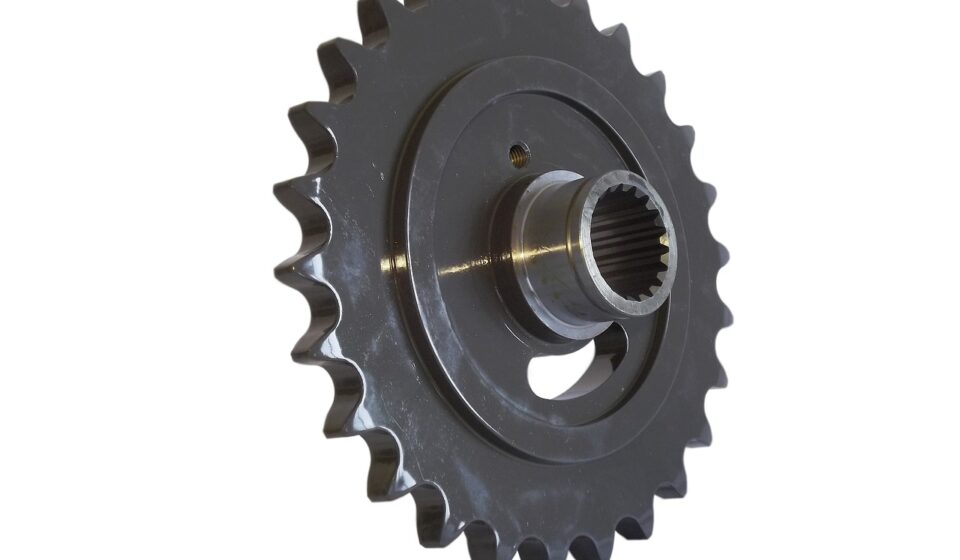
The basic mechanism is straightforward. The lower end of the steering column carries a small gear called the pinion. The pinion meshes with a straight toothed bar called the rack. As the pinion rotates, its teeth drive the rack in a straight line. Each end of the rack connects to an inner tie rod, which connects through an outer tie rod end to the steering knuckle or steering arm. That linkage converts linear rack travel into wheel angle.
Service and manufacturer education materials, including Nissan parts information and chassis component references, describe the same core path: steering wheel, column, pinion, rack, tie rods, steering arms and front wheels. Vehicle packaging differs by platform, but the operating principle is consistent.
Several details determine how the steering feels and behaves:
- Steering ratio: A faster ratio turns the wheels more for a given steering-wheel angle. This can improve response but may also make the vehicle feel more sensitive.
- Rack travel: The available linear movement of the rack helps determine turning radius and lock-to-lock steering angle.
- Gear tooth design: Some racks use variable-ratio tooth spacing to keep the steering calmer near center and quicker away from center.
- Tie rod length and angle: These affect toe change through suspension travel and can influence bump steer.
- Mounting stiffness: Rack bushings and housing stiffness affect noise, vibration, harshness and steering precision.
For that reason, replacing a rack or inner tie rod is not only a parts swap. The rack must be centered, the steering angle sensor may need calibration on some vehicles, and alignment must be checked so the mechanical center and electronic reference agree.
Hydraulic, electric and manual rack systems compared
Rack and pinion steering can work without assistance, but most modern vehicles use power assist. The rack mechanism may look similar from the outside, while the source of assist changes the system design. Hydraulic power steering uses engine-driven or electric-hydraulic pressure to reduce steering effort. Electric power steering uses an electric motor, sensors and control software to add assist when needed.
| System type | How assist is generated | Common advantages | Common limitations |
|---|---|---|---|
| Manual rack | No external assist; driver force moves the rack through the pinion | Simple layout, low component count, direct mechanical feel | High steering effort, especially with wide tires, heavy front axle loads or low-speed parking |
| Hydraulic rack and pinion | A pump pressurizes fluid and a valve directs assist force inside the rack | Strong assist, familiar steering feel, proven on many platforms | Fluid leaks, pump load, hoses, seals and maintenance requirements |
| Electric power steering | A motor adds assist based on driver input, vehicle speed and control logic | Lower parasitic losses than constant hydraulic pumping, easier integration with driver-assistance features | Greater dependence on sensors, software, motor durability and electrical architecture |
Supplier descriptions from NSK and Bosch note that electric systems use sensors and motors to provide the required assistance instead of relying on traditional hydraulic pressure. This shift has changed how steering racks are engineered. In a column-assist system, the motor is located in or near the column. In pinion-assist or rack-assist systems, the assist is applied closer to the rack. Larger vehicles and heavier front axle loads often push designs toward more powerful rack-assist layouts because the assist force is delivered closer to the road wheels.
From an industry perspective, electric power steering is attractive because it consumes significant energy mainly when steering assist is needed. It also supports software-defined functions such as speed-sensitive assist, lane-keeping support and compensation for crosswind or road crown, depending on the vehicle’s control strategy. The tradeoff is that steering becomes a safety-critical electromechanical system, making diagnostics, redundancy and calibration more important.
Why rack and pinion steering matters to chassis safety systems
Modern stability and driver-assistance systems rely on the vehicle knowing both what the driver requested and how the vehicle responded. The steering rack and its related sensors provide part of that information. The U.S. electronic stability control regulation, FMVSS No. 126, uses steering input, yaw response and lateral displacement in its performance framework for light vehicles. The regulation is not a rack design standard, but it shows why steering accuracy is central to chassis control.
In everyday driving, electronic stability control compares driver intent with actual vehicle motion. If the vehicle is understeering, oversteering or not following the intended path, the system can apply individual brakes and, in some cases, adjust powertrain torque. The steering system therefore needs predictable mechanical behavior. Excessive free play, binding, incorrect toe or a miscalibrated steering angle sensor can make driver input harder to interpret correctly.
For repairers and parts professionals, the practical rule is to avoid separating steering, suspension and braking diagnostics too early. A pull, wander, off-center wheel or stability-control warning can come from the rack, tie rods, alignment, tires, brake drag, suspension bushings or sensor calibration. Confirming the root cause matters because replacing a rack will not fix tire conicity, a worn control-arm bushing or an uncalibrated steering angle sensor.
Design pressures from heavier vehicles and electrification
Vehicle size and mass trends have direct consequences for steering racks. Recent U.S. EPA Automotive Trends reporting shows continued market movement toward SUVs and truck SUVs in model-year data, while average vehicle footprint and weight have also been important long-term indicators. Heavier vehicles, larger wheels and wider tires can raise steering loads, especially at low speed, during parking maneuvers and on rough surfaces.
Electric vehicles add another layer. Battery packs increase mass but also lower the center of gravity. Packaging can free space where an engine once sat, yet front suspension and crash structures still compete for room with steering gears, motors, half shafts and cooling hardware. For steering suppliers, the challenge is to deliver enough assist, precision and durability without adding unnecessary weight or noise.
These pressures explain several visible trends in rack and pinion steering:
- Higher-output electric assist: Heavier crossovers and EVs may require stronger rack-assist or belt-drive electric power steering units.
- More attention to NVH: Electric vehicles have less engine noise to mask steering gear whine, clunks or road feedback.
- Software-tuned steering feel: OEMs can tune effort and returnability electronically, but poor calibration can make steering feel artificial or inconsistent.
- Integrated chassis control: Steering is increasingly coordinated with braking, damping, torque vectoring and stability functions.
- Durability around seals and boots: Larger wheels, road debris and suspension travel can increase the importance of boot integrity and contamination control.
The takeaway is not that every heavier vehicle has steering problems. The point is that the design margin and calibration work behind a modern rack are becoming more complex. A rack that worked well in a lighter sedan may need different bearings, assist strategy, housing stiffness or thermal management for a heavier electrified platform.
Common failure signs and what they really indicate
Many drivers describe steering symptoms as a bad rack, but several parts can create similar complaints. Tie rods connect the rack to the wheel knuckles, and chassis component suppliers such as MOOG emphasize that worn tie rods can cause steering looseness, abnormal tire wear and potential loss of control if ignored. That does not mean every loose steering complaint is a rack failure.
Common symptoms include:
- Steering play or wandering: Possible causes include worn inner or outer tie rods, rack bushings, control-arm bushings, ball joints, wheel bearings or alignment errors.
- Clunking while turning or over bumps: The source may be a loose rack mount, worn tie rod, strut mount, sway bar link or suspension joint.
- Hard steering: Hydraulic systems may have low fluid, pump problems, belt issues or internal rack leakage. Electric systems may have motor, torque sensor, wiring or module faults.
- Fluid leak: Usually relevant to hydraulic racks, hoses, pumps or seals. A wet rack boot can indicate fluid trapped inside the boot from an internal seal leak.
- Uneven tire wear: Often connected to toe misalignment, worn tie rods or suspension wear, not necessarily the rack gear itself.
- Off-center steering wheel: Often an alignment or centering issue, though it can also follow incorrect rack installation or steering sensor calibration problems.
A torn rack boot deserves quick attention even if no steering symptom is present. The boot protects the inner tie rod and rack area from water, grit and road salt. Once contamination enters, wear can accelerate and the repair can become more expensive.
For service decisions, the most reliable approach is a loaded inspection. The technician should check free play at the wheels, observe inner and outer tie rod movement, inspect rack mounts, look for hydraulic leaks where applicable, scan electric power steering faults, and verify alignment. Relying on one symptom alone can lead to unnecessary rack replacement.
How steer-by-wire changes the role of the rack
Steer-by-wire is the clearest sign that steering is moving deeper into software-defined chassis design. Supplier materials from ZF and Bosch describe systems in which the mechanical connection between the steering wheel and steering gear is eliminated. Instead, a steering-wheel actuator reads driver input and provides feedback, while a front axle or steering rack actuator moves the wheels electronically. These systems require redundant power, communication and control strategies because steering remains safety critical.
This does not make rack and pinion steering obsolete overnight. Most vehicles on the road, and many new platforms, still use a mechanical rack and pinion layout, often with electric assistance. Steer-by-wire adoption depends on regulation, cost, redundancy architecture, customer acceptance and OEM platform strategy. Even so, it changes how the industry thinks about the steering rack. The rack is no longer only a gear housing; it can become an actuator in a coordinated motion-control system.
Potential benefits include variable steering ratio without a traditional mechanical compromise, more cabin packaging freedom, easier adaptation across vehicle platforms and improved integration with automated driving functions. The risks and engineering challenges include fail-operational safety, cybersecurity, driver trust, road-feel tuning and service procedures that are more electronic than mechanical.
For parts distributors, workshops and chassis content readers, the practical implication is gradual change rather than sudden replacement. Hydraulic racks remain relevant in the aftermarket. Electric rack and pinion units are becoming more common and more software-dependent. Steer-by-wire will add a new category of actuators, sensors and diagnostic requirements, but it will coexist with conventional rack systems for years.
Buying, inspection and replacement considerations
When a rack and pinion steering unit must be replaced, matching the part number is only the starting point. Differences in assist type, sensor configuration, inner tie rod length, steering ratio, mounting points and electronic module integration can make two similar-looking racks incompatible. Electric racks may also require programming, initialization or steering angle calibration after installation.
Key checks include:
- Confirm the exact vehicle application, drivetrain, wheelbase and steering option.
- Compare hydraulic, electric, pinion-assist and rack-assist layouts before ordering.
- Inspect related parts such as tie rods, boots, rack mounts, hoses, pumps, wiring and connectors.
- Center the rack before installation and avoid forcing the steering to full lock if the steering column or clock spring is disconnected.
- Perform wheel alignment after replacement or tie rod adjustment.
- Follow the vehicle maker’s scan-tool procedures for electric power steering initialization and steering angle calibration.
Replacement quality also depends on handling. A rack dropped during shipping, an exposed boot clamp, contaminated hydraulic ports or damaged electrical connectors can create immediate failure risks. For remanufactured hydraulic racks, cleanliness and seal quality are critical. For electric racks, electronic condition and software compatibility are just as important as mechanical fit.
Frequently asked questions
Is rack and pinion steering the same as a steering rack?
In common repair language, the terms are often used together, but they are not exactly the same. The rack is the toothed bar inside the steering gear. Rack and pinion steering refers to the complete gear mechanism in which the pinion gear moves the rack, and the rack then moves the tie rods and front wheels.
Is electric power steering still rack and pinion steering?
Often, yes. Many electric power steering systems still use a rack and pinion mechanical layout. The difference is that assist comes from an electric motor and control unit rather than hydraulic pressure. Depending on the design, the motor may act on the column, pinion or rack.
Can a bad tie rod feel like a bad steering rack?
Yes. A worn inner or outer tie rod can create looseness, clunking, wandering or abnormal tire wear that may be mistaken for rack failure. A proper inspection should isolate whether the play is in the tie rod, rack, rack mount, suspension joint or wheel bearing.
Do all rack leaks require complete rack replacement?
Not always, but many internal hydraulic rack seal leaks are repaired by replacing or remanufacturing the rack assembly rather than replacing individual seals in the vehicle. The correct repair depends on vehicle design, leak location, parts availability and labor cost.
Will steer-by-wire replace rack and pinion steering?
Steer-by-wire will likely grow in advanced and electrified platforms, but it will not immediately replace conventional rack and pinion systems across the market. Mechanical and electric rack and pinion steering remains common, well understood and cost-effective for many vehicle segments.
Bottom line for chassis professionals
Rack and pinion steering remains important because it combines a direct mechanical path with the flexibility required by modern assist systems. Its basic job is simple: convert steering-wheel rotation into controlled wheel angle. Its modern role is broader: support stability systems, driver-assistance features, heavier vehicle platforms, EV packaging and increasingly software-defined chassis behavior.
The most useful way to evaluate a rack is to look beyond the gear itself. Steering precision depends on the rack, tie rods, mounting points, suspension geometry, tires, alignment, sensors and control software working together. As the market moves from hydraulic assist to electric assist and, gradually, to steer-by-wire architectures, the steering rack will remain a key chassis component, but its value will be measured as much by integration and calibration as by mechanical strength.